At least 35 Australians are among hundreds of people missing after a catastrophic flood and landslide tore through a remote stretch of the Nepal-Tibet border, striking one of the Himalayan region's most beloved trekking and pilgrimage destinations. The disaster, which struck on Wednesday, has killed at least 160 people, with rescuers battling treacherous mountain terrain and a lack of infrastructure to reach those still unaccounted for.
For a fuller picture of what has been one of the most destructive Himalayan disasters in recent memory, see our earlier coverage of dozens of Australians among hundreds missing as Himalayan flash floods kill more, and the unfolding search for Australians missing after the catastrophic Nepal-Tibet disaster.
A valley that draws trekkers and pilgrims alike
The flood struck Syabrubesi — the gateway town to Langtang Valley, situated roughly 122 kilometres by road north of Kathmandu — as well as other areas used by travellers making a Hindu pilgrimage to Kailash Mansarovar. Foreign Minister Penny Wong explained at a Thursday afternoon press conference that the mix of motivations drew a diverse international crowd to the region.
"It is well-known that this area, people are not only going there for trekking but also for spiritual reasons, so you would anticipate that the foreign nationals who were in the region would have been there for a variety of reasons," Wong said.
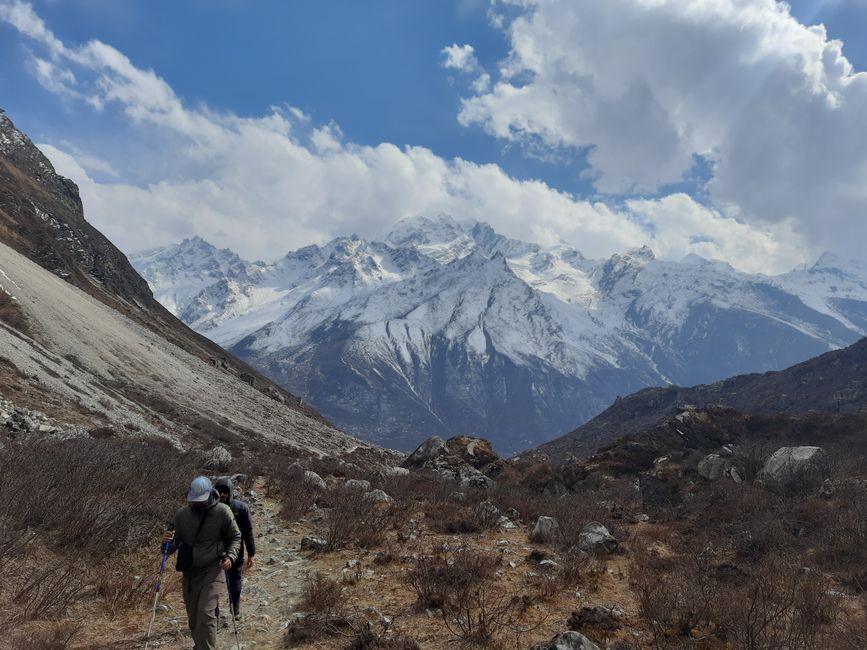
Langtang Valley is Nepal's third most popular trekking destination, behind only the Everest and Annapurna regions. The narrow valley runs north from Syabrubesi, framed by snow-capped peaks — including Langtang Lirung, which rises above 7,000 metres — with glaciers, rivers and icy landscapes lining the route. It is also home to remarkable wildlife, including approximately 250 bird species, red pandas, snow leopards, black bears and yaks.
The trek is rated moderate to tough, with most trekking companies recommending several weeks of fitness preparation. While the route can be undertaken year-round, the current monsoon season typically brings slightly fewer visitors than other times of year — meaning the number of tourists caught up in the disaster could have been considerably higher at a different time of year. These extreme weather events have become an increasingly sobering feature of the Weather of 2026 globally.
Who are the missing Australians?
Nepal's tourism ministry reported that some 644 tourists — 517 of them foreign nationals — were unaccounted for in the hours after the disaster. On the Tibetan side of the border, Chinese authorities confirmed 558 people were missing, including 260 foreign nationals, though no breakdown by nationality was provided.
Among those unaccounted for are 15 Australians who were part of a group of 47 people on a tour organised by US-based company Himalayan Glacier. The company's chief executive said he had been unable to contact the group, which also included nine Nepali nationals, two British travellers, two from Singapore, and others from the United States and Russia.
Of the 15 Australians in that group, nine are men and six are women. The youngest are two boys aged 11 and 14, while the oldest is a 64-year-old woman. In total, the Australian government was tracking at least 35 unaccounted-for nationals as of Thursday, with Wong cautioning that the final figure may rise.
"I can only outline the numbers we are aware of today," she said. "The numbers of foreign nationals are higher and as yet we do not have any further information about if there are any more of those who are Australian."
Australians represent one of Nepal's largest tourist groups. Nearly 50,000 Australians visited Nepal in 2025, according to the Nepal Tourism Board, with close to 25,000 having already made the trip in 2026 prior to the disaster.
China's information blackout contrasts with Nepal's openness
While Nepali authorities moved quickly to release detailed lists of missing tourists — including their nationalities and tour operators — the picture emerging from the Chinese side of the border has been far murkier. Security camera footage showing the wall of ice, mud and water obliterating the Tibet-Nepal border crossing briefly surfaced online before being scrubbed by Chinese censors.
China's state media led its prime-time bulletins not with the disaster, but with coverage of a new book by President Xi Jinping. A brief mention of rescue operations appeared at the bottom of the front page of the country's most-read newspaper. Chinese authorities have provided only broad figures and no information about which specific villages or settlements were affected on the Tibetan side.
Foreign journalists remain effectively locked out of independent reporting from Tibet, with Beijing having restricted free entry to the region since 2007. Formal requests to travel to the area to cover the disaster have been denied, making it near-impossible to hear directly from those affected on the Chinese side of the border.
What happens next
Rescuers on both sides of the border continue to pick through mud and debris in difficult, remote terrain. Wong acknowledged that it may take considerable time before Australian authorities can confirm the full scale of the toll on its citizens.
Many trekking companies were not running tours at the time of the disaster given the monsoon season, which may have limited — but clearly did not eliminate — the number of international visitors in the valley. As search operations continue, the Australian government has urged anyone with information about missing nationals to contact consular authorities.