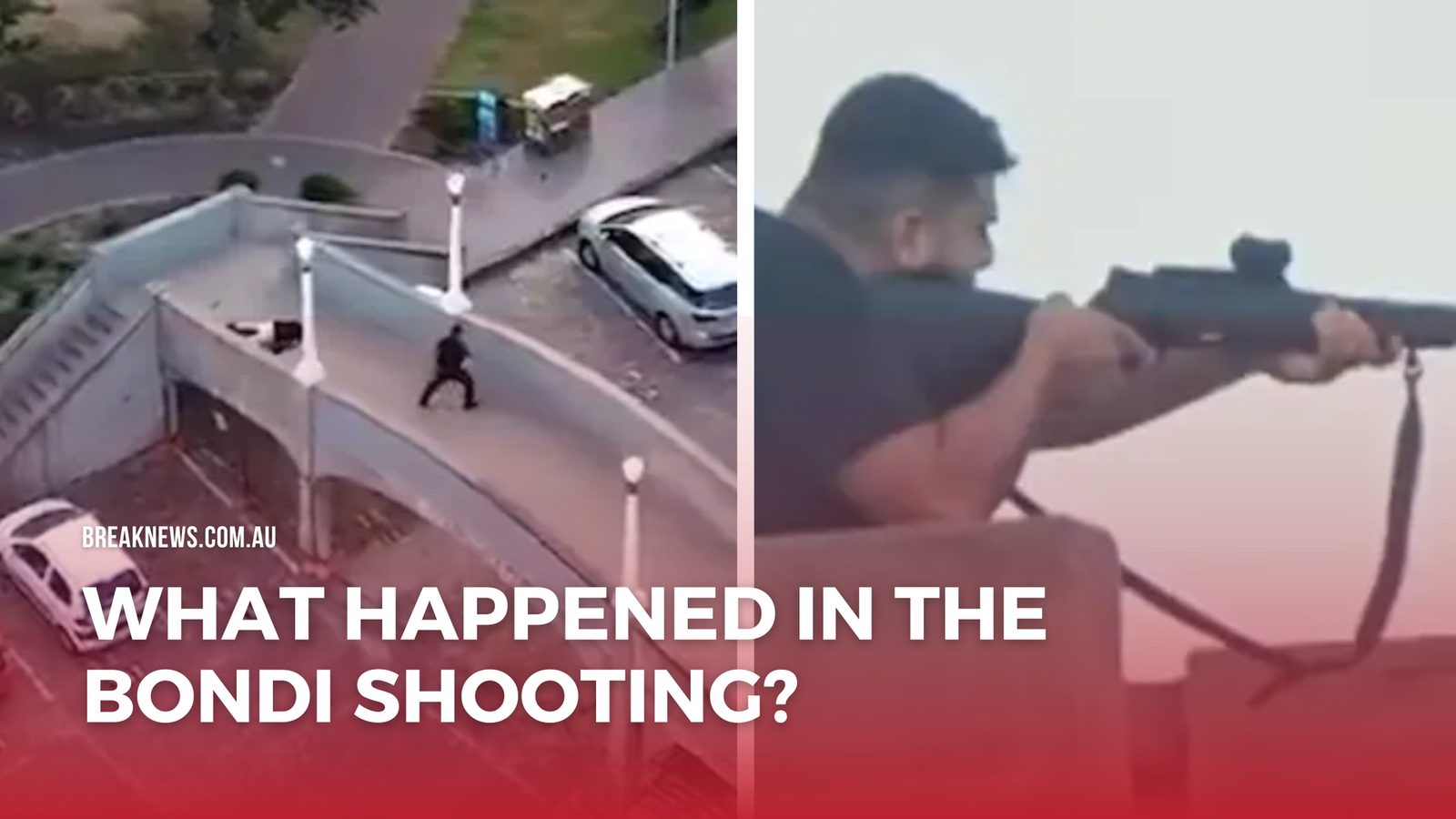
The Bondi shooting refers to a deadly Bondi Beach terror attack that unfolded in Sydney, Australia, during a public community event near Bondi Beach. According to police and early news reports, the beach shooting triggered an immediate emergency response involving NSW Police, paramedics, and multiple government agencies. Authorities treated the incident as a serious act of terror and crime, securing the scene and launching a large-scale investigation.
The attack has had a profound impact on Bondi, the wider Sydney community, and Jewish Australians across the country. As investigations continue, questions remain around public safety, antisemitism, crime prevention, and how such an act could occur in one of Australia’s most iconic public spaces.
Introduction
A devastating shooting has rocked Bondi Beach, leaving 16 people dead in a heart-wrenching attack aimed at the Jewish community. This tragic event unfolded amidst the bustling atmosphere of one of Australia's iconic beaches, casting a somber shadow over an otherwise lively setting. The attack has profoundly affected not only the Jewish community but also the beach-goers who witnessed the chaos and fled for safety. As the community grapples with this harrowing incident, the sense of shock and mourning is palpable.
What Happened in Bondi? Full Overview of the Incident
On a Sunday afternoon, during an event marking the start of Hanukkah, Bondi Beach in New South Wales, Australia, became the scene of a harrowing tragedy. As families gathered to celebrate, chaos erupted when two gunmen, identified as a father and son duo, opened fire on the crowd. The father, aged 50, was killed at the scene, and his 24-year-old son remains in critical condition in the hospital.
The violent attack lasted between five to ten minutes, turning the serene beach into a scene of terror. Witnesses described the gunmen using automatic weapons, unleashing a barrage of bullets on unarmed civilians. People ran for their lives, some seeking refuge in the water or nearby establishments, as screams of "they're reloading" echoed through the air.
This targeted attack on the Jewish community has been condemned as an act of terrorism, with Prime Minister Anthony Albanese labeling it an "act of pure evil." As the investigation continues, authorities and the community are left to grapple with the aftermath of this senseless violence.
Bondi Beach Shooting Timeline: Minute-by-Minute Breakdown
The Bondi Beach shooting unfolded rapidly, leaving little time for those present to react. This timeline offers a detailed look at the sequence of events as they occurred.
2:30 PM: The peaceful gathering at Bondi Beach commenced, marking the start of Hanukkah celebrations. Families, including children and the elderly, were present on this warm Sunday afternoon.
2:45 PM: Chaos erupted as two gunmen opened fire on the crowd. Eyewitnesses reported initial confusion, followed by panic as the sounds of gunfire echoed across the beach.
2:47 PM: Witnesses described people fleeing in all directions, with many running towards the ocean in a desperate attempt to escape the bullets. Shouts of "they're reloading" were heard, adding to the panic.
2:48 PM: Eyewitness accounts detail the targeting of children and elderly individuals, with onlookers describing the scene as a "massacre" with "blood everywhere."
2:50 PM: The attack continued for several minutes, with the gunmen firing indiscriminately into the crowd. Emergency services were alerted as bystanders attempted to assist the wounded.
2:55 PM: The shooting subsided, leaving behind a scene of devastation. First responders arrived promptly, tending to the injured and securing the area.
As the dust settled, the community and the nation were left to grapple with the horror of this targeted attack on the Jewish community. The incident has since been condemned by leaders, with calls for unity and resilience in the face of this tragedy.
Who Was Responsible for the Bondi Shooting?
The horrific Bondi Beach shooting was carried out by a father and son duo, in a premeditated act of violence against the Jewish community. The father, aged 50, and his 24-year-old son were identified as the perpetrators of this tragic event. The father died at the scene, while his son remains in critical condition in the hospital.
The authorities have labeled this as a terror attack, highlighting the targeted nature of the violence. It unfolded during a gathering for the start of Hanukkah, an event significant to the Jewish faith. This deliberate targeting of a religious community has sparked widespread condemnation.
Prime Minister Anthony Albanese has denounced the attack as an act of pure evil, emphasizing the urgent need to confront antisemitism and eradicate such hatred from society. As the investigation continues, authorities are piecing together the motives and planning behind this senseless act.
Naveed Akram
Naveed Akram has emerged as a key figure in the aftermath of the Bondi Beach shooting. Akram, a local community leader known for his advocacy work, has been at the forefront of uniting different communities in the wake of this tragedy. His efforts have been pivotal in fostering dialogue and understanding between affected groups, particularly the Jewish community and other local residents.
In the days following the attack, Akram has organized several vigils and community meetings to offer support and solace. He emphasizes the importance of coming together to stand against hatred and violence, a sentiment echoed by many in the community. His proactive stance has not only provided comfort to those in mourning but has also highlighted the need for increased security measures and community cohesion.
Akram's leadership during this difficult time serves as a reminder of the power of unity in the face of adversity. As the community continues to heal, his role in promoting peace and resilience remains vital.
NSW Police Response and Emergency Services at Bondi
The response from police and emergency services to the tragic shooting at Bondi Beach was both swift and coordinated. Law enforcement quickly mobilized to manage the chaotic scene, providing immediate aid to the victims and ensuring the safety of remaining beach-goers. Their rapid action was crucial in minimizing further harm and securing the area from additional threats.
In an effort to prevent similar incidents, authorities have been discussing enhanced gun control measures. The West Australian police have suggested new laws that could serve as a model for other regions, focusing on stricter gun ownership regulations and mental health checks for license holders. This reflects a broader push for reform in response to shaken public confidence in the existing system.
The ongoing investigation into the shooting is described as 'complex,' underscoring the thorough approach being taken by law enforcement. Authorities remain committed to uncovering the full details of the attack, as indicated by official statements acknowledging the profound impact on the Jewish community and broader society. As the investigation progresses, further insights are anticipated, particularly surrounding the heroic intervention of a civilian during the incident.
Public Safety Measures After the Bondi Shooting
In the aftermath of the tragic shooting at Bondi Beach, authorities have intensified efforts to ensure public safety and prevent similar incidents. This includes a comprehensive review of existing gun control measures, with particular focus on tightening regulations around firearm ownership. The West Australian police have highlighted new laws that limit the number of guns an individual can own and enforce stricter mental health checks for gun license holders. These measures are being considered as potential models for national reform, aiming to bolster community safety and restore public confidence.
The shooting has catalyzed discussions among policymakers and gun control advocates, who argue for the necessity of a national firearms register. This would provide a more robust framework for tracking and regulating gun ownership across Australia, addressing the concerns over the accessibility of firearms despite the country's traditionally stringent laws.
As the investigation into the complex incident continues, authorities are balancing immediate security measures with long-term strategies to prevent future attacks. This dual approach underscores the urgency felt by community leaders and the need for legislative action to mitigate the risks posed by unauthorized access to weapons.
How the Bondi Shooting Compares to Other Terrorist Attacks in Australia
The tragic events at Bondi Beach mark a significant and sorrowful chapter in Australia's history of gun violence. Comparatively, Australia has a considerably lower incidence of mass shootings than many other countries, attributed largely to its stringent gun laws enacted after the infamous Port Arthur massacre in 1996. This massacre led to the deaths of 35 individuals, prompting swift legislative action under the National Firearms Agreement, which greatly reduced gun-related incidents in subsequent years.
Since the implementation of these reforms, mass shootings have become rare occurrences in Australia. However, the Bondi Beach shooting, particularly targeting the Jewish community during a Hanukkah celebration, not only underscores a disturbing trend of increasing antisemitism but also reflects a broader rise in hate crimes against minority communities. This aspect differentiates it from earlier incidents primarily motivated by personal or domestic issues.
In terms of impact, the Bondi Beach attack, resulting in at least 16 deaths and 38 injuries, echoes the severity of past tragedies like Port Arthur but in a different socio-political context. As public outcry mounts, similar to the aftermath of Port Arthur, there are renewed calls for further strengthening of gun laws and enhanced measures to combat hate-driven violence, highlighting the ongoing challenge for Australian society to balance civil liberties with public safety.
Witness Accounts
The serene atmosphere of Bondi Beach was shattered by horrific violence during what should have been a joyous Hanukkah celebration. Eyewitnesses described scenes of chaos and terror as gunshots erupted unexpectedly among beach-goers. "I heard the first shots and thought it was fireworks," said one witness, struggling to comprehend the unfolding tragedy. "But then people started screaming and running, and I realized it was something far worse."
Among the confusion, the emotions ranged from shock to deep sorrow. "It was surreal, like a nightmare you couldn't escape," recounted another observer, visibly shaken by the experience. Many expressed disbelief that such violence could strike in a place synonymous with peace and relaxation. "We come here to find solace and community, not fear and loss," lamented a local resident.
The immediate aftermath was marked by a harrowing sense of loss and mourning, particularly within the Jewish community that was targeted. As the community grapples with this tragedy, the emotional scars will undoubtedly linger, underscoring the pressing need for healing and unity in its wake.
Impact on the Jewish Community
The Bondi Beach shooting, occurring during a Hanukkah celebration, was a deliberate and devastating strike against the Jewish community in Sydney. This targeted attack not only resulted in the tragic loss of 16 lives, including a young child, but also intensified widespread fears of rising antisemitism in Australia. The incident has been officially classified as a terrorist attack, underscoring the urgent need to address the growing threat of antisemitic violence.
In the aftermath, the Jewish community has been enveloped in profound mourning and distress. Global Jewish organizations and leaders have expressed shock and solidarity, echoing the sentiments of Australia's Prime Minister, who described it as a 'targeted attack on Jewish Australians.' There is a collective call for unity and action against hate, as emphasized by figures like Alex Ryvchin of the Executive Council of Australian Jewry, and Jillian Segal, the federal government's envoy to combat antisemitism.
The response from international communities, including the Jewish Council of New Zealand and the European Jewish Congress, emphasizes the global nature of this grief and the determination to combat antisemitism, ensuring the safety and dignity of Jewish communities worldwide.
Community Reaction to the Bondi Shooting
In the immediate aftermath of the Bondi Beach shooting, the local area was engulfed in shock and grief. The Jewish community, in particular, was devastated by the loss of life during what should have been a joyful Hanukkah celebration. As news of the tragedy spread, a wave of support and solidarity emerged from both local and international communities.
In Sydney, community support initiatives quickly took shape. Vigils and memorial services were organized, offering spaces for mourning and reflection while emphasizing resilience and unity. Leaders from various faiths and cultural backgrounds joined forces to stand against hate, reinforcing a collective commitment to combatting antisemitism.
Globally, Jewish organizations such as the European Jewish Congress and the Jewish Council of New Zealand expressed their condolences and offered support. This outpouring of solidarity highlights a shared resolve to foster a safer and more inclusive environment for Jewish communities worldwide, underscoring the importance of unity in the face of adversity.
Candace Owens Prediction
In the wake of the tragic events at Bondi Beach, attention has turned towards influential voices and their take on the situation. While there are no specific predictions made by Candace Owens regarding the incident, her past commentary on antisemitism and global events often stirs public discourse.
Owens, a conservative commentator known for her outspoken views, frequently discusses the importance of addressing hate crimes and the societal impacts of violence. Her potential commentary on the Bondi Beach shooting might focus on the need for unified action against antisemitism and the protection of religious freedoms worldwide.
As discussions continue globally, voices like Owens' contribute to the broader conversation about combating hatred and ensuring safety for marginalized communities. This aligns with the widespread calls for action and awareness following the Bondi incident, emphasizing the crucial role of public figures in shaping public understanding and policy responses.
When Did the Bondi Shooting Start?
The Bondi Beach shooting unfolded during a lively Hanukkah celebration, casting a shadow over what was intended to be a joyous occasion. The tragic incident occurred on the evening of December 12, 2025, when gunmen targeted the gathering, leading to chaos and panic among attendees.
This attack, carried out by two assailants, was swift and brutal, leaving little time for those present to react. The beach, usually a place of relaxation and enjoyment, became a scene of terror as the gunmen opened fire on the crowd, resulting in the loss of 16 lives and injuring 38 others.
The timing of the attack during a significant cultural and religious event for the Jewish community has added to the profound impact and fear among those affected. This deliberate targeting during Hanukkah highlights the pressing need for enhanced security measures during such celebrations.
Data and Statistics
The tragic Bondi Beach shooting has resulted in the death of 15 individuals, including a 10-year-old child and a 40-year-old man. In addition, 42 people have been hospitalized due to injuries sustained during the attack. The attack, which targeted a Hanukkah celebration, saw one shooter, aged 50, killed by police, while another 24-year-old gunman remains in critical condition. Two police officers also suffered gunshot wounds.
Casualties
Injured
Gunmen Status
15
42
1 deceased, 1 critical
In comparison to similar incidents, Australia generally experiences a lower rate of gun-related deaths compared to countries like the United States. The rate of gun deaths in Australia stands at 0.90 per 100,000 people, significantly lower than the 12.09 per 100,000 in the U.S. This stark contrast underscores the rarity of such tragic events in Australia and highlights the effectiveness of its stringent gun control measures.
Bondi Shooting FAQs
What happened in the Bondi shooting?
The Bondi shooting was a violent beach attack that occurred near Bondi Beach in Sydney during a public community event. Gunmen opened fire, prompting an immediate NSW Police response and a terrorism investigation.
Was the Bondi Beach shooting a terror attack?
NSW Police confirmed the Bondi beach shooting was being treated as a terror attack due to the targeted nature of the violence and the circumstances surrounding the incident.
How did police respond to the Bondi shooting?
NSW Police officers arrived within minutes, secured the scene, established police cordons, escorted injured people to safety, and launched a large-scale investigation.
Is Bondi Beach safe after the shooting?
Police confirmed there is no ongoing threat to the public. Security was increased across Bondi Beach and surrounding areas following the attack.
Who were the victims of the Bondi beach attack?
Victims included members of the public attending the event, with multiple people injured and killed. Authorities continue to support affected families and communities.