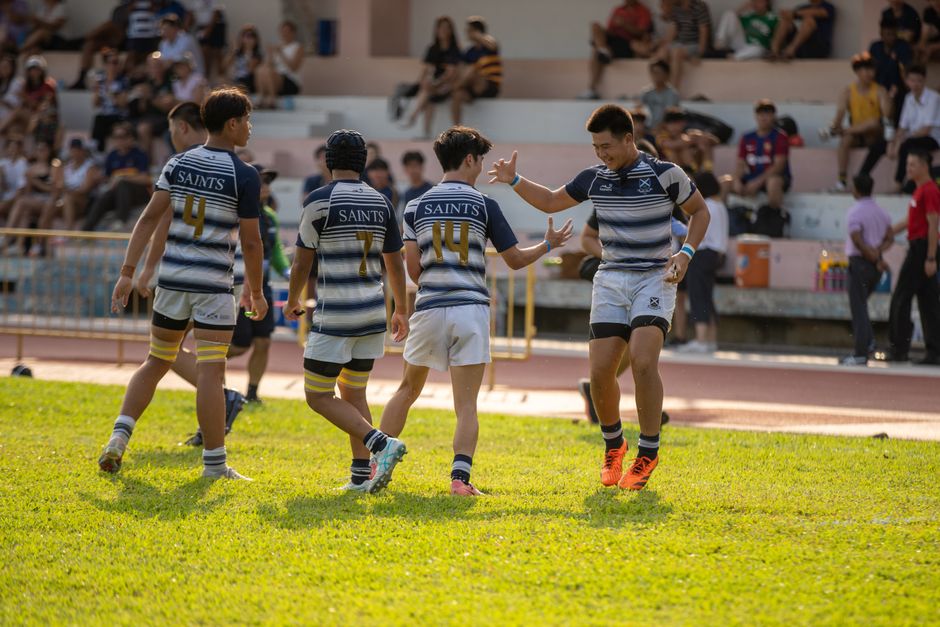
The Wallabies have produced one of the most dramatic victories in recent Test rugby history, defeating world champion South Africa 42-38 in Perth after being reduced to just 11 players in the dying minutes of a match that descended into utter chaos. A crowd of 54,678 at the ground witnessed Australia reclaim the Mandela Challenge Plate in extraordinary circumstances, having led comfortably before a stunning collapse of discipline threatened to undo everything they had built.
A Stunning Lead Wiped Out by Four Yellow Cards
For the first 70 minutes, Australia were largely in command. They led 24-17 at half-time and continued to push their advantage in the second half, eventually stretching their lead to 42-17 — a scoreline that suggested a comfortable victory was well in hand. Then everything unravelled.
Referee Andrea Piardi issued four yellow cards to Australian players in the final stages, triggering one of the most chaotic endings seen in Test rugby. Captain Harry Wilson was the first to walk, sin-binned for a high shot on Malcolm Marx in the 69th minute. Shortly after, Ryan Lonergan was sent to the bin, with the Springboks simultaneously awarded a penalty try for an infringement — cutting Australia's lead to 42-24 in a matter of moments.
Joseph-Aukuso Suaalii was next to go, dismissed for an offside play, and the Springboks capitalised immediately, scoring a converted try through Morné van den Berg to further close the gap. With the match seemingly in the balance, what appeared to be a match-sealing intercept try from Tom Wright in the 76th minute was denied — the score disallowed because Hunter Paisami was ruled to have made contact with the head of Sacha Feinberg-Mngomezulu in an earlier passage of play. Paisami was yellow-carded, leaving Australia with just 11 men on the field.
South Africa capitalised further when prop Ox Nché crashed over for a converted try in the 78th minute, trimming the deficit to just four points. But the undermanned Wallabies somehow held firm, clinging on through two of the most nerve-shredding minutes imaginable to secure a famous win.
Adding to the surreal atmosphere, referee Piardi was forced to communicate with his fellow match officials via a mobile phone after the standard communications system malfunctioned — an almost farcical detail in a match already overflowing with them.
The Dominant First Seventy Minutes That Made It Possible
While the finish grabbed the headlines, Wilson was quick to credit the performance that put the Wallabies in a position to win in the first place.
"It was a crazy last 10 minutes," the skipper said after the final whistle. "But that first 70 minutes… the way we played, we implemented our game plan. We did exactly what we wanted. We stepped up in the physical battle and I'm so proud of the boys."
Len Ikitau, restored to his preferred outside centre position, was a standout in the first half, crossing for two tries. His shift to the number 13 jersey pushed Suaalii to the wing — a role the former NRL star handled with considerable composure. Wilson himself added a try in the second half, as did Max Jorgensen, while Lonergan contributed with the boot, landing two conversions and two penalty goals to help Australia build the sizeable buffer that ultimately proved just enough.
It was the kind of dominant first-half Wallabies performance that has been seen in glimpses — a team capable of imposing themselves physically and executing a structured game plan, even if the finish tested every nerve in the stadium.
Context: A Changed Springbok Side After Historic All Blacks Series
South Africa arrived in Perth off the back of a significant achievement — a series victory over New Zealand in a four-Test campaign billed as rugby's greatest rivalry. That physical and emotional burden may well have been a factor in Perth, with the Springboks making 13 changes to the starting line-up that had defeated the All Blacks 43-28 in Baltimore earlier in the month.
For Australia, this result carries real significance as part of a landmark year for the nation's sport — a moment that will be noted among the notable achievements in 2024 in Australian sport. The Wallabies last held the Mandela Challenge Plate in 2022, which was also the last time they had beaten South Africa on home soil.
What's Next for the Wallabies
Australia's attentions now turn to New Zealand, with the first of two Bledisloe Cup Tests scheduled for Auckland on 10 October. The second Test of that series returns to home soil, to be played in Sydney on 17 October. Whether Australia can back up Saturday's stunning performance against another of the world's elite sides will be the next great test of where this team truly stands.