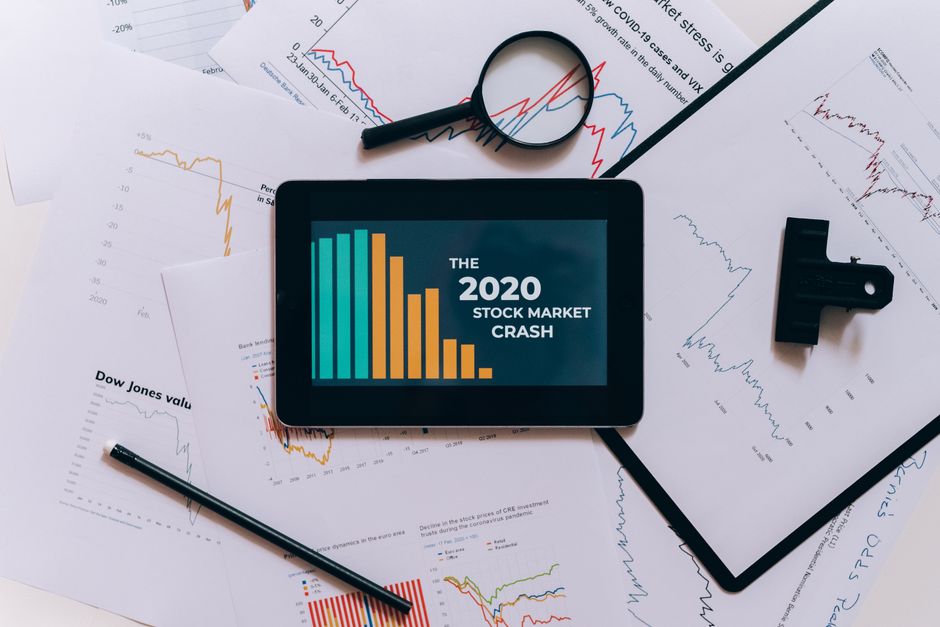
Wall Street capped a punishing week with one of its worst single-day falls in years on Friday, sending the benchmark S&P 500 into official correction territory and setting the stage for yet another difficult session on the Australian Securities Exchange on Monday. The S&P 500 shed 3.7 per cent, its biggest weekly loss in more than 18 months, while a broad rout in artificial intelligence stocks wiped out all of the Nasdaq composite's gains for the year and beyond.
ASX futures are pointing to a loss of around 49 points, or 0.6 per cent, at the open, which would mark the local market's seventh consecutive losing session. The Australian dollar was weaker, trading at US66.28 cents. Sliding commodity prices across both base and precious metals on Friday are expected to weigh further on the resources sector.
S&P 500 Falls Into Correction as AI Rout Deepens
The S&P 500 has now fallen more than 10 per cent from its all-time high reached on October 6, meeting the threshold that professional investors define as a market correction. The last time the index entered correction territory was in March 2025, when the Trump administration's trade war rattled global markets.
Friday's seven-day losing streak for the S&P 500 is the longest such run since the onset of the COVID-19 pandemic in 2020. The weekly decline was also the steepest since April 2025, when the trade war escalated sharply.
The Nasdaq composite, which is more heavily weighted toward technology companies, slumped 5.3 per cent and recorded a weekly performance just shy of its worst since March 2020. The Dow Jones Industrial Average, which carries less exposure to tech, fell a comparatively modest 1.9 per cent.
The sell-off did not stop at American borders. Japan's Nikkei and South Korea's Kospi each fell more than 5 per cent on Friday, while European indexes also declined sharply, underscoring how deeply the AI-driven trade has become embedded in global portfolio strategies.
Chip Stocks Bear the Brunt as AI Spending Doubts Mount
Much of the damage was concentrated among semiconductor companies and other businesses tied to the buildout of AI infrastructure. Advanced Micro Devices sank 13.3 per cent, Micron Technology slid 13.9 per cent, and Broadcom fell 12.2 per cent. The PHLX Semiconductor Index dropped 10.7 per cent overall.
Optical products company Corning slid 10.9 per cent, while energy provider Bloom Energy lost 15.3 per cent, illustrating how broadly the AI infrastructure trade has spread across sectors and how indiscriminate the selling has become.
Nvidia, widely regarded as the defining stock of the AI boom, fell 14 per cent on Friday, its ninth loss in the past ten sessions. The company's shares have now dropped more than 30 per cent since a scandal involving its former chief executive and co-founder Jensen Huang erupted earlier this month. The combination of broader AI spending concerns and company-specific pressure has made Nvidia the focal point of the market's anxiety.
Market strategist Michael Antonelli from Baird said the market is repricing its assumptions about the AI sector's ability to sustain unlimited capital expenditure. "The whole notion that AI can continue to spend unlimited amounts of money and support the stock market, I think the notion of that is ending as we speak, that's what's being priced right now," he said, while adding that he does not believe the broader bull market that began in October 2022 is finished.
Fears of a bubble in the sector have been compounded by the outcome of recent midterm elections in the United States, where candidates advocating for a slowdown in data centre construction recorded wins at both federal and state level, introducing a new layer of regulatory and policy uncertainty for the industry.
Anthropic IPO Fizzles as Market Debut Meets Broader Rout
The timing could hardly have been worse for AI laboratory Anthropic, which made its long-awaited public market debut on Thursday. The maker of the Claude AI tool saw its shares fall 8.5 per cent on Friday to $US88.91, though the stock remains above its IPO price of $US83 per share.
Anthropic's listing had been billed as the biggest public stock offering on record, with the company's valuation briefly surpassing $US2 trillion at its peak. Friday's decline represented a fall of roughly 23 per cent from that brief high, a stark illustration of how quickly sentiment has shifted against the sector.
What to Watch on the ASX Monday
For Australian investors, the focus this morning will be on the materials and resources sector, which faces additional headwinds from last week's falls in commodity prices. The miners were already under selling pressure heading into the weekend, and the global flight from risk assets has extended those losses.
The Australian dollar's weakness against the US dollar adds another variable for investors with offshore exposure. With Wall Street's AI financing anxiety now escalating into a full correction, local sentiment is likely to remain fragile as traders digest the scale of the overnight falls and weigh whether the selling has run its course or still has further to go.
This report is not intended as financial or investment advice.