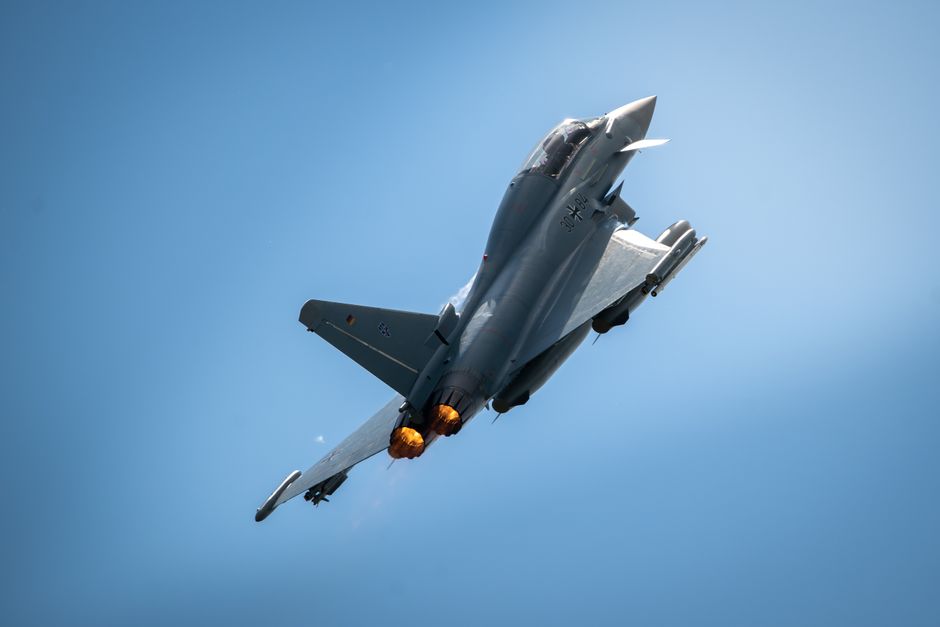
The United States military carried out its 12th consecutive night of strikes against Iran on Wednesday, local time, as the conflict over the Strait of Hormuz deepened, with both sides increasingly targeting civilian infrastructure and diplomatic efforts showing little sign of progress.
US Central Command said the latest wave of attacks was aimed at further degrading Iran's capacity to threaten civilian mariners and commercial vessels passing through the strategically vital waterway, through which roughly a fifth of the world's traded oil and gas flowed before the war began.
Trump Threatens Bridges and Power Plants
Earlier on Wednesday, President Donald Trump issued a stark warning on social media, declaring that the US would destroy one bridge or power plant for every Iranian attack on a ship in the strait. "From this point forward, any time the Islamic Republic of Iran shoots at a ship in the Strait of Hormuz, whether it be by Missile, Rocket, Drone, or any other device or weapon, the United States will bomb and destroy ONE BRIDGE OR POWER PLANT," Trump wrote.
Iranian state media reported that US missiles struck locations near the western Iranian cities of Ahvaz, Ramshir and Andimeshk late Wednesday. Two people were killed in a separate US missile strike in the border town of Shalamcheh, according to Iranian state media reports published early Thursday.
Iran's Foreign Minister Seyed Abbas Araghchi responded defiantly, posting on social media that his country would adopt an "eye for an eye" doctrine. "Any aggression against Iran, including our infrastructure, will compel a powerful and decisive response," he wrote.
Civilian Infrastructure Under Fire Across the Region
The conflict has spread well beyond direct military targets. Iran has responded to American strikes by attacking energy infrastructure and desalination plants — facilities that supply drinking water — in neighbouring Gulf states. International law generally prohibits attacks on such civilian infrastructure unless it is being used for military purposes.
Military officials in Kuwait confirmed on social media that their air defences had been activated to counter what they described as hostile drone attacks linked to Iranian aggression. The escalating regional spillover has raised alarm among Gulf nations heavily dependent on desalination for fresh water supplies.
Iran-backed Houthi rebels in Yemen have also threatened to extend the conflict's reach, with new warnings that they will target Saudi shipping in the Red Sea — putting yet another critical global trade corridor at risk. For more on the evolving situation in the strait, see our earlier coverage of the US strikes on Iran as Tehran declared the Strait of Hormuz closed.
Economic Toll Mounts as War Costs Hit $37.5 Billion
The wider economic damage from the conflict is accelerating. Benchmark Brent crude oil climbed above $93 a barrel — up from under $72 at the start of the month before hostilities intensified — with petrol prices also rising sharply. The timing is politically sensitive for the White House, with US midterm elections approaching this northern autumn.
Defence Secretary Pete Hegseth told a Senate hearing on Tuesday that the United States had spent an estimated $37.5 billion on the war to date. President Trump separately travelled to Dover Air Force Base on Wednesday for the solemn arrival of the remains of four US service members killed in the conflict.
Iran has maintained that it holds sovereign rights over the Strait of Hormuz, including the authority to manage traffic and potentially levy fees — a position directly at odds with the US-enforced transit route that Washington says must remain open and toll-free. Peace talks have stalled and a prior ceasefire agreement has collapsed, leaving both sides entrenched as the ceasefire breakdown continues to drive the fighting into its second week of sustained strikes.
With no diplomatic breakthrough in sight and civilian populations in multiple countries now directly affected, pressure is growing on both Washington and Tehran to find a path back to negotiations before the conflict widens further.