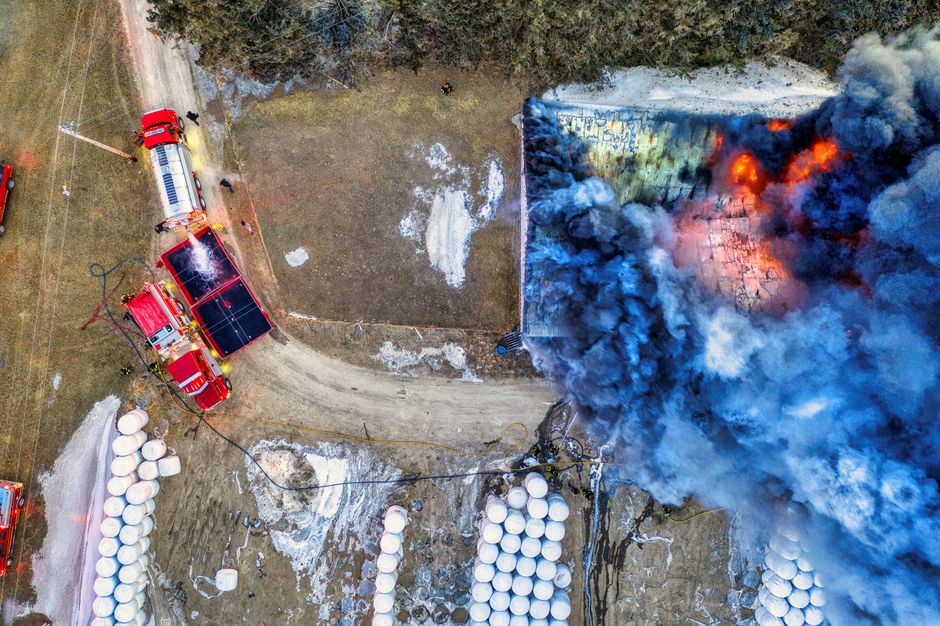
Ukraine has struck two more warehouses belonging to Wildberries, Russia's largest online retailer, with drone attacks on facilities in the southern Russian cities of Krasnodar and Nevinnomyssk, the company's chief executive confirmed on Wednesday. The strikes mark a further escalation in Kyiv's campaign of deep strikes targeting Russian infrastructure, following a deadly attack on the same company just days earlier.
What Happened: Strikes, Casualties and Footage
Tatyana Kim, the co-founder and head of Wildberries, confirmed both attacks via her Telegram channel, describing the human and operational toll on the company's workforce and business partners. Dramatic footage circulating on social media showed enormous plumes of smoke rising above the Krasnodar site.
The regional governor in Krasnodar confirmed that one young woman had been killed in the attack, with a further three people receiving hospital treatment. The full extent of the damage and any disruption to customer deliveries was not immediately clear.
It follows a strike last Saturday in which eight Wildberries workers were killed, fires broke out across warehouse facilities and the company's operations were significantly disrupted. Wednesday's attacks extend what is becoming a sustained targeting of one of Russia's most prominent commercial brands.
"There are no words to describe all the feelings and emotions caused by the attacks on ordinary people, on our employees, on all of us who are simply doing our jobs," Kim said in a statement published to Telegram following the latest strikes.
Ukraine's Justification — and the Kremlin's Denial
Ukrainian President Volodymyr Zelensky addressed the strikes directly on Wednesday, describing the targeted sites as logistics hubs used to supply Russian forces with drone components and other military equipment. Kyiv's broader position is that it is striking companies and infrastructure supporting Russia's war machine, even as Ukraine's own cities face relentless bombardment. Russia has similarly targeted Ukraine's logistics networks, as well as its energy infrastructure and power grid.
The Kremlin has rejected Ukraine's characterisation of Wildberries' role, denying that the company handles military supplies. Moscow has not confirmed the scale of damage from either Wednesday's strikes or the earlier Saturday attack.
The ongoing cycle of strikes and counter-strikes between the two countries has increasingly brought the war into the daily lives of ordinary Russians, with attacks on a household-name retailer representing a visible new front in Ukraine's strategy.
Economic Fallout and the Wildberries Business
Wildberries is often referred to as Russia's equivalent of Amazon — one of the country's biggest private employers, having grown from a modest online clothing reseller sourcing from European catalogues into a sprawling marketplace hosting thousands of third-party vendors. Its shares are not publicly traded.
The attacks rattled broader investor confidence in the Russian e-commerce sector. Shares in Wildberries' main rival, Ozon, fell 2.3% on Wednesday afternoon amid concern that it could also become a target, though the stock recovered somewhat from earlier session lows.
Kim said the company was working to redistribute goods across its warehouse network to protect supply chains and support partner sellers. She acknowledged, however, that Wildberries' insurance policies contained no provision for acts of "terrorism and sabotage", leaving the company to bear losses while seeking government relief.
An e-commerce industry lobby group, AUREK, separately called on the Russian government to allow a six-month deferral of tax payments for businesses that had suffered losses as a result of the strikes. Kim said the company was also seeking government assistance in the form of tax breaks and other financial support for affected sellers and logistics partners.
A New Phase in Ukraine's Deep-Strike Strategy
The repeated targeting of Wildberries warehouses signals a deliberate shift in Ukraine's approach — moving beyond purely military targets to strike at the commercial and logistical infrastructure underpinning Russia's war economy. By hitting a retailer embedded in everyday Russian consumer life, Kyiv appears intent on making the consequences of the war tangible for the broader Russian population, not just those near the front lines.
Wildberries has not released an official statement on the cumulative scale of the damage across this week's and last weekend's attacks.