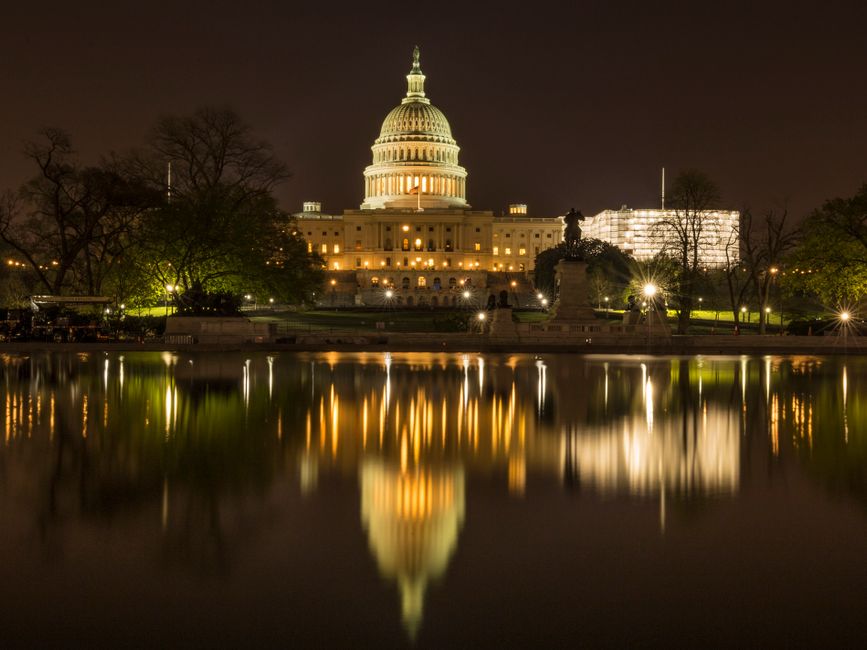
Democrats have seized full control of the United States Congress in a sweeping midterm election result widely described as a brutal rejection of President Donald Trump, delivering a political earthquake that carries profound consequences for the global economy and for Australia's already pressured household budgets.
The results, confirmed in the early hours of Wednesday morning Sydney time, saw Democrats flip seven Republican-held Senate seats across Michigan, Maine, Iowa, Kansas, Ohio, North Carolina, South Carolina and Texas, while also securing a commanding majority in the House of Representatives, potentially their largest in almost two decades.
A Historic Rebuke of Trump
Trump had urged voters to treat the midterms as a referendum on his presidency. By any measure, that referendum produced a damning verdict. Exit polling found that 43 per cent of midterm voters said one of their primary motivations was to express opposition to Trump, whose approval rating on election day was lower than that of any president in nearly two decades.
Remarkably, 71 per cent of voters, including 41 per cent of Republicans, said there was insufficient congressional oversight of the president, citing corruption, affordability, immigration and the ongoing war in Iran as key concerns.
The results produced some genuinely historic outcomes. In Michigan, Abdul El-Sayed, the son of Egyptian immigrants, defeated Republican Mike Rogers to become the first Muslim senator in United States history. In South Carolina, a state Trump carried by nearly 18 percentage points in 2024, paediatrician Annie Andrews became the first Democrat to win a Senate seat there since 1998, defeating Trump's personally endorsed candidate. In Texas, Democrat James Talarico unseated scandal-plagued Republican Attorney General Ken Paxton in a state Trump won by 14 points just two years ago.
Trump's response on social media was swift and defiant, claiming he was not on the ballot and that Republicans would have won in a landslide had he been. The claim sat uneasily with his earlier exhortation that voters treat the election as a direct judgement on his leadership.
What the Midterms Mean for the World Economy
For economists and central bankers watching from abroad, the political shift in Washington carries significant implications, though not necessarily straightforward ones. Much depends on a factor that has become a defining feature of the Trump era: sheer unpredictability.
Reserve Bank of Australia Governor Michele Bullock identified unpredictability as the worst possible environment for a central bank as far back as May last year, when she described the trade situation created by Trump's tariff announcements as not merely uncertain but "actually unpredictable." That assessment has only grown more relevant.
One potential upside of a Democrat-controlled Congress is fiscal constraint. With both chambers now in opposition hands, Trump's appetite for deficit spending, against a backdrop of US government debt surpassing 40 trillion dollars, may be curbed. Rising yields on government debt have been a growing problem in bond markets globally, and reduced deficit spending from Washington could ease some of that pressure.
The political positions of Donald Trump on trade, spending and international alliances have consistently unsettled markets since he returned to office. A Congress now positioned to check some of those impulses may provide a degree of stability, though analysts caution that a constrained Trump could also become a more erratic one.
Australia's Rate Dilemma and the Trump Factor
The global uncertainty lands at a particularly sensitive moment for Australian households. The Reserve Bank this week delivered its fifth interest rate increase of the year, adding roughly 500 dollars a month to repayments on a 600,000 dollar mortgage. Three members of the RBA's rate-setting committee voted against the increase, expressing concern that the cumulative effect of previous hikes has not yet fully filtered through the economy.
The standard rule of thumb is that a rate change takes around 12 months to fully work through. That means the February increase is still nine months from full impact, while the September rise is barely six weeks old. A substantial tightening effect remains in the pipeline, independent of anything happening in Washington.
Bullock was candid when pressed this week on whether last year's rate cuts, which brought the cash rate down to 3.6 per cent across three separate moves, had been a mistake. The bank had initially cut in February, then again in May shortly after Trump's "liberation day" tariff announcement, with its own modelling at the time suggesting a sustained trade war could push Australia into recession and lift unemployment by close to two percentage points.
She stopped short of calling it an error, but acknowledged that with hindsight, had the bank known Trump's tariffs would have limited economic effect, the calculus might have been different. The lesson, she implied, was not about bad judgment but about the impossibility of forecasting in a world shaped by a president whose next move is never predictable.
What Comes Next
With Democrats now controlling both chambers of Congress, the immediate legislative agenda in Washington faces significant recalibration. Trump's domestic spending ambitions are likely to face stiff resistance, which could influence global bond markets and the trajectory of US interest rates.
For Australia, the picture remains clouded. The RBA must now navigate the lagged effects of five rate rises, softening consumer spending and a global environment that, even with a Democratic Congress, remains subject to the unpredictable impulses of a president who, as Bullock might gently note, is entirely certain about what needs to be done next.