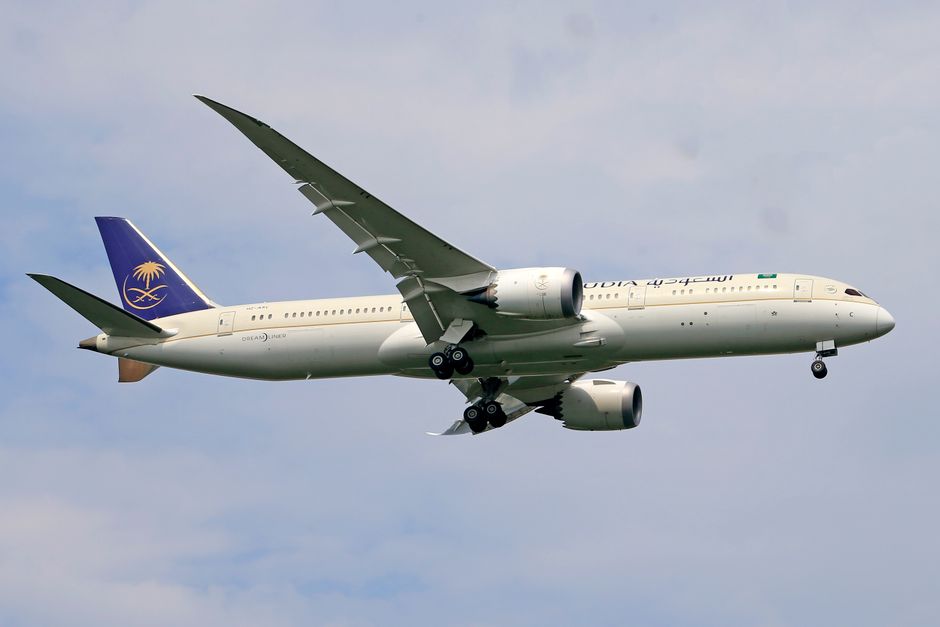
United States President Donald Trump has declared that a landmark civilian nuclear agreement with Saudi Arabia will only proceed if the kingdom agrees to normalise relations with Israel — a significant condition that was not mentioned when the deal was formally announced, throwing the agreement into immediate doubt.
Trump made the announcement via his Truth Social platform, writing that the Saudi nuclear deal "will be approved, but is totally subject to Saudi Arabia joining the very respected and successful Abraham Accords." He also stated there would be "no enrichment of material!" and that the agreement would pertain only to non-military use — a notable reversal of one provision that had reportedly included the possibility of a uranium enrichment facility being built by US companies inside Saudi Arabia.
What the nuclear deal involves
The agreement, signed by US Secretary of Energy Chris Wright and his Saudi counterpart Prince Abdulaziz bin Salman, is designed to establish a civilian nuclear program in Saudi Arabia. It would generate billions of dollars for American companies and was seen as a significant diplomatic achievement for the Trump administration.
The deal still requires approval from the US Congress, where it has already drawn criticism from politicians on both sides of the aisle, as well as from Israeli officials. Their concern centres on the risk that a nuclear program in Saudi Arabia could eventually be redirected toward weapons development — a fear that has long shadowed any discussion of nuclear proliferation in the Middle East.
US Secretary of State Marco Rubio sought to address those concerns, stating that "any agreement that we're going to make with any country in the world on civil nuclear energy is going to be one that will have safeguards in place to ensure that it can't be turned into a weapons program." However, reports indicate the deal exempts Saudi Arabia from the kind of rigorous international inspections required of other countries in similar agreements, including the United Arab Emirates — with sensitive inspections instead to be carried out by American teams.
The Abraham Accords condition
Trump's Truth Social post caught many observers off guard, given the condition had not been stated publicly when the deal was announced by the US Energy Department. The White House, however, insisted the Saudis were aware of the requirement all along.
"The president is always the final dealmaker, as you know," White House press secretary Karoline Leavitt told reporters, adding that Trump "feels very strongly" about the Abraham Accords and would continue to push for Saudi participation. She said the US would continue discussions with Saudi counterparts to finalise an agreement that included recognition of Israel.
The Abraham Accords, brokered during Trump's first term in office, saw several Arab nations — including the United Arab Emirates and Bahrain — establish formal ties with Israel. Saudi Arabia, however, has consistently refused to join, maintaining that it will not recognise Israel without a concrete and credible pathway toward the creation of a Palestinian state.
Israeli Prime Minister Benjamin Netanyahu welcomed the prospect of Saudi recognition, describing it as a potential "historic leap" for peace in the Middle East. Saudi officials had not publicly responded to Trump's social media post at the time of publication.
Experts warn forcing normalisation unlikely to succeed
Analysts are sceptical that the US can pressure Riyadh into a swift reversal of its longstanding position. HA Hellyer, a senior associate fellow at the Royal United Services Institute for Defence and Security Studies in the United Kingdom, said that if Washington "tries to force normalisation on Riyadh, it's not likely to work out very well."
"Would Saudi decide to do a complete 180 on what it has declared for the past three years, or 30 years? Quite dubious," he said.
The stakes are heightened by the broader regional context. The Trump administration is simultaneously pressing hard against Iran's nuclear ambitions, and critics have warned that a Saudi nuclear program — even a civilian one — risks accelerating an arms race in an already volatile region. Saudi Crown Prince Mohammed bin Salman has previously indicated that if Iran were to obtain a nuclear weapon, Saudi Arabia would seek to develop its own. Last year, the kingdom also signed a mutual defence pact with nuclear-armed Pakistan, adding further weight to those concerns.
What happens next
The deal now faces an uncertain path forward. It must pass congressional review, where bipartisan opposition has already emerged. Trump's sudden imposition of the Abraham Accords condition — publicly, via social media, a day after the signing — has added a further layer of complexity to what was already a geopolitically sensitive arrangement.
The White House confirmed it would continue talks with Saudi counterparts, but gave no timeline. With Saudi Arabia showing no sign of abandoning its position on Palestinian statehood, and Trump insisting that recognition of Israel is non-negotiable, it remains unclear whether the multibillion-dollar agreement will ever come to fruition.