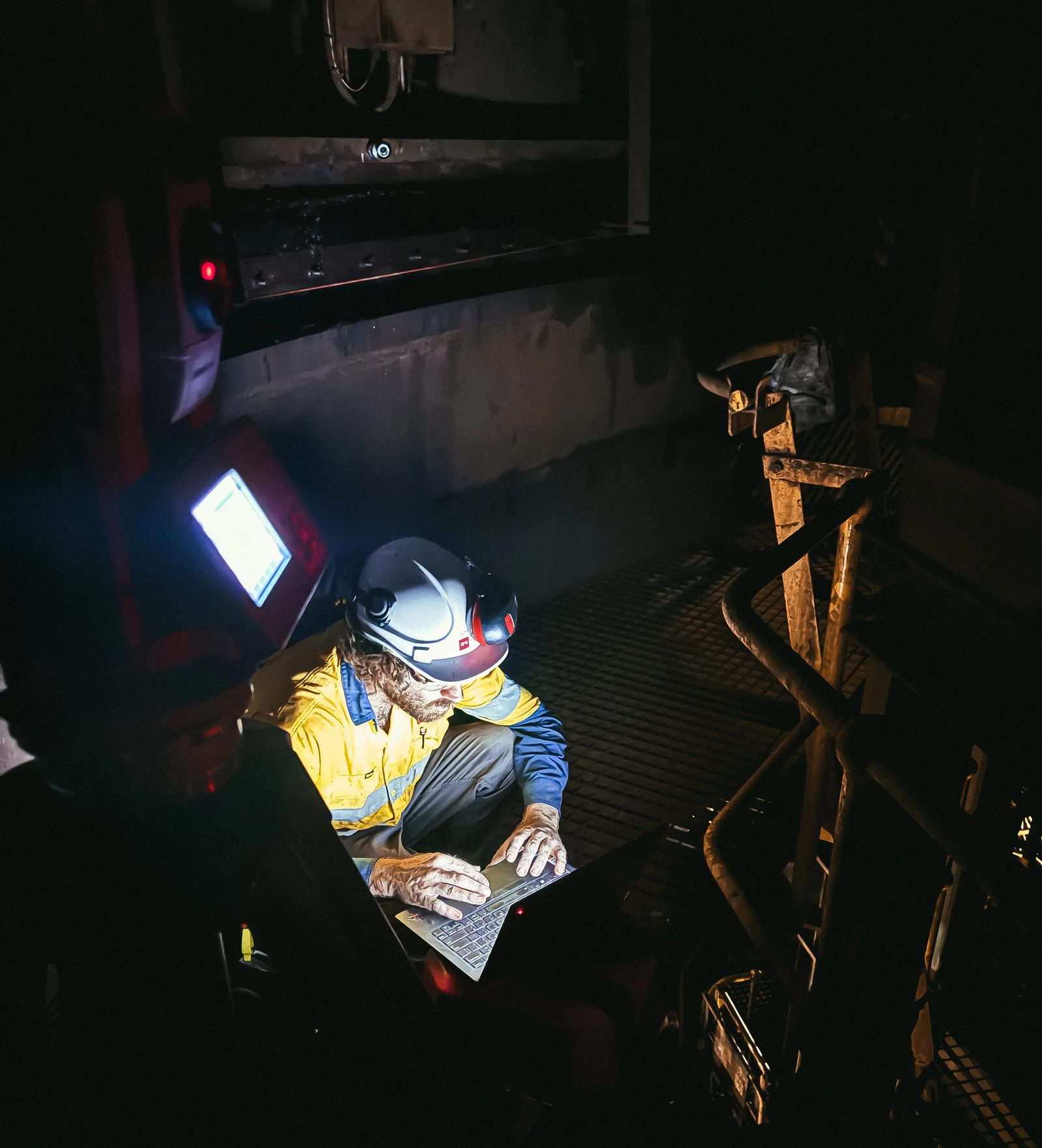
When people think about Western Australia’s booming resource sector, they usually picture huge mines, giant processing plants, and long‑haul trucks rolling across the Pilbara. What they rarely see is the quiet, behind‑the‑scenes work of precision surveying—particularly dimensional control—which quietly ensures that everything fits, functions, and stays safe.
In practical terms,
dimensional control is all about checking that structures, equipment, and components are built and installed exactly where the engineers intended, within tight tolerances. A few millimetres might sound trivial, but in complex mining and industrial projects, that small gap can mean the difference between a smooth commissioning and an expensive rework.
Why millimetres matter in WA’s mines and plants
In WA’s resource projects, you’re often dealing with massive steel structures, pipelines, processing modules, and offshore‑style components. Even if every part is manufactured to specification, subtle shifts in foundations, supports, or fabrication can mean things no longer align on site.
This is where a
dimensional control surveyor steps in. Using high‑precision total stations, laser scanners, and 3D models, they measure and verify positions, alignments, and clearances across the entire project. By catching discrepancies early—at the fabrication yard, during transport, or at the first stages of installation—these surveyors help prevent costly delays, safety issues, and rework in remote locations such as the Pilbara or Goldfields.
For mining and heavy‑industrial operators, dimensional control is no longer a “nice‑to‑have.” It’s a core part of risk management, ensuring that structures, vessels, pumps, and pipelines are positioned correctly and will perform as expected over their operational life.
How precision surveying supports WA’s growth
Western Australia’s resource sector is under constant pressure to build faster, safer, and more efficiently. From iron‑ore expansions to lithium and critical‑minerals projects, operators are pushing the boundaries of scale and complexity.
Dimensional control sits at the heart of this evolution. It provides a single, reliable source of spatial data that connects design, fabrication, and construction teams. Whether it’s aligning a new processing plant, checking a pipeline’s path, or verifying an offshore module’s fit‑up, dimensional control turns technical drawings into verifiable reality on the ground.
Perth‑based surveying firms specialising in dimensional control, such as RM Surveys, bring NATA‑accredited metrology practices to WA’s resource sector, offering tailored reports and traceable measurements that support quality assurance and project certainty.
To the outside world, much of this work remains invisible. But for WA’s resource projects, dimensional control is a quiet yet essential partner—making sure that every screw, beam, and pipe ends up exactly where it should, so the big picture can keep moving forward.
FAQs – Dimensional Control in WA’s Resource Sector
1. What is dimensional control?
Dimensional control is a high‑precision surveying and metrology process that checks whether structures, equipment, and components are built and installed exactly where they should be, within strict engineering tolerances. It is commonly used in WA’s mining, oil and gas, and infrastructure projects to ensure accuracy and fit‑up.
2. How is it different from regular surveying?
Traditional surveying often focuses on land boundaries, topography, and general layout. Dimensional control, by contrast, verifies detailed geometry, alignment, and spatial relationships of fabricated components—like pipes, frames, vessels, and modules—down to the millimetre level.
3. Why is dimensional control important in mining and resource projects?
In mining and heavy‑industrial sites, even small misalignments can lead to costly rework, safety risks, and project delays. Dimensional control helps catch these issues early, whether during fabrication, transport, or installation, so plants and pipelines can be commissioned smoothly and operate safely.
4. Where in Western Australia is it most commonly used?
Dimensional control is especially important in WA’s remote mining and energy hubs, such as the Pilbara and Goldfields, where large processing plants, pipelines, and offshore‑style infrastructure must be assembled under challenging conditions. Perth‑based surveying firms support these projects with on‑site and NATA‑accredited metrology services.
5. What tools do dimensional control surveyors use?
Surveyors typically use high‑accuracy total stations, laser scanners, laser trackers, and 3D modelling software to capture and verify measurements. These tools allow them to compare “as‑built” conditions with the original design, often in real time, on or near the construction site