Introduction to the Doomsday Clock
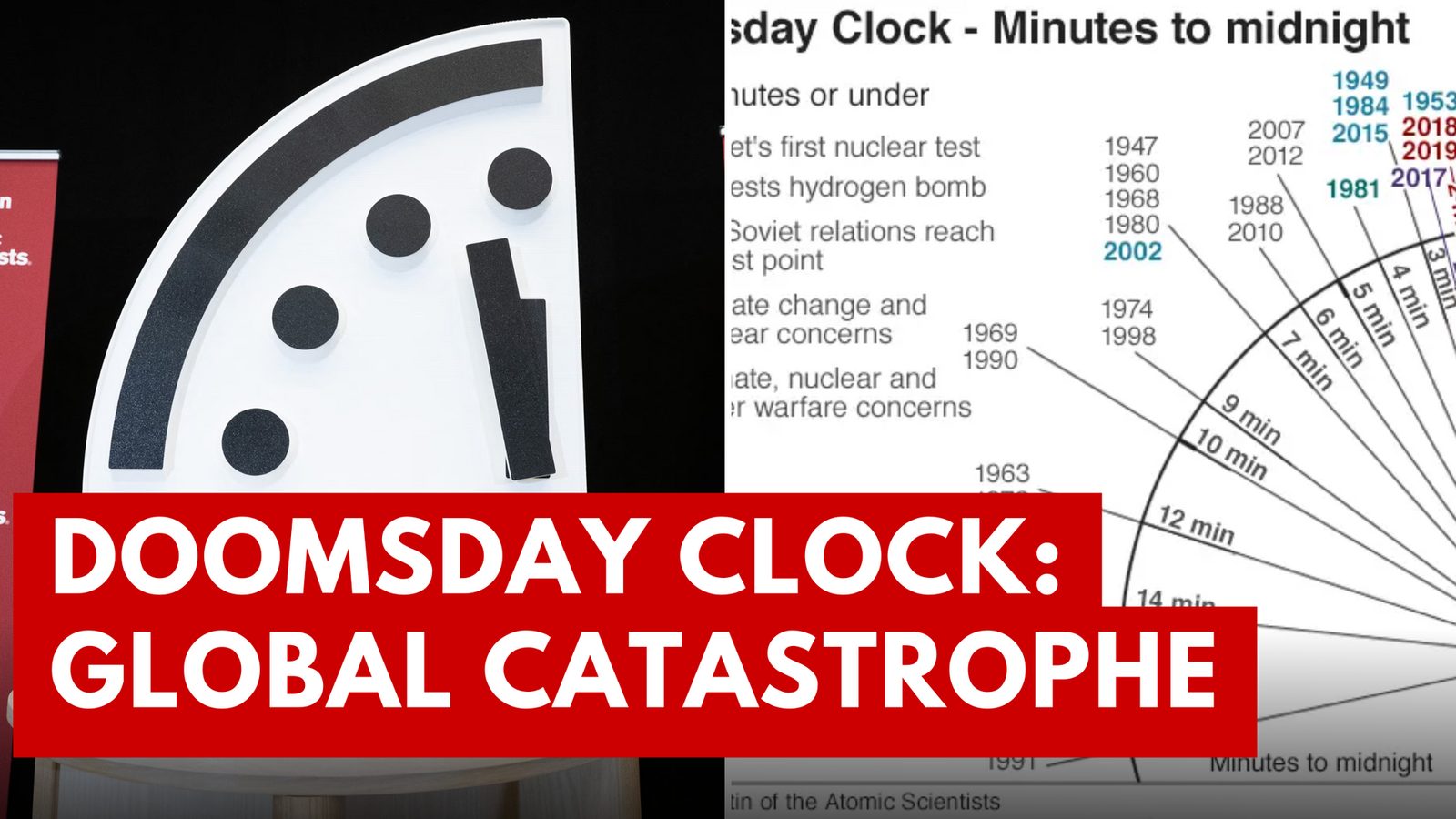
In 1947, the Doomsday Clock made its debut on the cover of the Bulletin of the Atomic Scientists. Created by artist Martyl Langsdorf, this symbolic clock was designed to represent the looming threat of nuclear annihilation. The clock's hands, initially set to seven minutes to midnight, were meant to convey a sense of urgency about the potential for self-destruction due to nuclear weapons.
Over the decades, the purpose of the Doomsday Clock has evolved. While it initially focused on nuclear threats, it now also highlights the existential dangers posed by climate change and emerging technologies. The clock serves as a metaphorical barometer, warning the public about humanity's proximity to catastrophe. It aims to inspire action to mitigate these pressing risks.
The symbolism of midnight on the clock is particularly stark. It represents the hypothetical "end of the world," a point where irreversible damage could occur from nuclear warfare or climate change. By moving closer to midnight, the clock signals increased urgency, urging global efforts to address these critical issues.
Evolution of the Clock
Since its inception in 1947, the Doomsday Clock has been adjusted 25 times, reflecting the ever-shifting landscape of global threats. Initially set at seven minutes to midnight, the clock's hands have inched both forward and backward in response to world events. For instance, in 1991, amid the hopeful winds of the Cold War's end, the clock was set to 17 minutes to midnight, the farthest from doomsday it has ever been. This adjustment mirrored the optimism following the Strategic Arms Reduction Treaty (START) between the U.S. and Soviet Union, which aimed to reduce nuclear arsenals.
However, as of January 2025, the clock has reached its closest point to midnight at 89 seconds, highlighting escalating global threats such as nuclear tensions from the Russia-Ukraine conflict, climate change, and unregulated advancements in artificial intelligence. These adjustments are not arbitrary; they are determined by the Bulletin's Science and Security Board and reflect a confluence of factors, including geopolitical instability and disinformation.
Each change in the clock's time serves as a stark reminder of humanity's precarious position and underscores the urgency for global cooperation to mitigate these existential threats.
Global Threats Reflected in the Clock
The Doomsday Clock has been set to 89 seconds to midnight, capturing a convergence of pressing global threats. Foremost among these are nuclear threats, with the ongoing conflict in Ukraine escalating tensions significantly. Russia's revised nuclear doctrine and its military actions have heightened the risk of nuclear confrontation, underscoring a precarious global situation.
Climate change also plays a pivotal role in the clock's setting. The year 2023 marked the warmest on record, with alarming trends such as unprecedented ocean heat content and low Antarctic sea-ice extent. These changes contribute to severe weather events, affecting millions worldwide and leading to economic disruptions, especially in vulnerable regions. Despite progress in renewable energy, the investment in fossil fuels remains substantial, posing a continued threat.
The rise of emerging technologies like artificial intelligence presents additional risks. The potential misuse of these technologies could exacerbate political tensions, as seen in geopolitical hotspots like Taiwan and the Middle East. These factors highlight an urgent need for global action, emphasizing the Doomsday Clock's role as a critical alarm bell for humanity's future.
Impact on Global Action
The Doomsday Clock has not only served as a stark warning but has also acted as a catalyst for political initiatives. By highlighting existential threats, it has spurred legislators like Senator Edward Markey and Representative Ted Lieu, who have advocated for restricting executive powers over nuclear strikes, branding them 'terrifying and unconstitutional.'
Moreover, the Clock has significantly influenced public awareness. Its presence in media and culture has amplified the discourse on nuclear risks and climate change, encouraging broader public engagement. Publications such as The New York Times have increased their coverage, reflecting a rising consciousness about these dangers.
World leaders have also taken concrete actions in response to the Clock's time. At a recent discussion at Georgetown University, figures like Mary Robinson emphasized the necessity for international cooperation, while Juan Manuel Santos underscored the importance of negotiation in resolving conflicts such as the one in Ukraine. These discussions highlight the Clock's role in driving global efforts towards peace and security.
Criticism and Support
The Doomsday Clock, currently set at 90 seconds to midnight, has sparked debate over its fear-mongering potential. Critics argue that by emphasizing threats like wars, climate crises, and the rise of artificial intelligence, the clock may exaggerate the immediacy of existential risks. This portrayal can lead to public anxiety, potentially desensitizing people to genuine issues.
On the other hand, proponents highlight the vital role of scientific communication in raising awareness about existential threats. Established by the Bulletin of the Atomic Scientists, the clock serves as a powerful metaphor urging the public and policymakers to take action against these dangers. It underscores the importance of responsible communication in tackling nuclear and climate challenges.
Striking a balance between urgency and alarmism is crucial. While the clock's adjustments indicate real dangers, they must be contextualized to avoid panic. The Bulletin's approach aims to foster informed dialogue, encouraging proactive measures without inciting fear. This balance is essential to mobilize collective action towards a safer future.
The Clock Today
The Doomsday Clock now stands at a historic 89 seconds to midnight, marking the closest approach to global catastrophe since its inception. This recent adjustment, made in January 2025, underscores the escalating dangers posed by current global events. The Science and Security Board points to several critical factors influencing this shift, including the ongoing war in Ukraine, which continues to heighten nuclear tensions, and the accelerating impacts of climate change.
Recent assessments from the Board highlight the convergence of multiple threats. These include the misuse of emerging technologies like artificial intelligence, which could disrupt global stability, and the spread of misinformation, which complicates efforts to address these existential risks effectively. The clock's current setting acts as a stark reminder of the urgent need for comprehensive action.
Looking ahead, the implications are profound. Without decisive global cooperation, the risks of nuclear escalation, environmental disaster, and technological misuse will likely intensify. The Bulletin of the Atomic Scientists urges world leaders, especially those from major powers, to engage in meaningful dialogue to avert these looming dangers and steer humanity away from the brink of catastrophe.
Frequently Asked Questions
What does the Doomsday Clock represent? The Doomsday Clock is a symbolic representation of how close humanity is to a global catastrophe. It highlights the risks from nuclear threats, climate change, and disruptive technologies. Midnight on the clock symbolizes the "end of the world," serving as a metaphor for potential human-made disasters.
How often is the Doomsday Clock adjusted? The Doomsday Clock is updated annually, though adjustments can occur more frequently based on global events. The Science and Security Board evaluates the world's situation and decides whether a change is necessary.
Who decides the time on the Doomsday Clock? The time is set by the Science and Security Board of the Bulletin of the Atomic Scientists. This group comprises experts in nuclear technology, climate science, and other relevant fields. They assess global threats and determine the clock's position, emphasizing the urgency of addressing these risks.
Understanding the Doomsday Clock's purpose and adjustments helps in grasping the critical need for global cooperation to avert imminent dangers.
Conclusion: The Clock's Urgency
The Doomsday Clock stands as a stark reminder of the interconnectedness of our global community. As we edge closer to midnight, the importance of global cooperation becomes undeniable. Nations must engage in meaningful dialogue, especially the United States, China, and Russia, to mitigate the existential threats of nuclear proliferation, climate change, and technological misuse.
For readers, the call to action is clear: become informed, advocate for sustainable policies, and support initiatives that promote peace and security. Individual actions, when multiplied across communities, can drive the change needed to turn back the clock. Remember, it is our collective responsibility to shape a future where humanity thrives rather than teeters on the brink of catastrophe.
Reflecting on humanity's future, we must ask ourselves what kind of world we want to leave for the next generations. The urgency of the clock's time setting is not just a symbol, but a real prompt for change. Together, we have the power to decide how close we inch toward midnight and what measures we will take to ensure a safer, more sustainable world.