South Korea has confirmed plans to extend its Cheonghae anti-piracy naval unit to waters near the Strait of Hormuz, as two oil tankers and a tugboat caught fire in the strategically critical waterway on Thursday following what Iran's Revolutionary Guard Corps described as mine strikes.
Seoul Commits Destroyer and Drones to Hormuz Mission
South Korea's defence ministry announced Thursday it would deploy a substantial package of naval and air assets to waters near the Strait of Hormuz as part of a mission to protect commercial shipping and secure energy supplies through one of the world's most critical maritime chokepoints.
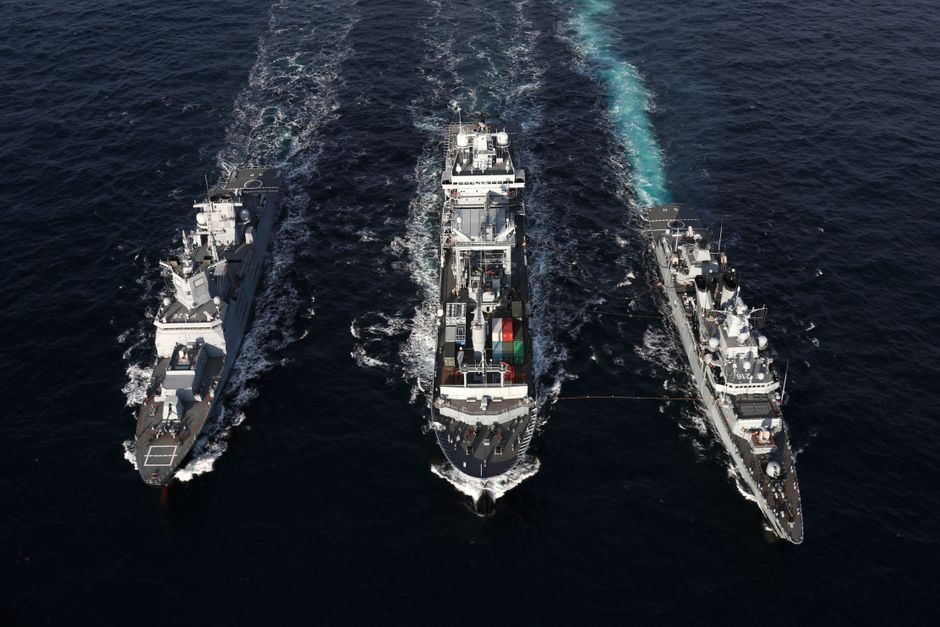
The deployment will include a destroyer, a P-8 maritime patrol aircraft, an explosive ordnance disposal team, unmanned surface vessels, unmanned underwater vehicles, and remotely operated vehicles for underwater exploration, according to reports citing South Korea's official news wire.
The Cheonghae unit currently operates in the Gulf of Aden off Somalia, where it protects commercial vessels from piracy. Expanding its area of operations to the Strait of Hormuz region will require approval from South Korea's parliament, as the unit's existing authorisation is set to expire at the end of this year.
A defence ministry official, speaking on condition of anonymity, stressed the deployment was not a combat mission. "The enhancement of the Cheonghae unit's mission is to protect our citizens and safeguard our economic interests," the official said.
The official added that operations would be confined to open waters south of Oman, and that maritime patrol aircraft would be barred from targeting or monitoring Iranian territory, Iranian territorial waters, or the interior of the strait itself.
Tankers on Fire: IRGC Reports Mine Strikes in the Strait
The announcement came on the same day that two large oil tankers and a tugboat were reported to have caught fire in the Strait of Hormuz. Iran's Revolutionary Guard Corps told local media that the fires broke out during two separate overnight incidents.
"A large oil tanker attempting to pass through the illegal passageway south of the Strait of Hormuz suffered a fire after striking a mine and was brought to a halt," the IRGC said, according to reports from the Iranian Fars news agency.
In a second incident, a supertanker exiting the eastern end of the strait was halted by a large fire. A tugboat that moved in to assist with firefighting also caught fire, the IRGC reported. Reports also indicated that Iran's IRGC navy electronic warfare unit had taken control of two US drones, though details remained limited.
South Korea Insists on Non-Military Role Despite Iran's Warnings
Seoul has been careful to frame its expanded naval presence as purely protective in nature, amid persistent pressure from Tehran. Iran has previously warned South Korea against any deployment to the region following earlier indications that Seoul was weighing a contribution to waterway security.
South Korea's President Lee Jae Myung reiterated in September that his government would not deploy troops in any way that risked military intervention. "We have upheld the principle of non-involvement and non-intervention in the war until now," he said at the time. "And we will continue to uphold it going forward."
The broader context is a deepening crisis in the Strait of Hormuz following the outbreak of the US-Iran war on 28 February. The strait normally carries around a fifth of the world's oil, and the conflict has severely disrupted that flow. The United States has imposed a blockade on Iranian ports and helped tankers navigate the strait, with US Central Command reporting last month that it had assisted Gulf countries in exporting 1.5 billion barrels of oil through Hormuz since the summer.
South Korea, as a major energy importer heavily dependent on Middle Eastern oil, has strong economic reasons to keep the passage open, even as it seeks to avoid being drawn into the conflict itself. The defence ministry's confirmation that the Cheonghae unit will operate independently of allied forces underscores Seoul's intent to chart its own course through the crisis.