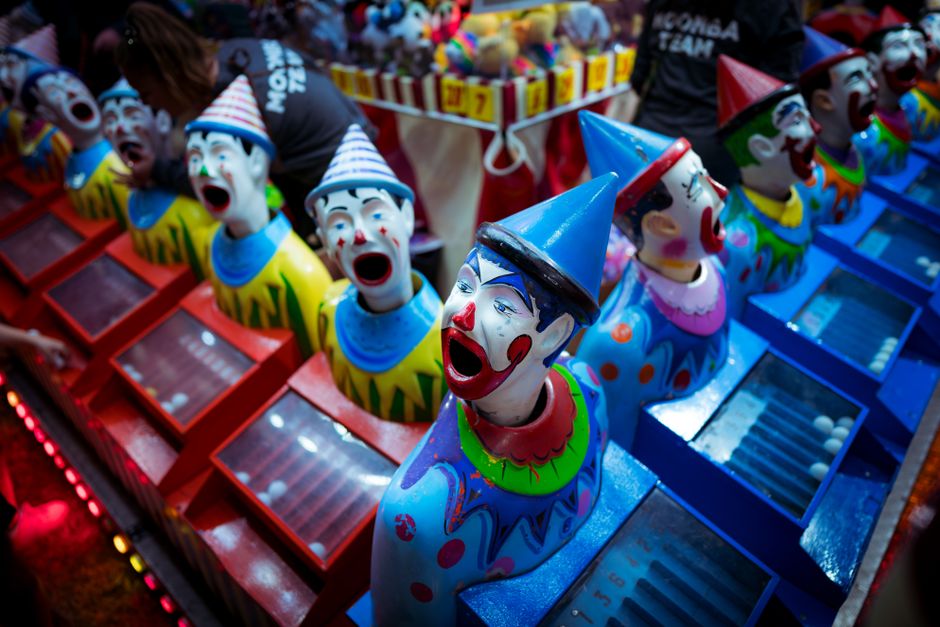
Australia's travelling show families — known as "showies" — are being forced to make hard decisions about whether the annual show circuit remains financially viable, with soaring insurance premiums, surging fuel costs and a persistent shortage of workers combining to squeeze businesses that have in many cases operated across multiple generations.
Insurance and Fuel Costs Biting Hard
Victorian sideshow alley operator Melissa Quay has made the trip north to Queensland for the show circuit her entire life — a tradition her father and grandfather maintained before her. But this year, the financial pressure forced a significant change: she left her caravan, and her daughter, at home.
"We've spent the last four weeks and probably the next four weeks living in a truck instead of living in a caravan to combat the cost," Ms Quay said.
The single biggest financial shock for Ms Quay has been public liability insurance. She said premiums increased fivefold since 2020, jumping from around $10,000 a year to $52,000 — and at one point she was unable to obtain any coverage at all. To absorb the blow, she cut her staff from three workers down to two.
Similar pressures are being felt across the industry. Much like businesses in other sectors weighing their options under financial strain, show operators are being forced to reassess whether continuing on circuit makes economic sense.
Remote Circuits Among the Hardest Hit
The Showmen's Guild of Australasia describes the current environment as "very challenging", particularly for operators travelling remote circuits that can clock up around 15,000 kilometres in a single run.
Guild president Aaron Pink pointed to the Darwin circuit through the Northern Territory as a prime example of the difficulty. "There's not a lot of shows in that run … and it's a long way back," he said, noting that sparse show dates spread across vast distances make it increasingly difficult to justify the fuel expense.
Despite the difficulties, Mr Pink expressed cautious optimism that operators would continue to service smaller regional shows, even if the economics became tight. "A show movement out in western Queensland and western New South Wales is something young families really look forward to," he said.
Staff Shortages Add to the Pressure
Beyond costs, finding reliable staff has become a significant obstacle. Lifelong showman Darrell Brown, who operates a bust-a-balloon stall, said the contrast with earlier decades is stark.
"Once upon a time, in the late '90s, people have been coming down looking for work all the time," he said. Today, that pipeline has dried up.
Mr Brown said his own children, having finished school, are currently helping out at his stall. But his brother, who operates large rides including a Ferris wheel, has not been so fortunate. With only himself and his wife available, the physical demands of maintaining and operating the equipment have become unmanageable.
"He needs some guys to help him," Mr Brown said simply.
A New Generation Keeps the Tradition Alive
Despite the challenges facing the industry's veterans, younger generations of show kids appear eager to carry the tradition forward. Nine-year-old Chase Lovell, a seventh-generation showman, was busy demonstrating the mechanics of a fishing stall at the Charleville Show — explaining prize structures and duck-catching techniques with the confidence of someone who has grown up in the trade.
Chase and his sister Peyton have already travelled to Charleville, Longreach, Winton, Darwin and Mount Isa this year alone, embodying the itinerant spirit that has defined show families for well over a century.
Whether the economics allow that spirit to survive into the next generation remains an open question — one that operators across the country are actively weighing as each new show season approaches.