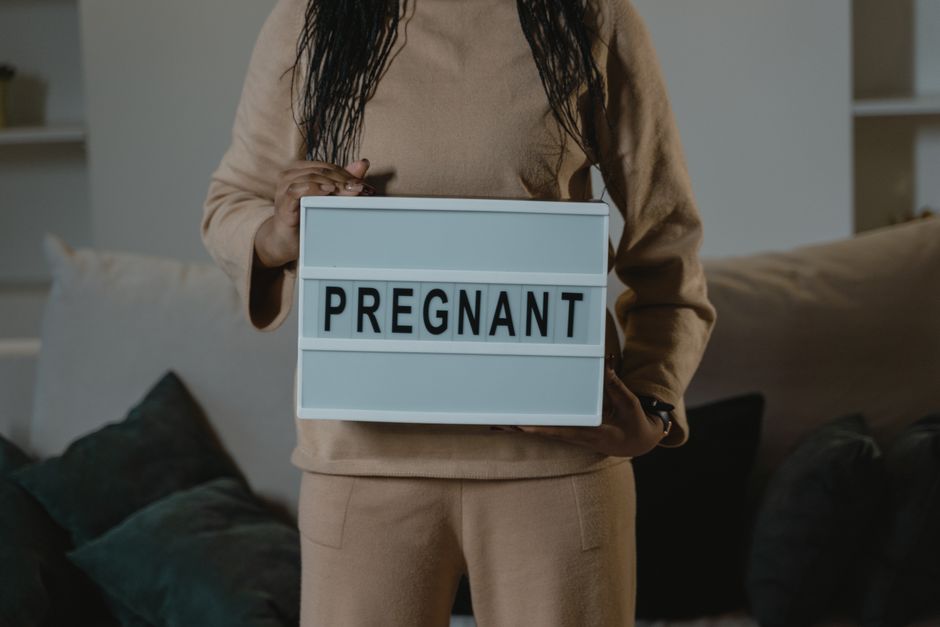
A British television presenter and GP who announced her pregnancy live on air at the age of 59 has fired back at critics, arguing that women who become mothers later in life are held to a standard that older fathers rarely face. Dr Renee Hoenderkamp, a co-host of a GB News weekend program, revealed during a live broadcast on 14 November that she is 12 weeks pregnant with her third child, conceived through IVF using eggs she froze in her 30s.
The announcement visibly stunned her fellow panellists. Hoenderkamp is already a mother to a 37-year-old son and an eight-year-old daughter, and her partner, Colin Natali, will be 66 when the new baby arrives.
Backlash and the double standard
While Hoenderkamp received considerable public support after the announcement, she also attracted hostile messages, with some people describing her pregnancy as "disgusting", "revolting" and "selfish". In a written response to the criticism, she argued that the reaction laid bare a deeply ingrained double standard in how society treats older parents.
"Older fatherhood has long been treated as an eccentricity, sometimes even an achievement," she wrote. "Yet when a woman chooses to have a baby at 59, the reaction borders on moral outrage."
Hoenderkamp pointed out that relatively little public discussion had focused on the fact that her partner was already 57 when their eight-year-old daughter was born, and is now 66. "Society rarely objects when men become fathers at 70 or 80," she wrote. "The double standard is hard to miss."
Questioning the scrutiny placed on older mothers
Hoenderkamp also challenged the assumption that her pregnancy was somehow a selfish act, noting that the same logic is never applied to younger women who choose to have children.
"Many people have suggested I am having this baby 'for me'. Well, isn't that true of almost every woman who deliberately sets out to become a mother?" she wrote. "We don't ordinarily demand that women in their 20s or 30s justify their desire for children as an act of altruism. Why should that desire suddenly become morally suspect simply because a woman is older?"
She also reflected on how her perspective on parenthood had shifted significantly since she first became a mother at 21. "At 21, I had youth on my side but far less understanding of what motherhood required of me," she wrote. "Nearly four decades later, while I have fewer years ahead of me, I also have the wisdom, patience and freedom to make the most of every moment."
Confronting questions about longevity
Hoenderkamp openly acknowledged one of the most common concerns raised by critics: whether she would live long enough to see her child grow up. She described it as a legitimate consideration she had thought carefully about, while pushing back on the idea that uncertainty about the future should disqualify anyone from parenthood.
"I cannot promise I will be alive when my daughter turns 30, or even 20. But who can?" she wrote. "Illness and tragedy do not politely wait until someone reaches pensionable age."
She argued that the possibility of an earlier bereavement did not automatically outweigh the value of a child growing up in a loving and stable family. Her baby, she said, would arrive into a household where the child was already wanted and loved.
A growing conversation about later-life pregnancies
Hoenderkamp's announcement comes as several high-profile women have recently shared news of pregnancies later in life. Hollywood actor Hilary Swank announced last month that she is expecting her third child at 52, sharing the news in a video alongside her husband and their three-year-old twins. The trend has reignited public debate about the medical, ethical and social dimensions of later-life parenthood, particularly for women navigating both personal choices and public scrutiny.
For Hoenderkamp, the core of her argument remains straightforward: the right to become a parent should not carry a different moral weight depending on whether the person making that choice is a woman or a man.