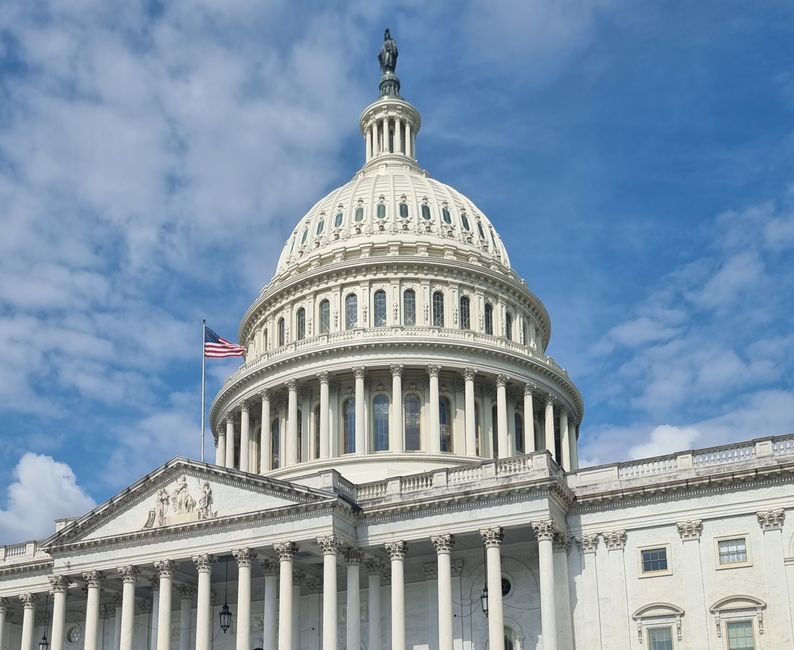
The 2026 US midterm elections are shaping up as one of the most consequential political tests of Donald Trump's presidency, with Democrats targeting control of the House of Representatives and Republicans fighting to defy a well-established historical pattern that punishes governing parties mid-term. Voting is scheduled for November, and the outcome could fundamentally alter the balance of power in Washington for the remainder of Trump's time in office.
What's at Stake in the 2026 US Midterm Elections
Every two years, Americans elect all 435 members of the House of Representatives, while roughly one-third of Senate seats are also contested. The two chambers carry distinct but complementary responsibilities: the House holds the power to initiate tax legislation and to impeach officials, while the Senate confirms presidential appointments including judges and cabinet members.
For the Democratic Party (United States), the midterms present an opportunity to demonstrate that widespread dissatisfaction with Trump can be converted into real electoral gains — and to begin laying the groundwork for the 2028 presidential race. For Republicans, the challenge is to defy a historical tide that has dragged down virtually every sitting president's party at the halfway mark of a term.
Primaries are already under way. The first were held in March, with Alaska, Florida and Wyoming among the states to have held their contests in recent weeks.
The Historical Pattern Working Against Trump
History is not on the Republicans' side. Presidents routinely suffer significant losses in the House during their first midterm, a trend analysts attribute to the natural ebbing of enthusiasm that follows a presidential election win.
"People get excited about a potential candidate in the main year election, then there's always some wearing off of the bloom," said Wesley Widmaier, a professor at the Australian National University's Department of International Relations.
The numbers bear this out. During Trump's first term, Republicans lost around 40 House seats in the 2018 midterms. Former President Barack Obama famously described his party's 2010 midterm losses as a "shellacking," according to Brendon O'Connor, a US politics expert from the University of Sydney, who noted that most recent presidents have suffered significant setbacks in the House two years into their presidency.
Unlike in Australia, voting in US elections is not compulsory, and midterm contests typically attract lower turnout and less media attention than presidential election years — though experts say their political consequences are anything but minor.
Democrats Need Just Four Seats — But What Comes Next?
The arithmetic is straightforward: Democrats need to gain just four seats in the House to outnumber Republicans and claim the majority. Analysts are broadly predicting the party will achieve that target, though what they would do with a House majority remains an open question.
What is clear is that a Democratic-controlled House would dramatically change the political environment around Trump. Committee chairmanships would shift, subpoena powers would change hands, and the president would face considerably more scrutiny, investigations and legislative resistance heading into the final stretch of his term.
Widmaier was direct about the implications. "The House controls the power of the purse and is where budgets originate in the American system," he said. "A Democrat win would mean a loss of a lot of control for Trump."
A Verdict on Trump's Political Momentum
Beyond the immediate legislative consequences, the midterms are widely seen as a referendum on Trump's political standing. A strong Republican performance would suggest his grip on the electorate remains firm. A Democratic wave, on the other hand, would signal that the momentum built during the 2024 presidential election has begun to dissipate — and hand his opponents both institutional power and a significant morale boost ahead of 2028.
As the geopolitical pressures on the Trump administration continue to mount, the November midterms will ultimately deliver the clearest signal yet of whether Republican dominance in Washington is holding — or beginning to crack.