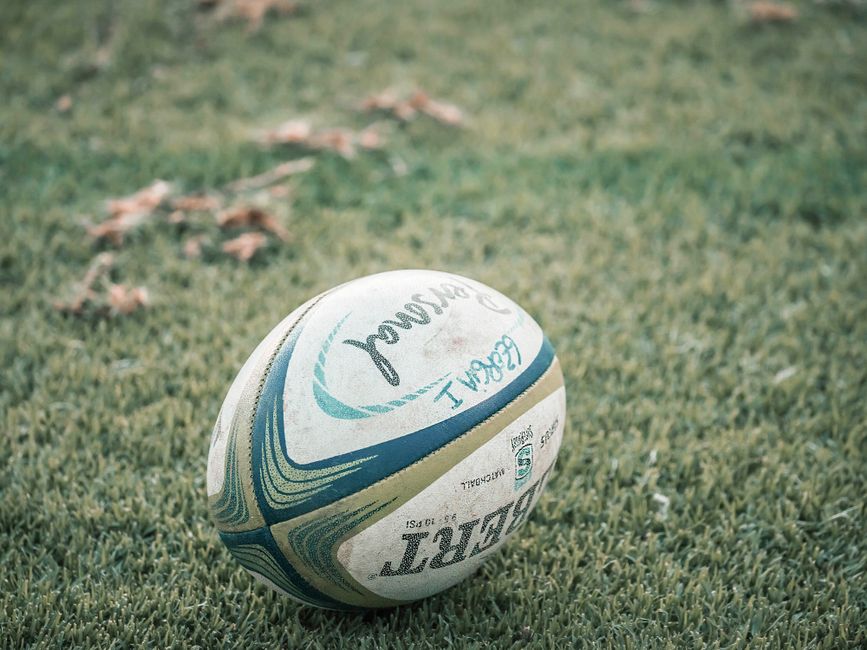
Peter V'landys has resigned as chief executive of Racing NSW after 22 years at the helm, clearing the final hurdle for his appointment as the NRL's new executive chairman — a move that will hand him the most powerful singular role in Australian rugby league since the Super League war of the 1990s.
V'landys confirmed on Thursday that his departure from Racing NSW would take effect when a period of long-service leave concludes in November. An official announcement of his new NRL appointment was expected to be made as early as the same day, with fellow commissioners, club representatives and state bodies all said to have given the move their blessing.
The 64-year-old has served as chairman of the Australian Rugby League Commission since 2019, but the new executive chairman role goes considerably further — effectively absorbing the responsibilities previously held by former NRL chief executive Andrew Abdo, who announced his own resignation in May.
The making of an unprecedented NRL power structure
When Abdo's departure was confirmed, V'landys told the rugby league world it would take "Superman and Jesus added together" to replace him — pointedly declining at the time to nominate himself. Within weeks, however, he had taken leave from Racing NSW to dedicate time to NRL affairs, and spent the months that followed quietly building the coalition of support needed to formalise the arrangement.
The role he is set to assume is without precedent since the Australian Rugby League Commission was established as an independent body in 2012. No individual has previously held the positions of chairman and full-time executive simultaneously. Reports indicate V'landys could be paid up to $3 million a year in the combined role — roughly double what his predecessor was earning.
The transition has been in train for approximately six months. V'landys and Abdo were regarded as complementary operators — the former a big-picture strategist, the latter a detail-oriented administrator — but Abdo's move to lead Tennis Australia opened the door for V'landys to consolidate his grip on the game's day-to-day direction.
A legacy built on prize money, litigation and The Everest
V'landys' tenure at Racing NSW — which began in early 2004 after he had previously spent 17 years running NSW Harness Racing — is widely regarded as transformative for the sport. Racing NSW said his initiatives delivered $3.5 billion in new funding over his time in charge, with total new recurring annual revenues approaching $375 million.
Among his most visible achievements was the creation of The Everest in 2017, now recognised as the world's richest turf race and credited with attracting a new generation of racegoers to Sydney. The race drew fierce resistance from Victoria's racing establishment — a reaction V'landys is said to have taken considerable satisfaction in.
Saturday metropolitan prize money rose from $45,000 in 2004 to $160,000 under his watch, while country TAB prizes climbed from $5,000 to $27,000. He also secured a federal government rescue package during the equine influenza outbreak of 2007, and successfully pursued litigation to impose a 1.5 per cent tax on online wagering operators taking bets on NSW races — a measure that now delivers the industry at least $150 million annually.
Racing NSW chair Saranne Cooke said V'landys had no equal in the country's sporting history. "Peter V'landys has been, without doubt, the most effective and successful administrator in the history of Australian sport," Dr Cooke said in a statement. "He has fundamentally changed the trajectory of racing in this country and made NSW one of the world's leading racing jurisdictions."
Champion horse trainer Chris Waller echoed that assessment. "He will go down as one of the best, if not the best, sporting administrators in Australian history," Waller said. "When he came in he promised to double the prize money and introduce this and that, and everyone thought 'what a load of nonsense' … But everything he said, he did."
V'landys himself acknowledged the emotional weight of the departure. "Naturally, this is a very sad day for me. I have put my heart and soul into racing for 22 years," he said. "As a team, we went from a struggling jurisdiction to a world-leading jurisdiction. I will miss them greatly."
Controversies and what comes next at Racing NSW
His record has not been without friction. V'landys and Racing NSW became embroiled in a number of legal and political disputes in recent years, and a government-commissioned review of the laws governing NSW racing — led by former health minister Brad Hazzard — is understood to be sitting with the state government awaiting a response. What the report contains remains a matter of competing speculation, with some sources suggesting it addresses only the Thoroughbred Racing Act, while others believe it may canvass broader questions of corporate culture within the organisation.
V'landys' chief operating officer at Racing NSW, Graeme Hinton, is considered the frontrunner to succeed him as chief executive.
With his Racing NSW chapter formally closing, V'landys now turns his full attention to the NRL, where his influence has already been considerable — and where, under the new structure, it is set to become total.