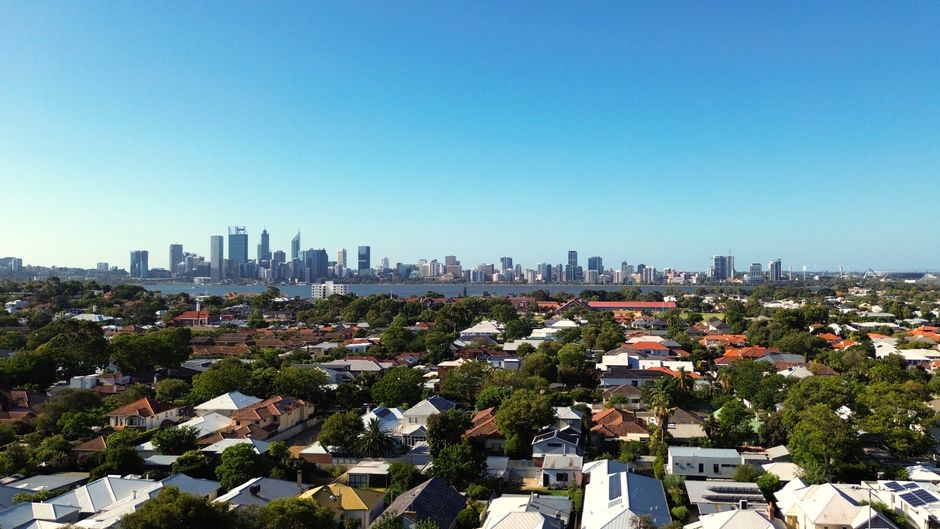
Perth's property market has recorded its steepest decline in four decades, with dwelling values across the metropolitan area falling 8.9 per cent from their April peak, according to new data from property analytics firm Cotality. The drop is the sharpest six-month decline seen in the city since records began 40 years ago, surpassed nationally only by Sydney.
The Scale of Perth's Property Downturn
The numbers paint a stark picture of a market undergoing rapid deterioration. The volume of houses sold in Perth dropped 21.4 per cent over the 12 months to October, the largest sales decline of any capital city in the country. Properties that were snapping up buyers within days just three months ago are now sitting on the market for an average of 28 days, roughly three times longer than that earlier period.
At the same time, the supply of homes available for sale has surged. Total listings in Perth sat 8 per cent above the five-year average in the four weeks ending November 8. That is a dramatic turnaround from the end of January, when listings were running around 55 per cent below average.
Cotality head of research Gerard Burg said the city had become a buyers' market, but not for healthy reasons.
"Those demand side pressures have limited the pool of buyers who have both the confidence and the financial capacity to transact, so those that remain have more choice, more time to consider and more time to negotiate with vendors," Burg said. "This puts downward pressure on home values."
What Is Driving the Decline
Burg attributed the downturn to a combination of pressures building on the demand side of the market. These include affordability constraints, higher interest rates, cost-of-living pressures (particularly around energy prices), weak consumer confidence and changes to investor policies introduced in the federal budget.
He explained that Perth and Brisbane had not had the same time to rebalance supply and demand as Sydney and Melbourne, where the downturn began earlier. In those southern capitals, the longer duration of the correction gave the market time to absorb and reduce stock. In Perth, that adjustment has happened far more slowly, leaving a large increase in available properties sitting on the market without sufficient buyer demand to clear them.
For those who bought close to the market's April peak, particularly those using the federal government's 5 per cent deposit scheme, the risk of falling into negative equity is now elevated. Burg noted that most existing homeowners retained a significant buffer from the strong value growth of the past five years, but that protection did not extend equally to recent buyers.
If you are watching value movements across the broader eastern seaboard, it is worth noting which Queensland suburbs have recorded the biggest house price falls as similar pressures take hold there too.
National Picture Also Worsening
Perth's pain is part of a broader national trend. Combined capital city home values fell for the seventh consecutive month in October, with cumulative losses reaching 8.1 per cent. That figure sits just 0.1 percentage points short of the largest peak-to-trough decline recorded across Australia's capitals over the past four decades.
"This is the fastest decline on record, and we would expect next month it will be the largest overall," Burg said.
For Perth specifically, the record downturn remains some way off. The city's largest historical correction was a fall of 15.3 per cent, recorded between June 2014 and July 2019.
Outlook: Recovery Not Expected Before 2027
Burg said the downturn was expected to continue into 2027, though the pace of decline was likely to slow. A meaningful recovery, he said, would probably require the Reserve Bank of Australia to begin cutting interest rates, with the earliest realistic window for that now appearing to be the second half of 2027.
"The market is unlikely to turn around until buyers have enough confidence and financial capacity to return en masse," he said.
For buyers currently on the sidelines weighing their options, understanding which Perth suburbs are still showing growth may help inform longer-term decisions as the market continues to shift.