More than 1,300 people are confirmed dead and nearly 4,800 remain missing after catastrophic floods triggered by a glacier collapse swept through Nepal and Tibet, with thick, treacherous mud continuing to obstruct search and rescue teams more than a week after disaster struck. Australia has now deployed a specialist response team — including drone operators equipped with artificial intelligence and thermal imaging technology — to help find those still unaccounted for, among them at least 36 Australian nationals.
A landscape almost impossible to comprehend
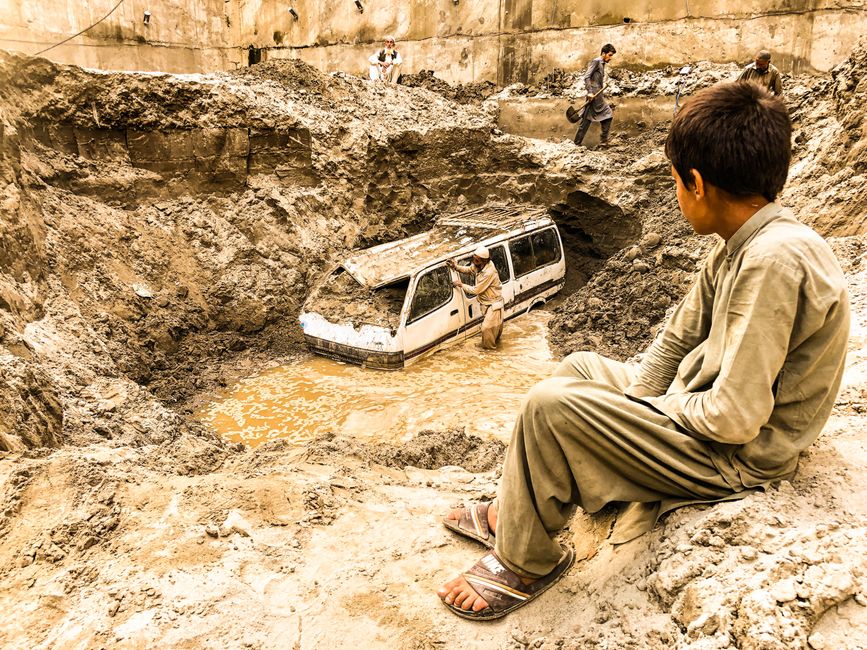
The floods were nothing like the slow-building inundations Australians are accustomed to. A collapse high in the Himalayas on 26 August sent an enormous surge of water and mud roaring down through valleys at extraordinary speed, giving communities below virtually no warning. Homes, roads and entire buildings were buried beneath a thick grey slurry that settled and hardened, making movement through affected areas extraordinarily difficult — and in some places, deadly in its own right.
Journalists who walked through the destroyed villages described the devastation as almost beyond comprehension. In some sections of the mud, a single misplaced step sent a boot sinking to the ankle; pulling free required significant force. Locals warned that in certain spots, a person could suddenly drop to their knees or even their waist. It was a chilling reminder of the terror those caught in the original flood must have experienced.
Rather than the large-scale rescue operations many expected to find, some affected areas appeared eerily quiet — the occasional resident shovelling mud from a doorway, or picking through wreckage trying to salvage what little remained. Days after the initial disaster, the mud still made it physically impossible to reach many homes, leaving families desperate for any information about loved ones inside.
In one striking moment, a local man approached a drone operator working in the area and asked whether the aircraft could be flown inside a nearby home to check for any sign that its occupants had escaped. He stood watching a screen as the drone moved through the structure — one of the only ways anyone could get eyes inside, given the mud made foot access impossible.
The isolation was felt just as acutely in Betrawati, a settlement reached only via roads more akin to hiking tracks. There, a military helicopter landed so officials could survey a site for a temporary bridge — an unglamorous but critical piece of infrastructure, since without it, rescuers, food and supplies could only be moved in and out by air. Moving across the mud at all required rescuers to lay down timber and salvaged debris as makeshift stepping stones.
Australia scales up its disaster response
Australia has significantly expanded its assistance to Nepal in response to the scale of the disaster. A 15-person specialist team arrived in Kathmandu late Friday, with victim identification experts also being dispatched following a formal request for help from Nepali authorities. The Disaster Assistance Response Team draws on personnel from the Queensland Fire Department and Fire and Rescue NSW.
Fire and Rescue NSW Commissioner Jeremy Fewtrell farewelled six remotely piloted drone operators and four incident management specialists as they departed for Nepal. "Their drones will give search and rescue teams critical information about areas that may be inaccessible or too dangerous to reach from the ground," he said. "They have an important job ahead of them."
The drone technology being deployed carries AI capabilities designed to help locate victims, as well as thermal imaging to identify anyone who may still be trapped and alive. Nepali authorities will also receive telecommunication data to help narrow down the last known locations of missing Australians.
Foreign Minister Penny Wong confirmed that searches are under way at specific locations where Australians were believed to have been staying, including the Kailash Hotel and the Royal Himalaya Hotel. At least 36 Australians remain missing, and the government has said it holds grave concerns for their welfare. Treasurer Jim Chalmers confirmed on Friday that two more Australian citizens had been found safe, bringing the total confirmed safe since the disaster to seven.
A Royal Australian Air Force plane carrying aid supplies also landed in Kathmandu on Wednesday, carrying more than 1,400 hygiene kits along with 2,200 solar lights and phone chargers for affected communities.
For background on why dozens of Australians were in the remote valley when the floods struck, see our earlier reporting on why Australians were in the Nepal valley devastated by the deadly floods.
The toll on both sides of the border
In Nepal, the official death toll has climbed close to 1,300, with almost 4,800 people still unaccounted for, including 601 foreign nationals. On the Tibetan side of the border, Chinese authorities reported 31 deaths — an increase of 10 from the previous tally — along with 531 people listed as missing. It was not made clear whether those figures included foreign nationals.
The disaster's origins lie in the glacier collapse near Nepal's border with Tibet on 26 August. The resulting flood surge was of a scale and speed that left no time for warnings to reach those in its path. Earlier reporting tracked the initial surge in the death toll as the true scale of the catastrophe became clear in the days that followed.
With mud still blocking access to entire neighbourhoods and the missing count remaining in the thousands, authorities warn that recovery operations could take weeks — and that the final toll may not be known for some time.