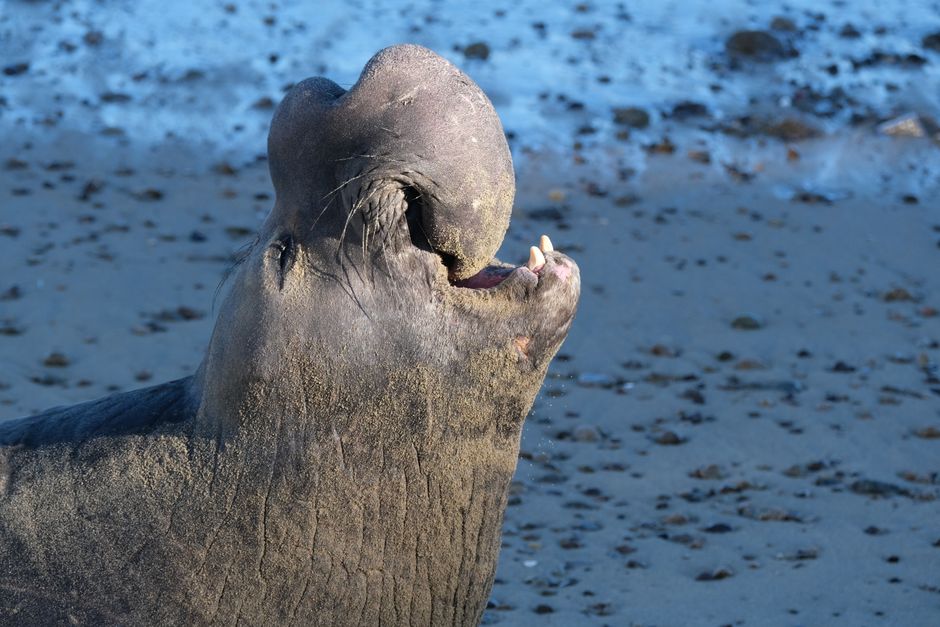
Tasmania's most unlikely celebrity has wrapped up his latest visit to dry land. Neil the Seal, a one-tonne southern elephant seal whose beachside destruction has racked up millions of views online, has returned to sea after spending several weeks at his regular haul-out spot in southern Tasmania — leaving behind a damage bill, a queue of traffic cones in need of repair, and a state that seems equal parts relieved and fond of him.
The five-year-old seal's departure was confirmed by Tasmania's Department of Natural Resources and Environment on Thursday, which announced that Neil had left the area overnight. "Neil the Seal returned safely to sea last night. This is his natural behaviour and was expected," the department said in a statement. Authorities noted he may still return briefly or haul out at a nearby location before eventually heading south to feeding grounds.
A season of viral mayhem
This winter's visit saw Neil live up to his reputation as a one-animal wrecking crew. Videos of the three-metre-long seal crushing signs and bollards, lounging across suburban streets and — most memorably — attempting to crush a car at a petrol station sent his profile soaring on social media, drawing tourists from around the country and overseas to the otherwise quiet coastal area.
The influx of visitors forced the local council to manage traffic in the area, and a 24-hour security presence was hired to keep the public at a safe distance. The council is still tallying the full cost of Neil's damage. Wildlife authorities also issued a stern public warning after reports of people carrying young children right up to the seal for photographs and leaving food out for the apex predator.
Tasmanian Premier Jeremy Rockliff acknowledged Neil's departure with characteristic warmth. "We'll keep an eye out for him but otherwise the traffic cones and street signs of Tasmania can breathe a small sigh of relief," he said. "A big well done for everyone that has treated big Neil with respect and caution while he's been on land."
Why Neil does what he does
Neil's twice-yearly appearances on the Tasmanian coast are driven by biology, not mischief. He was born on the Tasmanian peninsula in 2020 — making him potentially one of the first southern elephant seal pups born back in Tasmania since the species was wiped out by hunting in the early 1800s. The species remains listed as vulnerable in Australia. With no colony to return to, Neil is biologically compelled to come back to his birthplace each year to rest and moult.
The moulting process, which typically takes between four and six weeks for males, involves shedding old fur to reveal a new silver coat underneath. To do this, elephant seals must come ashore — redirecting blood flow to the skin would be dangerous in cold ocean water. During the moult, they fast entirely, burning through their blubber reserves before returning to the sea to hunt and rebuild.
His infamous "jousting" with bollards, fences and poles is also entirely natural, according to wildlife expert Dr Kris Carlyon from the Department of Natural Resources and Environment. At Neil's age, young male elephant seals would normally be testing their strength against each other. Alone in Tasmania without companions of his own species, he has found other outlets. "He's got no other seals to play with, to joust with, to test his strength with — like he would be doing normally, so he chooses things to interact with," Carlyon explained.
Neil is expected to reach a weight of around three tonnes when fully grown — roughly triple his current size.
Wildlife experts urge caution ahead of Neil's return
Despite the chaos, authorities have been clear that Neil's presence is a cause for quiet celebration. Carlyon described him as potentially a pioneer of a species' return to Tasmanian shores. "Regardless of the resource burden and the challenges that Neil throws, we're pleased to see him," he said.
But with his popularity growing each season, wildlife managers are increasingly concerned about public behaviour putting both people and Neil at risk. There were multiple reports this season of visitors behaving recklessly — approaching closely with infants and attempting to feed him. Authorities stressed that while Neil is not inherently aggressive, he will defend his space if he feels threatened, and an incident could ultimately force a difficult decision.
Euthanasia was described as an absolute last resort, only if public safety could no longer be guaranteed. Relocation is another option that could be on the table if behaviour around Neil doesn't improve.
With Neil expected back for another visit — males typically moult between June and late August, so a return next winter is anticipated — authorities have restated the rules for anyone hoping to catch a glimpse:
- Maintain a distance of at least 20 metres from Neil at all times
- Keep dogs on a lead and at least 50 metres away
- Do not touch, feed or approach him
- Never block his access to the water
For now, Tasmania's streets are quieter. But if history is any guide, Neil will be back — and the bollards of southern Tasmania should enjoy the reprieve while it lasts.