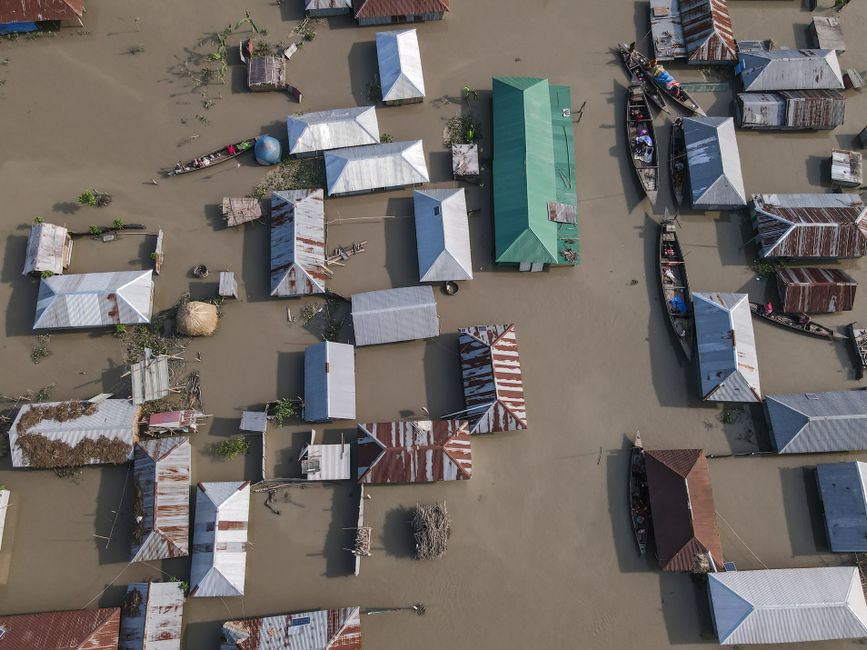
Six Australians have now been confirmed safe following the catastrophic flash floods that struck the Nepal-Tibet border region, with the Department of Foreign Affairs and Trade revising the number of missing Australians down to 36 as search and rescue operations continue across a devastated landscape. The toll from the disaster has climbed to more than 1,200 dead, with over 5,500 people still unaccounted for on both sides of the border.
The latest confirmed contacts include two citizens who were previously unreachable but have since made contact and confirmed they are safe and well. Neither requires consular assistance. Treasurer Jim Chalmers confirmed the development, while government ministers described the news as a relief — though one tempered by the reality that dozens of Australians remain missing.
"Every person who's been rescued or found is a relief to their family and to the broader Australian community," one senior minister said. "But of course, we still have 36 Australians who are missing and unaccounted for, which is just gut-wrenching."
Australians located across Nepal and beyond the flood zone
Of the six Australians now accounted for since the floods struck last Wednesday, one — Cara Severino — was found safe in Nepal over the weekend. Officials also made contact with an Australian in Tibet earlier this week. Among the four others subsequently located, one was found in Nepal while the remaining three were found outside the immediate flood-affected area. The welfare of those three has not yet been confirmed.
A 15-person Australian Disaster Assistance Response Team is expected to arrive in Kathmandu, with a further seven Australian Federal Police disaster victim identification specialists due to arrive days later. Aid supplies aboard a Royal Australian Air Force plane that departed earlier in the week were due to reach Nepal on Wednesday morning.
For families still waiting, the anguish is acute. This disaster has been unfolding rapidly, and earlier reports placed the number of missing Australians even higher as officials worked to piece together who had been in the affected region at the time of the floods.
Tunnel rescue race as hopes of finding survivors fade
On the ground in Nepal, rescue teams from India, China and the United States are working urgently to reach an estimated 100 hydropower workers believed to be trapped inside multiple tunnels that were engulfed when the floods tore through towns and valleys near the Chinese border. Some 279 people have been rescued from the ruins of hydropower projects, but at least 639 workers remain missing, with many feared buried under debris-filled sludge.
A member of the US crisis response team described the operation, saying teams planned to use high-technology listening equipment to detect signs of life inside the tunnels before safety teams moved in. Excavators worked through the night, though progress was hampered when a large volume of water began flowing into a hole being dug, forcing crews to start a new opening elsewhere.
So far, only bodies have been recovered from the blocked tunnels, and officials are growing increasingly pessimistic. "The hope of finding survivors is decreasing," said a senior official at Nepal's National Emergency Operation Center. "We pray and are hopeful. Hope is hope!"
The death toll has risen sharply since the initial reports following the glacial collapse that triggered the disaster, with mortuaries overflowing and authorities beginning to bury hundreds of unidentified bodies after DNA sampling. At least 17 bodies have also been recovered from rivers downstream in India. In Nuwakot district, a drone search located 24 corpses inside a single house.
'Miracles do happen': Nepal holds onto hope
In Kathmandu, crowds have gathered to search for news of missing relatives. One 58-year-old driver described posting photos of his 83-year-old mother-in-law and her granddaughter among dozens of notices, saying witnesses had seen them swept away by the floodwaters. "I am here hoping to find their bodies," he said.
Nepal's Prime Minister has described the catastrophe as "unimaginable and heartbreaking." Despite the grim outlook, Foreign Minister Shisir Khanal urged against abandoning hope entirely.
"Miracles do happen," he said. "At this point, I do not want to completely give up hope."
Australian officials echoed that sentiment, saying Australia would continue to provide any support the Nepalese government requested as recovery and identification efforts extend what is already one of the deadliest natural disasters to strike the Himalayan nation in recent memory.