A Venezuelan security guard has been pulled alive from the rubble of a collapsed shopping centre — eight days after twin earthquakes devastated the country's north coast — in what rescuers and officials have described as a miraculous survival. Hernán Alberto Gil Flores , 44, was freed on Thursday, 2 July, after being buried beneath 8.8 metres of wreckage at the Galerías Playa Grande mall in the coastal town of La Guaira, in an operation that pushed the boundaries of what experts consider survivable.
Eight days buried: how Flores survived
The two earthquakes — measuring 7.2 and 7.7 in magnitude — struck Venezuela's north coast less than a minute apart on 24 June, sending buildings across the region crashing down. Flores was on duty in a small security cabin in the building's basement when the structure collapsed around him. That cabin, cramped as it was, provided a vital pocket of air and just enough protection to keep him alive.
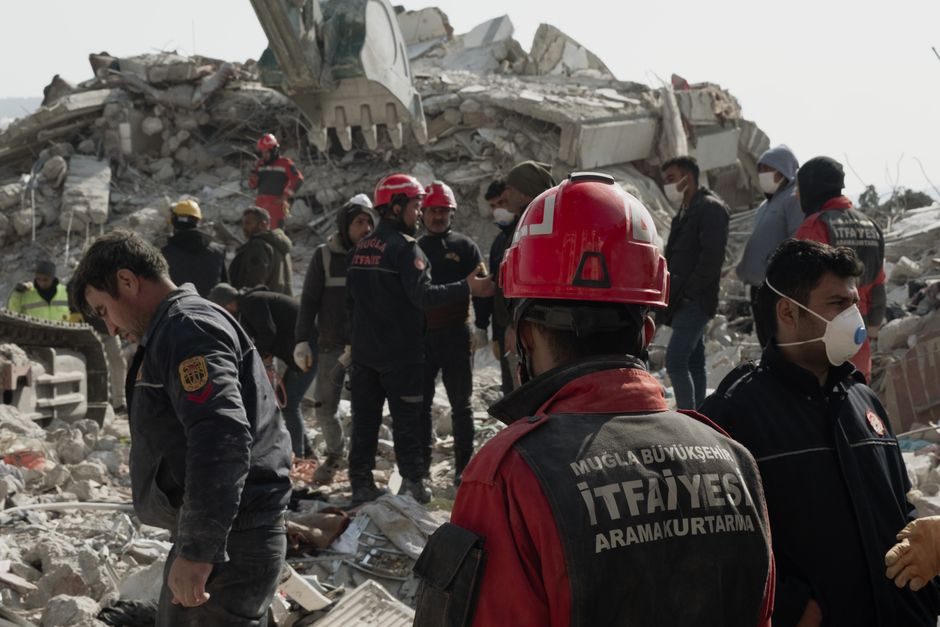
It was not until 29 June — five days later — that workers from the Costa Rican Red Cross detected signs that someone might still be alive beneath the ruins. Formal rescue efforts began the following day, drawing in specialist teams from Chile, the United States, Portugal, Mexico, Costa Rica and El Salvador.
Throughout the three-day operation, rescuers used radar sonar and sound detection equipment to confirm Flores' location, and a telescopic camera was threaded through the debris to maintain contact with him. Emergency crews passed more than 10 litres of water and liquid nutrients to him through a narrow hose, along with medication delivered via syringe. Video captured by Chilean firefighters the night before his rescue reportedly shows Flores drawing pictures to pass the time — and, according to the lead Chilean medic on the scene, he told rescuers he wanted to walk out of the rubble rather than be carried on a stretcher.
An 'extremely complex and dangerous' operation
Vincenzo Borgna, the lead medic from the Chilean urban search and rescue team that coordinated the extraction, described the mission as unlike almost anything his team had faced. He compared the structural situation to "a sand castle with a building on top — you take a rock away and it falls." Rescuers were forced to tunnel beneath unstable debris while also contending with torrential rain and persistent aftershocks that threatened to bring remaining sections of the building down.
The challenge was so severe that, it is understood, technical and engineering teams from the United States initially assessed the operation as too dangerous to attempt. At one point, rescuers came within 50 centimetres of Flores before being forced to abandon their approach and devise a new plan.
Chile's fire brigade, which played a central role in the rescue, said the operation ultimately took 70 hours from the time formal efforts began to the moment Flores emerged. When he was finally freed, he was wearing protective goggles and was transferred to a medical facility, where he was reported to be in good condition.
A representative from the Costa Rican Red Cross revealed a poignant detail from the early days of the rescue: when workers first made contact with Flores, he asked them not to tell his wife he was alive — fearing he might not ultimately survive. "We were never going to leave him here," the representative said.
A 'miraculous' survival beyond the golden window
Survival experts noted the extraordinary nature of the rescue. A representative from the United Nations Disaster Assessment and Coordination team said that "only miraculous rescues have been achieved" at the seven-day mark after an earthquake. The so-called "golden window" for finding survivors is typically the first three days — after that point, the chances of survival without access to water drop sharply. Flores had endured more than double that period. For those monitoring powerful earthquakes around the world, the Venezuela event has become one of the most dramatic recent examples of both catastrophic destruction and extraordinary human resilience.
For Borgna, who spoke to reporters on the ground in Venezuela, the experience of saving Flores was simply "priceless."
Family relief as Venezuela celebrates
Flores' wife, Gusbimar González , described the anguish of the days her husband was missing, believing he had likely perished in the disaster. The couple have two children, aged eight and ten.
"When I learned he was alive, I saw a ray of light in the darkness," she said. She had earlier described him as holding up "like a hero" — and said his children were waiting for him at home.
Venezuela's acting president, Delcy Rodríguez , applauded the rescue on social media, celebrating the outcome alongside the international teams whose cooperation made it possible. The rescue has drawn widespread attention as a rare moment of hope amid what has been a devastating period for communities along Venezuela's northern coast.