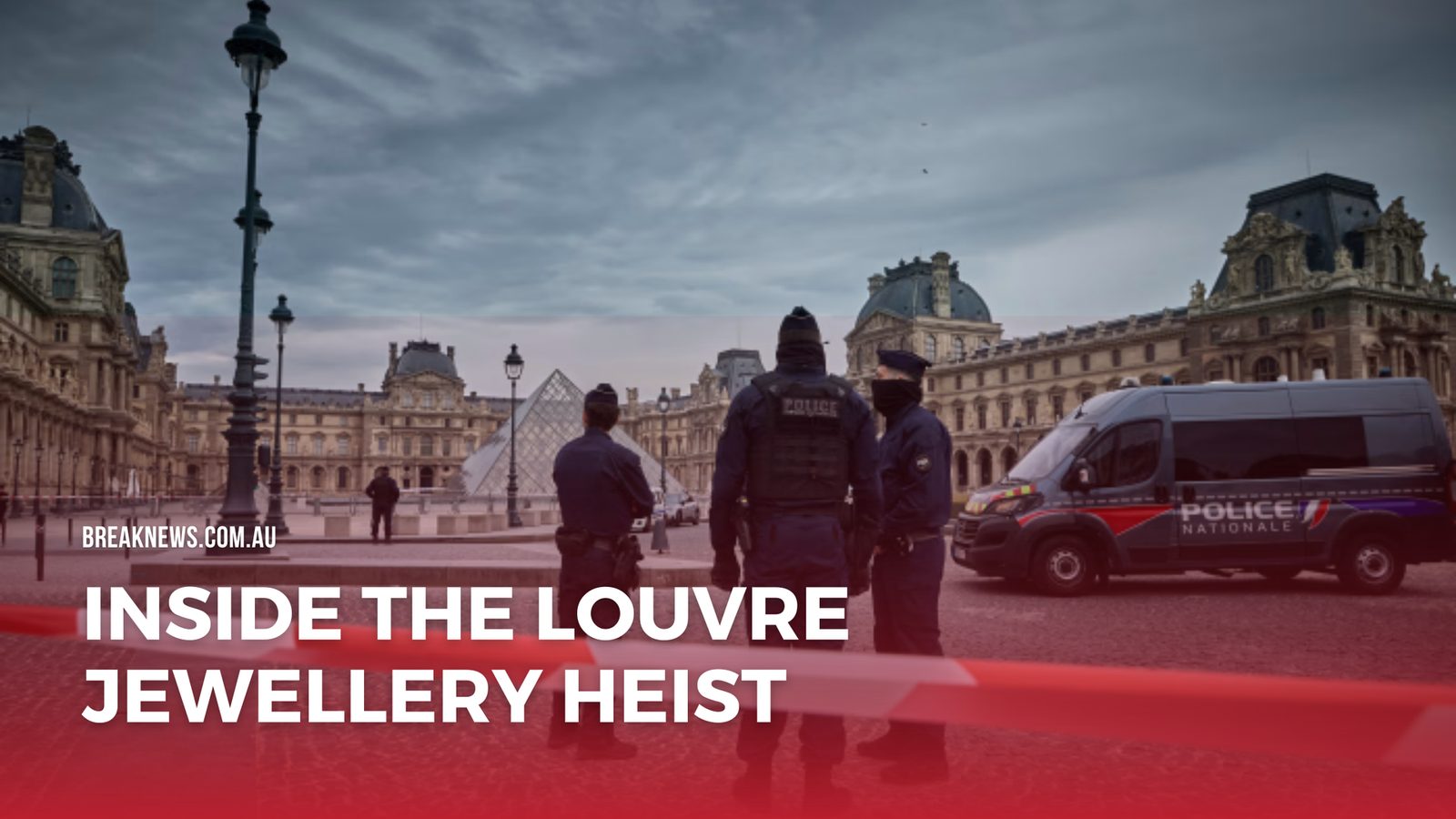
The Louvre jewellery heist wasn’t just any robbery—it’s being called one of the boldest crimes Europe has seen in recent years. In broad daylight, masked thieves slipped into the world’s most-visited museum and made off with priceless national treasures. Vanishing in minutes, they left behind shocked visitors and global headlines.
This drama unfolded right in the heart of Paris, targeting jewels that are not just valuable, but part of French history itself. It’s a story that resonates far beyond France: for Australians and the global community alike, it’s a wake-up call about the vulnerability of even the most secure cultural institutions.
From the initial chaos to the worldwide search for missing artefacts, this case shines a light on museum security, the international art market, and just how quickly centuries of heritage can be threatened. Here’s how it all happened—and why it matters.
Heist in Broad Daylight: How the Louvre Jewellery Robbery Unfolded
It’s not every day that a brazen robbery unfolds right before tourists’ eyes, especially inside the world’s most famous museum. Yet that’s exactly what happened on a bustling morning when a crew of masked thieves slipped into the Louvre’s Apollo Gallery, home to the French crown jewels. The timing was crucial: the thieves struck shortly after the museum opened, when staff were just settling in and the first wave of visitors was filtering through the ornate halls.
Surveillance footage later revealed how calm and coordinated the group was. Using clever disguises—posing as construction workers in yellow safety vests—they blended seamlessly with legitimate maintenance crews. This ruse gave them the confidence to move about the halls without arousing immediate suspicion, despite the ever-present CCTV cameras and vigilant staff.
Within minutes, chaos erupted in the gilded Galerie d’Apollon as alarms rang out. Staff and panicked visitors scrambled, forced out of the gallery as the thieves smashed glass cases and scooped up irreplaceable jewels. Museum officials acted quickly, locking down parts of the building and evacuating courtyards and nearby streets along the Seine, trying to ensure everyone’s safety amid uncertainty.
This daylight attack, carried out as tourists looked on, stunned locals and baffled authorities. The location and timing revealed a shocking vulnerability at one of Paris’s best-guarded landmarks. It didn’t take long for the news to ripple across the globe, leaving people everywhere asking: how could something like this happen, right under the nose of museum staff and security?
What Was Stolen in the Heist: Emeralds, Crowns and Priceless Jewels
The impact of the Louvre robbery becomes crystal clear when you look at the treasures that vanished. The thieves didn’t just grab random valuables—they specifically targeted a collection of jewels tied to generations of French royalty, each piece holding centuries of history and unmatched craftsmanship.
Among the most coveted items was a striking emerald necklace, said to have once belonged to Empress Eugénie, the influential wife of Napoleon III. This necklace formed part of a historic set that also included a pair of dazzling emerald earrings and a meticulously crafted reliquary brooch. Together, these gems were more than just precious stones; they represented the personal adornments of queens and emperors, passed down through royal lines.
The stolen items were displayed in the Apollo Gallery alongside other artefacts belonging to Queen Hortense and Queen Marie-Amélie, linking them to pivotal moments in French cultural heritage. The loss of these jewels is not simply about financial value—they’re considered irreplaceable, a part of the legacy that connects modern France to its regal past.
This theft has delivered a major blow to Paris and to museums worldwide. With jewels like the Regent Diamond and other national treasures left vulnerable, the event has reignited debates about safeguarding heritage that we all cherish. It’s a chilling reminder of how quickly the world can lose pieces of its shared history.
How Did the Thieves Do It? Tools, Disguises and Their Daring Escape
The meticulous planning and nerve required for the Louvre jewellery heist point to a crew of seasoned professionals. The group executed their plans with clockwork precision, beginning with disguises that allowed them to move through the museum unnoticed. Dressed as construction workers, complete with yellow safety vests and hard hats, they looked like they belonged inside a building where maintenance is part of daily life.
Once in position inside the Apollo Gallery, the thieves wasted no time. Armed with battery-powered disc cutters and angle grinders—tools that can cut through reinforced glass—they shattered the display cases in under four minutes. They worked quickly but calmly, knowing the response time of staff and alarms was limited.
With the jewels in hand, the group fled the museum and made their escape using a vehicle equipped with a mechanical lift or extendable ladder, a clever nod to their “worker” disguise. Parisian streets, traffic patterns, and proximity to the Seine likely played into their chosen getaway route. Locals later reported a suspicious van set alight just blocks away, used to destroy any forensic evidence.
Urban infrastructure played an unexpected role in their plan. Easy access to the Louvre’s surroundings and possible exploitation of ongoing public works provided the ideal cover for both entry and escape. By the time authorities arrived on scene, the thieves had disappeared—leaving behind only shards of glass and a trail of questions about security lapses.
Security Failures and the Louvre’s Investigation into the Robbery
The Louvre prides itself on state-of-the-art security, but the jewellery heist exposed gaps that even the best-prepared institutions can overlook. The robbers’ ability to breach the Apollo Gallery and smash display cases so rapidly points to vulnerabilities in both physical infrastructure and personnel vigilance.
Museum staff responded quickly once alarms sounded. A vigilant worker noticed the unusual activity and triggered the emergency protocol—contacting security forces and ushering visitors to safety. The museum was promptly evacuated, and police cordoned off courtyards and nearby streets, demonstrating well-drilled crisis management.
Investigators reviewing CCTV footage were able to confirm the sequence of events and get a detailed look at the masked robbers in action. High-resolution images and video of the theft, shared with the media and public, became key pieces of evidence in the hunt for the culprits. Reports in sources like Le Parisien highlighted the professionalism of the crew and the efficiency of their four-minute operation.
The incident has led the Louvre and other institutions worldwide to reevaluate display security, staff response protocols, and the overall physical safeguards required for national treasures. Experts suggest that partnering with top security providers—such as the leading firms listed in Australia’s top five security companies for 2024—could help museums bolster their defences with advanced technology and rigorous training. In the aftermath, rebuilding public trust and protecting cultural heritage is now more urgent than ever.
Reactions from French Leaders and What Comes Next
The Louvre jewellery heist has sparked strong reactions from France’s top officials. President Emmanuel Macron condemned the crime as an attack on national heritage, vowing that every effort would be made to recover the lost treasures and bring those responsible to justice.
Culture Minister Rachida Dati described the theft as a “tragedy for the French people” and promised immediate security reviews at major museums. Interior Minister Laurent Nuñez echoed these sentiments, stressing that security for public collections would be upgraded and that new protocols are already under discussion.
These events have prompted a wider debate both in France and globally about museum security and the protection of irreplaceable cultural artefacts. The international art world is watching closely to see how Paris responds, knowing that the lessons learned here could shape the future of museum security worldwide.