Swimwear shopping has never offered more choice — and yet choosing the right bikini still trips people up every season. The problem usually isn't the options; it's the outdated advice that frames the decision around body-type categories rather than what a design actually does. Cut, proportion and construction details matter far more than whether a style is trending on the runway or supposedly "approved" for a particular silhouette. Once you understand what each feature achieves, the choice becomes considerably more straightforward — and a lot more personal.
From high-cut bottoms and adjustable side ties to triangle tops and more supportive silhouettes, seemingly small differences in swimwear design can dramatically change how a bikini looks and feels.
Rather than thinking about which body types should wear particular styles, a more useful approach is to understand what each design feature actually does. That gives shoppers the freedom to choose whether they want to emphasise their waist, create a longer-looking leg line, add support or simply find something comfortable enough to wear all day.
Here are some of the key features worth considering when choosing swimwear this summer.
Start With Proportion, Not Body-Type Rules
Traditional fashion advice has often attempted to divide women into categories such as pear, hourglass, athletic or inverted triangle.
While those descriptions can sometimes provide a starting point, two women within the same category can still have completely different proportions and swimwear preferences.
Instead, consider what you actually want from your bikini.
Do you want to emphasise your waist? Would you prefer more bust support? Do you like a higher leg opening? Are adjustable bottoms important? Would you rather have more coverage or a cheekier cut?
Answering those questions can be considerably more useful than trying to find a bikini supposedly designed for a particular body type.
High-Cut Bottoms Can Change the Leg Line
One of the biggest swimwear trends of recent years has been the return of the high-cut bikini bottom.
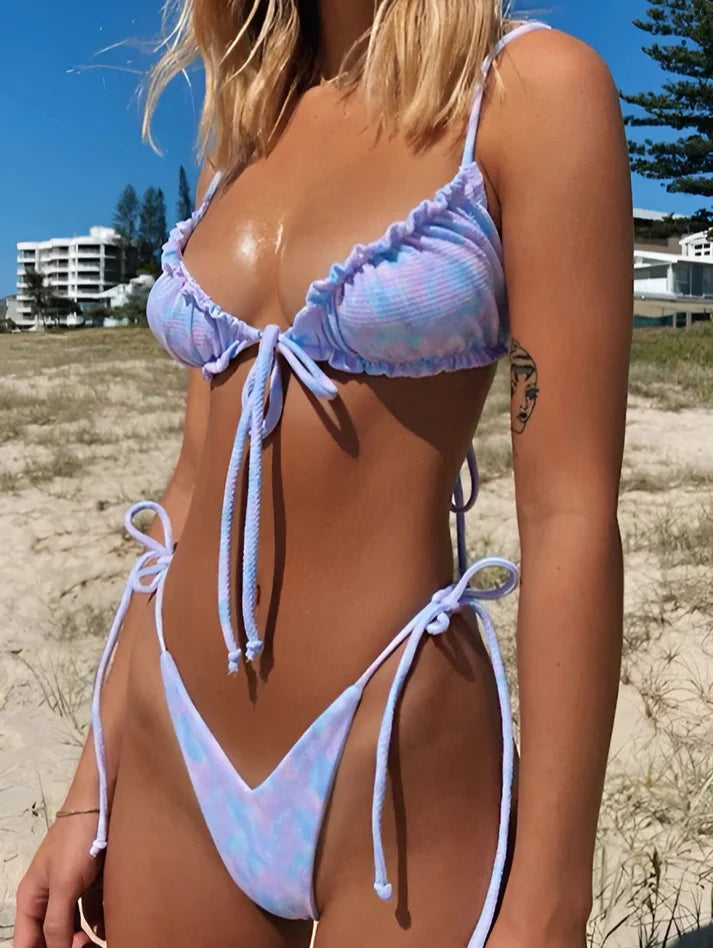
Unlike lower-cut bottoms that create a more horizontal line across the hips, high-cut styles expose more of the upper leg and create diagonal lines toward the waist.
This can visually lengthen the legs and place greater emphasis on the waist-to-hip transition.
How dramatic the effect becomes depends on the cut. Some bikini bottoms offer only a slightly higher leg, while others sit significantly above the hip bones for a much stronger silhouette.
Consider the Shape of the Bikini Bottom
Leg height isn’t the only consideration.
The shape of the waistband itself can also influence the overall look.
A straight waistband creates a strong horizontal line, while a V-shaped bikini bottom draws the eye toward the centre of the body.
These V-shaped designs are frequently combined with higher leg openings, creating diagonal lines on both sides of the bikini.
For women with more pronounced curves through the lower body, understanding these differences can be particularly useful. Dekota Swim’s guide to best bikini styles for wide hips looks more closely at how high-cut legs, V-shaped fronts and other bikini designs can work with wider proportions.
Adjustable Side Ties Offer More Than a Different Look
Tie-side bikinis are usually associated with their classic beach aesthetic, but adjustability is one of their biggest practical advantages.
A fixed bikini bottom determines where the sides sit and how tightly they fit. Tie sides give the wearer considerably more control.
They can be loosened or tightened and, depending on the design, positioned higher on the hips to create a more pronounced high-leg silhouette.
This can be particularly useful for women whose measurements don’t correspond perfectly with standard sizing.
Adjustability can also make swimwear more comfortable during long beach days, when a bikini may be worn for hours rather than simply for swimming.
Bikini Tops Can Help Create Balance
Choosing the right bikini isn’t only about the bottoms.
Different tops can substantially alter the proportions of an outfit.
Triangle bikinis provide a classic minimal silhouette, while wider straps and more structured designs can create greater visual presence through the upper body.
Details such as ruching, textured fabrics, prints and brighter colours can also naturally draw attention upward.
For women wanting more support, however, appearance shouldn’t come at the expense of fit.
Look at features such as adjustable straps, under-bust bands and the amount of coverage offered by the cups rather than choosing exclusively according to appearance.
Don’t Automatically Assume More Coverage Is Better
One persistent swimwear misconception is that anyone conscious of a particular area should simply cover more of it.
That isn’t necessarily how visual proportions work.
Adding fabric can sometimes create stronger horizontal lines or make one section of the bikini visually heavier.
A smaller bikini bottom with a higher leg, for example, can produce an entirely different silhouette from a full-coverage bottom sitting lower across the hips.
Neither option is inherently more flattering. They’re simply different.
The important question is whether the proportions produce the look the wearer wants.
Prints and Solid Colours Create Different Effects
Colour is another area where old fashion rules can be unnecessarily restrictive.
Advice suggesting that certain body shapes should only wear dark or understated colours ignores the fact that swimwear can be styled in completely different ways.
Solid colours tend to make the actual silhouette and construction of a bikini more noticeable. They’re also particularly versatile when building a holiday wardrobe because they can be easily paired with shirts, skirts and other resortwear.
Prints, meanwhile, make the swimwear itself a focal point.
Floral patterns, bright colours and statement designs can be particularly effective when the bikini is intended to become the centrepiece of a beach outfit.
There’s no requirement to choose one approach according to body shape.
Think About Fabric Quality and Longevity
One angle that often gets overlooked in bikini guides is the role fabric plays beyond appearance. Not all swimwear fabrics perform equally, and the difference becomes obvious after a few wears.
Chlorine, saltwater, sunscreen and repeated stretching can quickly degrade lower-quality materials, causing colours to fade and fabric to lose its shape. Look for bikinis made with a high percentage of elastane or Lycra blended into nylon or recycled polyester — these combinations tend to retain their fit and colour significantly longer than cheaper alternatives.
Fabric weight also matters. A slightly heavier fabric typically holds its structure better under movement and in water, which is particularly important for underwired or padded tops that rely on the surrounding material to stay in place.
Lining is another consideration. Unlined bottoms may be lighter and minimise tan lines, but a double-lined gusset is worth prioritising for comfort and practicality. Investing a little more in fabric quality from the outset usually means the bikini will still look and fit well by the end of the season.
Think About How You’ll Actually Wear It
A bikini that looks fantastic but constantly needs adjusting isn’t necessarily the best bikini for a holiday.
Consider what you’ll actually be doing while wearing it.
Someone planning to spend most of the day swimming may prioritise secure straps and a firmer fit, while a bikini chosen for relaxing around a resort might place greater emphasis on style and minimal tan lines.
Beach activities, surfing, boating and long periods in the water can all favour different levels of support and coverage.
It’s worth thinking about these practical considerations before buying rather than discovering them after arriving at the beach.
Mixing Bikini Separates Can Solve Fit Problems
One of the simplest ways to improve bikini fit is to stop assuming your top and bottom need to be the same size.
It’s completely normal for body proportions to require different sizing.
Where possible, choosing bikini separates allows shoppers to select the appropriate size for each half rather than compromising on one.
Mix-and-match swimwear also creates considerably more flexibility within a holiday wardrobe. A few complementary tops and bottoms can produce several combinations without requiring a different bikini for every day of a trip.
Confidence Comes From Fit, Not a Label
Ultimately, there isn’t one universally “best” bikini for any body shape.
High-cut bottoms can lengthen the appearance of the legs. V-shaped designs can create strong diagonal lines. Adjustable ties provide greater control over fit, while different bikini tops can change the visual balance of the upper body.
But these are styling options rather than rules.
The most useful approach is to understand what those features do and then decide which effects you actually like.
Good swimwear shouldn’t be about disguising your body to satisfy an arbitrary definition of the ideal shape.
It should fit properly, stay comfortable and allow you to enjoy summer without spending the day worrying about your bikini.
By Zara Dekota – Zara Dekota writes about swimwear, beach style and summer fashion for Dekota Swim. Image: Dekota Swim.