A Sydney accountant who grew up pumping petrol at her parents' service station now holds one of the most consequential seats in global business. Robyn Denholm, the Australian chartered accountant who chairs Tesla's board, sits at the centre of a pay structure that could deliver Elon Musk the largest executive payout in corporate history — potentially worth up to $US824 billion — and it all hinges on a single clause buried in his 2025 compensation agreement.
The change-in-control clause that changes everything
Under Musk's current Tesla pay deal, he normally faces two sets of demanding performance hurdles. Tesla must hit 12 market capitalisation milestones topping out at $US8.5 trillion, while also operationally delivering its 20 millionth vehicle, placing a million robotaxis in service, and building a million Optimus robots. Meeting all of those would unlock the full award.
But a change-in-control clause creates a dramatic shortcut. Should Tesla be acquired — by SpaceX, for instance — the operational milestones disappear entirely. The award then vests purely on the takeover price, unlocking a new tranche for every $US500 billion added to the deal price, reaching its maximum $US824 billion payout if the acquisition values Tesla at $US8.5 trillion.
A Boston College accounting professor who reviewed the agreement noted the targets were designed to be a stretch, adding pointedly: "All you have to do is be bought."
Josh Gilbert, eToro's lead Asia-Pacific analyst, said the clause fundamentally changes how Tesla's share price should be interpreted. "When the person who controls both companies has a trillion reasons to get a deal across the line, some of Tesla's share price starts reflecting deal probability rather than fundamentals," he said.
Denholm's role — and the conflict at the heart of the deal
Denholm has chaired Tesla's board since November 2018, when the US Securities and Exchange Commission forced Musk out of that role following his aborted attempt to take the company private. She is currently the highest-paid chair of any listed company in the United States.
The structural tension is significant. Musk controls approximately 86 per cent of SpaceX's voting power and appoints a majority of its board. At Tesla he holds under 20 per cent, meaning any takeover requires shareholder approval — and crucially, a price set by the board Denholm leads.
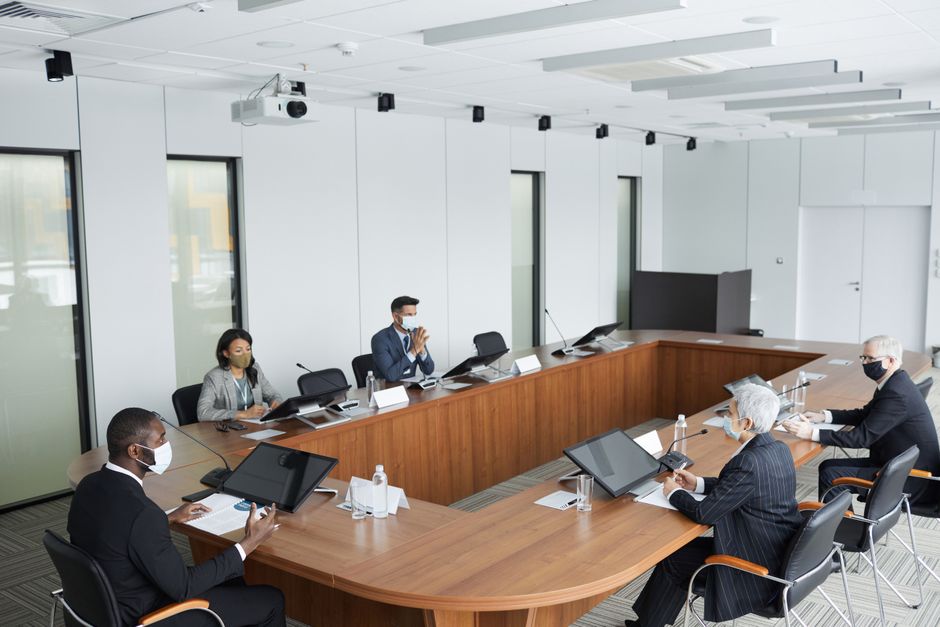
In a buyout where the buyer effectively sits on both sides of the negotiating table, the standard mechanism is a special committee of independent directors. Denholm used that same process to design the 2025 pay award, which she described to investors as built around "incentives that will drive peak performance from our visionary leader."
Her legal duty in any takeover scenario is to Tesla's shareholders — extracting the highest possible price from the buyer. Yet that duty also directly enriches Musk: every $US500 billion she negotiates upward releases another slice of his award. Her independence has been questioned previously, notably by the Delaware judge who struck down Musk's earlier compensation package.
The organic path is looking steeper
Reaching those milestones without a takeover is becoming harder. Tesla set a delivery record last quarter, but only by cutting prices — causing its operating margin to collapse to just 1.4 per cent. Gilbert was blunt: "On last quarter's numbers, the milestones look like a mountain."
That context makes the acquisition pathway more relevant for investors to consider, though analysts are divided on timing and likelihood. Wedbush analyst Dan Ives puts the odds of a SpaceX-Tesla combination by 2027 at above 80 per cent. Gilbert rates a deal plausible but not inevitable, noting that SpaceX's board cannot approve a transaction that does not stack up financially.
Australians have skin in the game
The stakes extend to ordinary Australian investors. More than 28,000 local retail investors participated in the SpaceX float in June, and mining billionaire Gina Rinehart committed $1.4 billion to the raise. SpaceX stock has since slipped below its $US135 issue price, closing recently at $US133.29.
Gilbert warned that an all-stock merger at that scale would leave existing SpaceX holders "owning meaningfully less of a very different company." Any deal would ultimately go to Tesla shareholders for a vote — but its terms would first be negotiated and recommended by a board chaired by the woman who once kept her parents' petrol station books in Milperra.
Tesla, SpaceX and Musk did not respond to requests for comment. Denholm has not publicly commented on the matter.