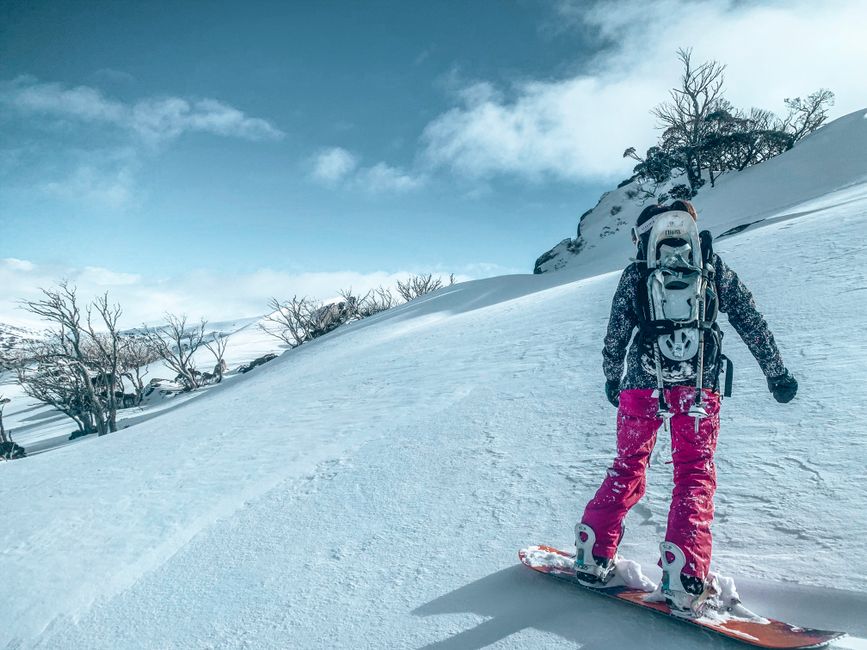
Australian alpine snowboarder Harvey Edmanson says his sporting future is in serious doubt after one of the hottest and shortest snow seasons on record left him with more than a month of lost training time — and he warns the damage extends far beyond his own career, threatening to hollow out the next generation of Australian snow sports talent.
The 27-year-old Melbourne-based facade designer is a member of the Australian Alpine Snowboard National Team and funds his own athletic career, fitting training sessions around full-time work. He cannot afford to chase snow overseas the way some of his peers now do.
"If I don't have snow and training opportunities in Australia, it's going to make it really hard to continue," Edmanson said.
A Season Cut Short
Edmanson typically trains on Australian slopes from early July through to late September, working primarily out of Mount Buller in Victoria, with additional time at Perisher and Thredbo in New South Wales. This year, his season started three weeks late and was cut off entirely by late August — a loss of well over a month of critical on-snow preparation.
"It makes it hard when I miss out on over a month of training," he said.
The shortened season also meant less access to the dedicated, sectioned-off slope space that competitive athletes need to simulate racing conditions. Ski resorts that would ordinarily accommodate such requests found themselves unable to do so, with too little terrain holding adequate snow depth.
"When there's only limited snow and limited run hill space, then it's not possible," Edmanson said.
Several atmospheric factors drove this year's historically poor season. A Bureau of Meteorology spokesperson explained that prolonged high-pressure systems over the Tasman Sea directed warmer air from the north across south-eastern Australia throughout winter. A University of Melbourne climate scientist added that the region simply did not receive the large Antarctic cold fronts that normally deliver heavy snowfall, as frequently as in previous winters.
Experts stress that not every year will be this lean, but warn the broader long-term trend is cause for concern.
Young Athletes Bearing the Brunt
Edmanson runs a futures program for developing snow athletes and says he is watching the squeeze affect the next generation firsthand. Young competitors, many of whom must balance school commitments with training, are not getting enough time on snow in Australia to develop properly.
Edmanson himself did not travel overseas to compete until after finishing school, and credits his formative years training domestically as the foundation of everything that followed.
"The most important part of my training and development all happened in Australia," he said. "It's really scary that there's a lot of young athletes that might not have that opportunity."
Some elite athletes are now bypassing Australia's winter season altogether, heading offshore for off-season training as domestic conditions deteriorate. For self-funded athletes like Edmanson, who joked he "can't commute to New Zealand," that option simply doesn't exist.
Olympic Momentum at Risk
The timing makes the situation all the more frustrating. The Milano Cortina Winter Olympics delivered a historic result for Australia — three gold medals, two silvers and one bronze, the nation's best-ever Winter Games haul — generating genuine excitement around snow sports across the country.
Edmanson says sustaining that momentum depends on giving young athletes the home-grown experience that produces champions in the first place.
"We need to give young athletes that opportunity from riding at home," he said.
Without reliable domestic snow seasons, the pipeline of talent that produced Australia's Olympic breakthrough could dry up before the next generation gets its chance. For Edmanson and those he coaches, the question is becoming urgent: how do you build world-class snow athletes in a country where the snow is disappearing?