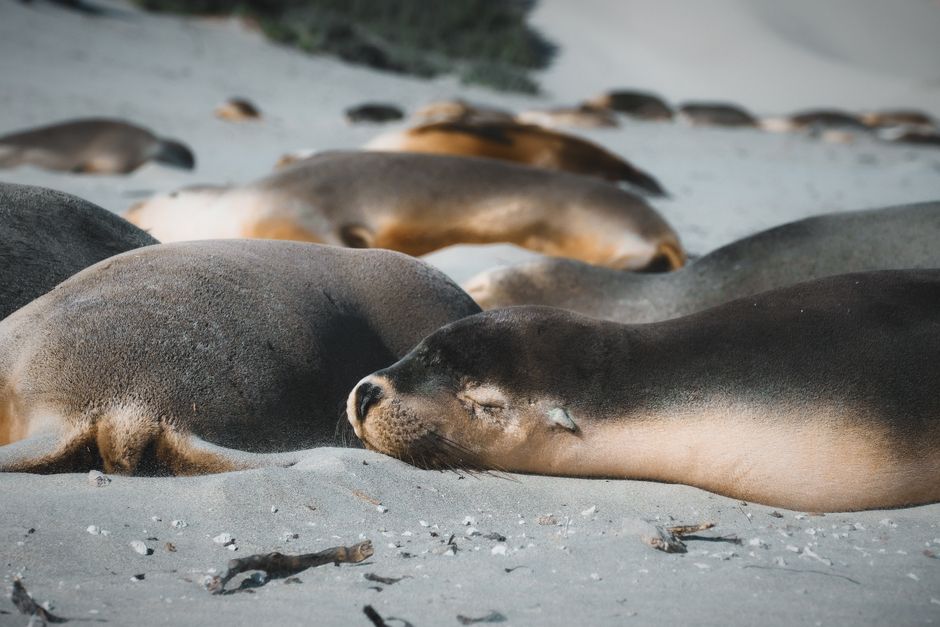
A confirmed detection of H5N1 bird flu on South Australia's Kangaroo Island has placed Australia's most iconic and endangered sea lion colony under immediate threat, with conservation groups declaring the discovery a wildlife emergency that demands urgent federal government action.
Four greater crested terns have tested positive to the highly pathogenic virus across the island, including one bird at Seal Bay — a critical breeding site on the island's southern coastline that is home to roughly 5 per cent of the entire global population of Australian sea lions.
A Detection Conservationists Feared but Predicted
The Australian sea lion is found nowhere else on Earth, and the species' total population stands at just 12,000 individuals. That fragility is precisely what makes the Seal Bay detection so alarming to those who have been monitoring the global spread of H5N1 in marine environments.
Australian Marine Conservation Society campaigns director Alexia Wellbelove described the news as a moment the conservation community had long feared.
"This is the news we feared but predicted given the experience of bird flu internationally," she said. "Endangered Australian sea lions are now on the frontline of the potential wildlife crisis, and a positive detection in a greater crested tern at one of the largest breeding colonies means we must be on high alert."
Wellbelove stressed that the species simply does not have the numbers to withstand the kind of losses the virus has inflicted on marine mammal populations in other parts of the world.
"With only 12,000 individuals left, the Australian sea lion simply cannot absorb the kind of losses we have seen bird flu inflict on marine mammals overseas," she said.
A Virus with a Devastating Global Track Record
The international precedents are deeply troubling. H5N1 has already proven catastrophic for marine mammals across two continents, killing 30,000 sea lion pups in South America within just six months. Closer to home, more than 13,000 elephant seal pups on Australia's remote Heard Island perished from suspected bird flu in a single season last summer.
The virus is known to jump from infected birds to seals and sea lions, a transmission pathway that has been documented repeatedly overseas and that conservationists now fear could play out at Seal Bay.
"In South America, this virus killed 30,000 sea lion pups in just six months. On our own Heard Island, it killed more than 13,000 elephant seal pups in a single season," Wellbelove said. "With a positive bird flu detection at this important colony, we now have to face the very real possibility of similar devastation here at home, in a species already teetering on the edge."
Calls for $200 Million Federal Response Fund
Conservation organisations are now pressing the federal government for immediate and co-ordinated national action. The Australian Marine Conservation Society is calling for the establishment of a $200 million national wildlife resilience fund to protect at-risk species and enable rapid responses to emerging biosecurity threats.
"This is no longer a question of prevention," Wellbelove said. "Every colony, every pup, every individual matters when a population is this small. We cannot afford to wait."
Authorities are continuing testing and surveillance operations across Kangaroo Island as environmental groups push for a nationally co-ordinated response framework to be put in place without delay.
What Happens Next
The detections have transformed what had been a months-long warning period into an active emergency footing. With H5N1 now confirmed at one of the most significant sea lion breeding sites in the world, wildlife managers, government agencies and conservation groups face a narrow window to act before the breeding season places the colony at its most vulnerable.
The Australian sea lion's survival has already been tested by decades of population decline. Experts say a significant H5N1 outbreak at Seal Bay could prove impossible for the species to recover from.