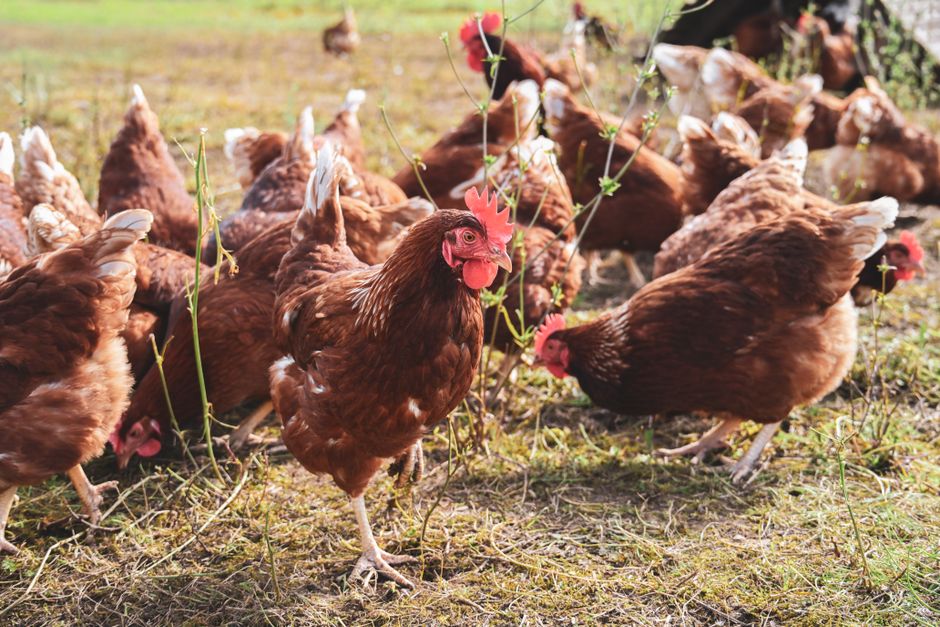
Australia's free-range egg industry is facing an existential threat as the spread of H5N1 avian influenza prompts urgent biosecurity measures that are forcing hens off pasture and into barns — raising serious questions about the future of free-range production across the country.
There are currently 78 confirmed cases of H5 avian influenza in Australia, with 58 of those linked to a mass casualty event at Baudin Rocks in South Australia. While the commercial egg industry has so far avoided direct infection, precautionary steps now being taken to contain the virus could fundamentally reshape how eggs are produced and labelled.
Industry Warns of a 'Riskier Operating Environment'
Australian Eggs managing director Rowan McMonnies said the sector is "facing up to a riskier operating environment for the foreseeable future," adding that the transmission of H5 avian influenza among Australian wildlife signals the virus is "established and is here to stay in the medium term."
McMonnies acknowledged that full eradication "seems unlikely," but said the industry had been preparing for such a scenario for several years. He said strict biosecurity protocols are being maintained, with enhanced measures put in place to deter wild birds and prevent crossover into commercial egg farms. He also noted the industry has worked with authorities to improve outbreak response processes, drawing on lessons from overseas, so affected farms can recover faster and limit disruption to egg supply.
Free-Range Standards Being Relaxed Amid the Outbreak
Under rules enforced by the Australian Competition and Consumer Commission (ACCC) since 2018, an egg can only be labelled free-range if it is laid by hens with meaningful and regular access to outdoor range during daylight hours, with a stocking density of no more than 10,000 hens per hectare. That density must also be displayed on packaging.
However, as of July, the ACCC confirmed it will not take enforcement action against farms that breach free-range labelling standards when birds have been brought indoors for biosecurity reasons. In practical terms, this means eggs from hens housed in barns may still carry free-range labelling — a significant shift that reflects just how seriously authorities are treating the threat.
Experts Call for All Poultry to Be Confined
Microbiologist and food safety expert Associate Professor Julian Cox said the advice is straightforward: confine birds to their sheds. He explained that free-ranging birds can pick up the virus and spread it to non-commercial species, while wild birds in the area could equally carry the infection into commercial flocks.
"If you've got some kind of coop, lock them in the coop. It's for their own good," Cox said, extending the advice to backyard poultry keepers as well as commercial operators.
Cox, who also serves as scientific director of the Food Safety Information Council, said that if an outbreak were detected in a commercial facility, the likely response would be swift and severe — infected flocks would be culled immediately. In a region with multiple commercial operations, he said authorities would likely cull all birds across the "entire area," describing it as akin to a "firebreak for bushfires."
Worst-Case Scenario: Supply Shocks and Months of Recovery
Should a major outbreak occur, Cox warned the worst-case scenario could see thousands of birds culled, triggering a significant drop in both egg and meat supply. He said cleaning and restocking affected facilities takes time — with a minimum of four to five months before replacement flocks are producing eggs, and at least six weeks for meat chicken operations to recover.
"There would be a lag in the market," Cox said, underscoring the potential economic and consumer impact of a large-scale outbreak.
With biosecurity showing no signs of easing and H5N1 now considered entrenched in Australia's wildlife, producers, consumers and regulators alike are being forced to reckon with the possibility that the free-range egg as Australians have known it may look very different in the months — and years — ahead.