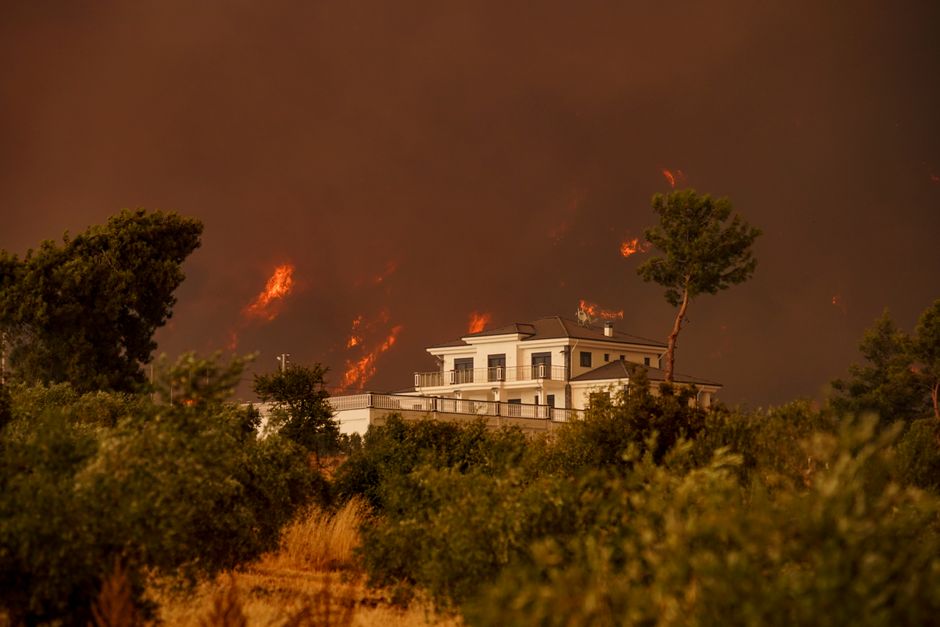
Catastrophic wildfires tearing through France, Spain and Italy have forced more than 80,000 people from their homes and holiday destinations, killed three firefighters, and pushed European emergency services to the brink, as a relentless heatwave and fierce winds drive blazes of unprecedented intensity across the continent.
Tens of thousands flee as French fires devour Atlantic coastline
In southwest France, authorities ordered the complete evacuation of the Cap Ferret peninsula — one of the country's most popular Atlantic holiday destinations — as two major separate fires converged on homes, campsites and pine forests. In total, around 63,000 people, the majority of them tourists, were ordered to leave the area.
Residents and visitors described desperate escapes. "From our home, we had a view of the fires … We could see the clouds becoming darker and darker," said one 26-year-old man who fled the town of Biscarrosse after police ordered his neighbourhood to evacuate. Boats were deployed alongside road convoys to assist the mass evacuation.
The fire originating near Saumos, north of Cap Ferret, became the largest blaze of the French season, tearing through more than 10,000 hectares of forest and destroying around 80 homes — about 50 of them completely. Interior officials warned the fire was threatening to cut off the only road access to the Cap Ferret peninsula.
Near the city of Bordeaux, more than 20,000 people — mostly tourists staying in campsites and holiday rentals — had already been evacuated since Wednesday as a separate fire ravaged a coastal pine forest. A firefighting captain described the conditions as a blaze of "rare" intensity, citing the density of the closely packed pines fuelling the flames.
Two firefighters died earlier in the week battling a blaze near Bordeaux airport. A 69-year-old resident of Le Porge, south of Bordeaux, described gendarmes knocking on every door in his street with the fire just 500 metres away. "We grabbed some things and left," he said. Skies above the town turned a deep orange as helicopters made repeated water-bombing runs over evacuated streets.
French President Emmanuel Macron formally requested assistance from the European Union as the country's emergency resources were stretched to capacity.
Spain declares national emergency as fires merge outside Madrid
Across the border in Spain, authorities declared a national emergency over wildfires for the first time in the country's history, unlocking federal funding as blazes merged west of Madrid in what regional leaders described as the worst wildfire event the area has ever seen.
More than 19,000 people were ordered to evacuate from towns in the mountains west of the capital as more than 2,000 personnel and 10 aircraft struggled to prevent multiple fires from converging. Government officials confirmed two major fires had already merged, with a third blaze in Avila province on the verge of joining them. In just one residential development, 43 homes were destroyed.
"This is the worst wildfire in our region's history," Madrid's regional leader said after confirming the fires had merged.
Among those displaced was a man sheltering in Cebreros, west of Madrid, who said he had to run from his house as a fireball bore down on him. "If I'd taken five more minutes, it would have wiped us out," he said.
Late on Thursday, authorities also issued evacuation orders for 3,500 people in the town of Aldea de Fresno, west of Madrid, after a separate forest fire burned out of control. Emergency alert messages were sent directly to residents.
A much larger wildfire in Guadalajara province, north of Madrid, had already burned approximately 32,000 hectares since igniting the previous Thursday, with hundreds of firefighters and military troops still working to contain it. Spain's civil protection chief warned that some fires become so extreme that, despite the deployment of aircraft and ground crews, firefighters stand "no chance". "Climate change is what kills, what destroys our villages and our natural and cultural heritage," she said.
Sicily overwhelmed as Italy's firefighters battle dozens of simultaneous blazes
In Italy, around 6,000 firefighters, forest guards and civil protection officers battled dozens of fires burning simultaneously across Sicily, some of which had been raging for several days. One firefighter died after falling ill while fighting the flames, according to Italy's interior minister.
The scale of the crisis across all three countries has pushed the total area of land burned so far this year in European Union member states to the second largest on record, according to satellite data from the European Forest Fire Information System.
Climate change driving more intense and faster-spreading wildfires
Scientists are clear about the underlying cause. Climatologists from the World Weather Attribution group, in a study published on Thursday, concluded that European droughts are now more severe as a direct result of climate change driven by the burning of fossil fuels. Fires, they warn, are breaking out faster and burning more intensely as a consequence.
The crisis echoes the destructive potential seen in other parts of the world — much as Bushfires in Australia have demonstrated the catastrophic and widening reach of extreme fire weather driven by a warming climate.
The Bordeaux region suffered a similarly devastating fire season in 2022, when blazes scorched 30,000 hectares of the same forests and forced some 50,000 people to evacuate — a grim precedent that the current crisis appears set to surpass. Meanwhile, firefighters around the world continue to face increasingly dangerous conditions as extreme weather events multiply.
With temperatures exceeding 40°C across parts of southern Europe, strong winds forecast to continue, and firefighting resources already exhausted, authorities across the region warned the situation could deteriorate further before any relief arrives.