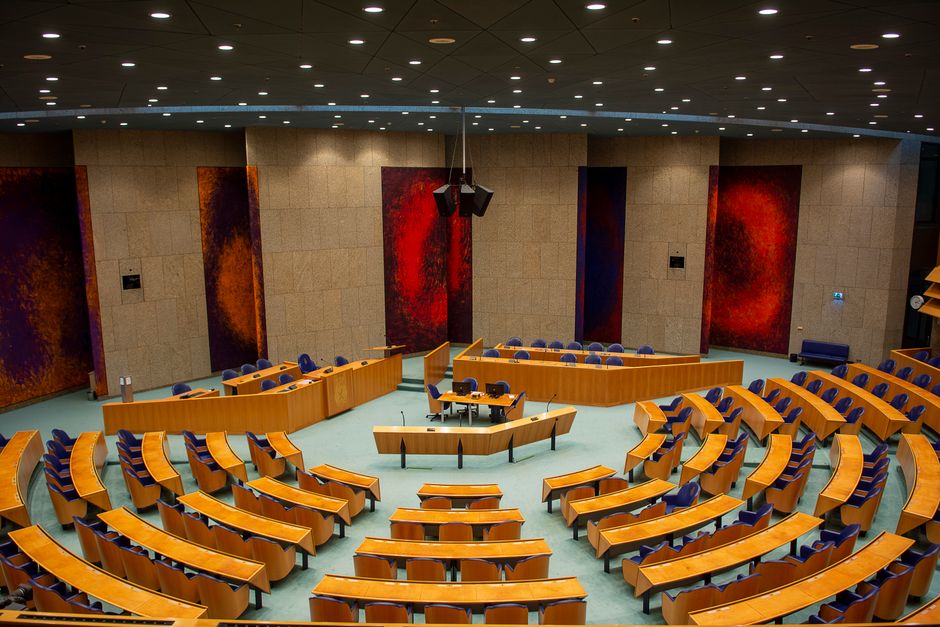
Former Israeli army chief Gadi Eisenkot and his centrist allies wasted no time moving against caretaker Prime Minister Benjamin Netanyahu's record on Wednesday, launching a flurry of legislative proposals in the opening session of Israel's new 120-seat parliament, the Knesset, even as coalition talks remained deadlocked with neither side holding enough votes to govern.
Legislative agenda set from the opening bell
Eisenkot's Yashar party filed multiple proposals before the new parliament convened, targeting two of the most contentious issues of recent Israeli political life. The first called for the establishment of an independent commission to investigate the security failures that allowed the Hamas attack of 7 October 2023, an inquiry Netanyahu has long resisted. The second sought a full repeal of the sweeping judicial overhaul his government had implemented, a package of changes that triggered some of the largest public protests in Israeli history before being overshadowed by more than three years of ongoing conflict.
Eisenkot's bloc also moved quickly to consolidate its position in the chamber itself, announcing it had secured enough votes to install a new parliamentary speaker. Matan Kahana, himself a former senior military figure, is the bloc's nominee for the role. The current speaker, Amir Ohana, a Netanyahu ally, confirmed he had received a request from 67 Knesset members to hold a vote for his successor the following Tuesday, noting he was granting it "despite my strong opposition to the intention of the emerging coalition."
Neither bloc can govern alone
Despite the assertive opening moves, the fundamental arithmetic of Israeli politics remains unresolved. Neither Eisenkot nor Netanyahu holds the 61 seats needed to form a majority government. Eisenkot, speaking before his swearing-in, pledged to form "a national-emergency government as quickly as possible," while Netanyahu used his post-session address to push for a national-unity arrangement.
The involvement of Arab-Israeli politicians in giving Eisenkot's bloc its legislative opening has itself become a flashpoint, drawing fierce criticism not only from Netanyahu's supporters but also from some right-wing figures within Eisenkot's own coalition of backers.
Israeli President Isaac Herzog, who has formally tasked Eisenkot with attempting to form a government, opened the session with a plea for restraint. "Do everything to avoid a repeat election," he urged lawmakers, calling on rivals to "reach out a hand for compromise." The appeal appeared to fall on deaf ears almost immediately, with shouting breaking out between lawmakers during the session.
Netanyahu warns of Iran threat, Eisenkot fires back
Netanyahu, who has served as Israel's prime minister for nearly two decades, framed his national-unity pitch around the threat from Iran. "In the very near future, we're going to be confronted by international pressure to accept a nuclear-armed Iran and the preservation of this terror regime that seeks to annihilate us," he told parliament. Iran denies pursuing nuclear weapons, and both Netanyahu and US President Donald Trump had previously claimed Iran's nuclear program had been severely degraded by Israeli bombing campaigns carried out with American support.
Netanyahu's remarks came against a backdrop of shifting diplomatic winds. Reports indicate he appeared to acknowledge new international constraints following a strong showing by US Democrats in last week's midterm elections, widely seen as a rebuke of Trump's backing for the war effort.
Eisenkot dismissed Netanyahu's speech as "shameful," saying it demonstrated the prime minister was "unfit to remain in office for even one more minute." He also cancelled a planned meeting with Netanyahu's Likud party, with Yashar accusing the outgoing premier of prioritising personal political survival over national unity. Netanyahu faces potential jail time if convicted on corruption charges once he leaves office, a factor widely seen as shaping his political calculations.
The tension of the opening session set the tone for what promises to be a volatile period of coalition negotiations, with Israel's future government direction and leadership still far from settled.