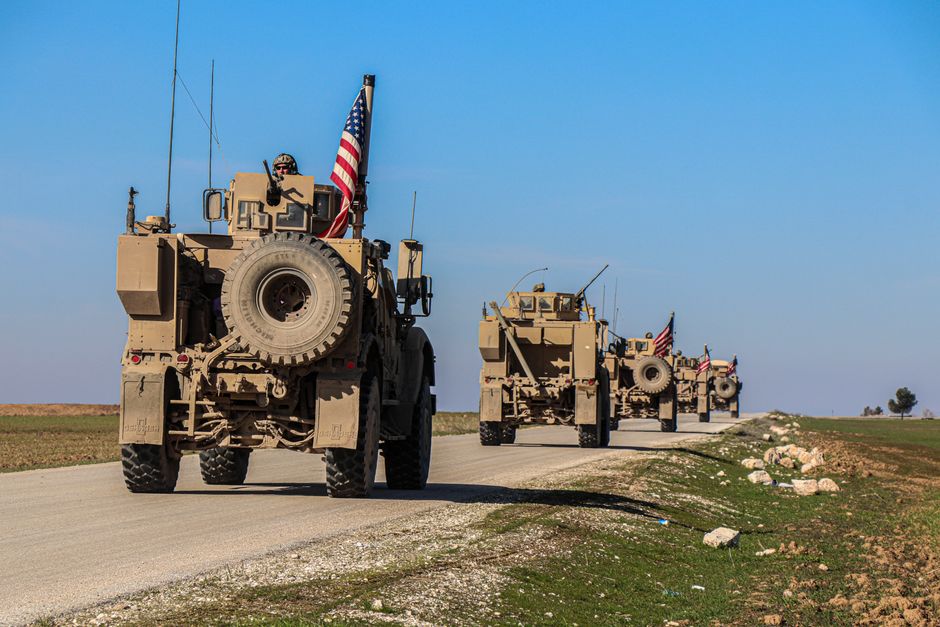
Donald Trump has announced the complete withdrawal of United States forces from Iraq, declaring an end to a 12-year military campaign against the Islamic State group and describing the conflict as "a very expensive excursion into hell." The last American troops departed an air base in northern Iraq under a bilateral agreement struck between Iraqi and US officials, with a deadline of September 30 marking the formal conclusion of the mission.
Trump took to social media to describe the pullout as "orderly" before appearing at a White House event where he addressed the withdrawal at length. "It's been a long time with very bad decision making that got us involved in this quagmire in the first place. It was a quagmire. For many, many years it lasted. But soon that part of history will be over," he told those gathered.
A milestone in US-Iraq relations
The departure of US forces was confirmed by Pentagon spokesman Sean Parnell, who said troops and equipment had completed an "orderly departure" from the air base in Irbil, located in northern Iraq's semi-autonomous Kurdish region. Parnell described the moment as a significant milestone, saying it "reflects the success of a 12-year campaign that defeated ISIS as an organised military threat in Iraq and across the region."
He added that the withdrawal marked "a transition from a wartime coalition mission to an Iraqi-led security effort supported by a more normal bilateral security relationship" — signalling a new chapter in how the two countries interact on defence matters.
Iraqi Prime Minister Ali al-Zaidi presided over the handover ceremony, framing the moment as the dawn of a "new phase: one defined by Iraq's sovereignty, the strength of its institutions, the readiness of its forces, the unity of its decision-making and balanced partnerships with its friends." Trump, in turn, praised al-Zaidi warmly, calling him "outstanding," a "fantastic guy, friend of mine" and expressing confidence he "will hopefully be able to handle things very well."
Celebrations — and concerns — across Iraq
Iraqi military units paraded through the streets of Baghdad and the Shi'ite holy city of Najaf to mark the occasion, with scenes of celebration spreading across the country. Baghdad resident Ahmed Salah said the withdrawal "fills our hearts with joy," adding that at 70 years old he felt "reborn." He also called on powerful militia groups to lay down their arms and allow the government to take sole responsibility for the nation's security.
Iran-aligned factions also welcomed the US exit. However, the mood was more cautious in Iraq's Kurdish region, where many fear a potential resurgence of IS militants without the support of American forces. Concerns also linger over the threat posed by Iran-linked armed groups operating within the country.
The withdrawal agreement was reached two years ago and comes amid the broader, ongoing tensions between the United States and Iran — a conflict that has at times played out on Iraqi soil, with Iran-backed militias targeting US personnel and American forces striking back against those groups' strongholds. For context on how these regional dynamics have shaped US military strikes against Iran, the situation in Iraq has long been a flashpoint.
Historical backdrop: two decades of US involvement
The roots of America's presence in Iraq stretch back to the 2003 invasion that toppled dictator Saddam Hussein. US forces withdrew in 2011, but returned three years later after IS swept across large portions of Iraqi territory, prompting Iraqi authorities to invite a US-led coalition to help combat the militant group.
Trump framed the final exit as a victory — for the United States, for Iraq, and as evidence of the defeat of IS. The Foreign policy of the first Trump administration was marked by a stated desire to reduce US military engagement abroad, and this withdrawal represents a significant moment in that broader strategic posture.
Questions now remain over the future of Iraq's powerful militia groups, which the central government has so far been unable to disarm — a challenge that will define much of the country's path forward as it moves into this new era of self-reliance.