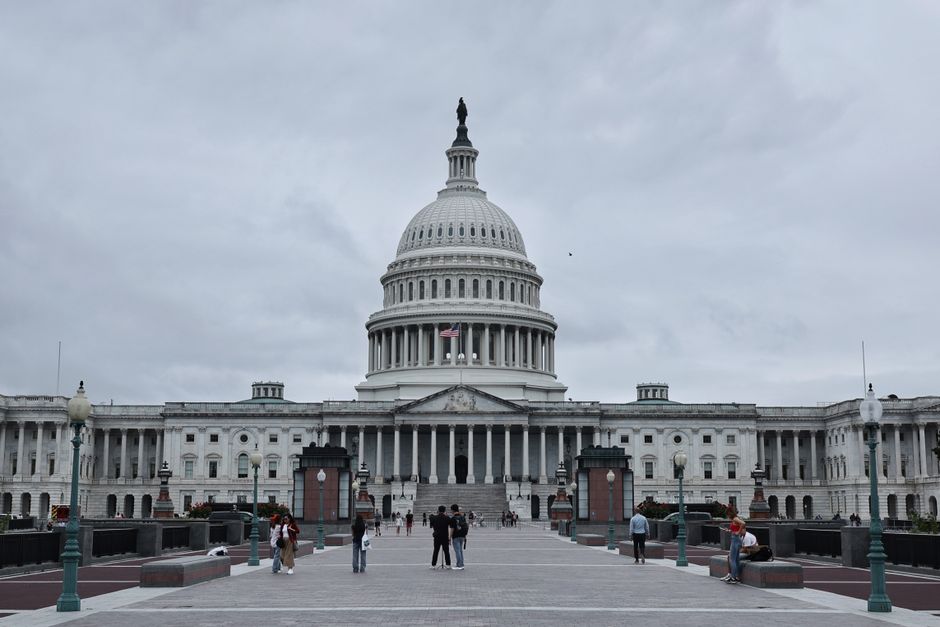
House Democrats have secured 258 seats in the US House of Representatives, their strongest general election result in more than three decades, setting up a sharply divided government with a Republican president in the White House and both chambers of Congress now under Democratic control.
The 258-seat milestone was reached after Democrat Chuck Hubbard defeated Republican incumbent Virginia Foxx in a North Carolina House race. Democrats have so far gained 44 House seats in total, surpassing the 40 seats they picked up during Donald Trump's first midterm in 2018. Four House races remain outstanding, in Minnesota, Tennessee and two in Louisiana, with Republicans holding at least 173 seats in the 435-member chamber.
A majority not seen since the Clinton era
The result gives Democrats their largest House majority from a general election since Bill Clinton was first elected president in 1992, when Democrats also won 258 seats. It eclipses the 257-seat majority secured during Barack Obama's 2008 election sweep. In the Senate, Democrats won a 56-seat majority in the 100-member chamber, their biggest advantage in more than a decade.
Progressive leader Alexandria Ocasio-Cortez described the result as historic, telling reporters at the Capitol: "This is a historic moment for our country. This is one of the largest classes we have seen." She called the figures "a mandate for change."
The scale of the Democratic wave reflected widespread voter anger over high prices, the Iran war and concerns about corruption, with the electorate making its discontent with the president unmistakably clear at the ballot box.
A 100-day agenda focused on affordability and accountability
As Democrats prepare to take control of both chambers in January, they have outlined a 100-day legislative agenda built around two core priorities: tackling the high cost of living, and exercising aggressive Congressional oversight of the Trump administration.
Among their most immediate legislative goals, Democrats plan swift votes to reverse Medicaid cuts made under the Republicans and to restore Affordable Care Act tax credits that were allowed to lapse. Centrist Democrat Tom Suozzi from New York argued the caucus should devote roughly 75 per cent of its energy to affordability concerns and 25 per cent to accountability matters, saying the two should be linked in the public mind.
"How does that affect" ordinary Americans, Suozzi said, urging colleagues to connect investigations into Trump's financial dealings directly to kitchen-table economic issues.
Colorado representative Jason Crow captured the mood inside the caucus: "Like, hell yeah, we should feel pressure. There are people dying in this country and people losing their health care, losing their livelihoods, losing their farms, being terrorised from ICE."
Investigations, impeachment and the limits of opposition power
Beyond legislation, Democrats have vowed to deploy their subpoena powers to launch a broad range of investigations, explicitly framing the move as a constitutional check on presidential power. High on that list are inquiries into how Trump and members of his family have accumulated greater wealth since his return to office.
Incoming House Speaker-in-waiting Hakeem Jeffries has not ruled out pursuing impeachment proceedings against Trump for a third time, though no firm decision has been announced. Democrats voted to nominate Jeffries as their leader ahead of the new Congress convening in January.
The combination of a large House majority, a strengthened Senate bloc and a detailed oversight agenda gives Democrats significant institutional leverage. Whether they can translate that into tangible results for voters, particularly on cost-of-living pressures that remain acute, will define whether the historic majority delivers on what Ocasio-Cortez called a mandate for change.
With divided government now locked in for the remainder of Trump's second term, the stage is set for sustained confrontation between a Democratic Congress and a Republican White House across every major policy front.