A 21-year-old Deakin University student who was given just a one per cent chance of survival at birth is now pursuing what would be a historic milestone in Australian medicine — becoming the country's first blind doctor.
Anna Dang, who studies biomedical science at Deakin and navigates campus life with the help of her guide dog Kylie, says her determination to enter the medical profession is deeply personal. Doctors have saved her life not once but twice, and she wants to repay that debt in kind.
"I just want to give back to the field that has allowed me to live such an incredible life," she said.
A life defined by survival against the odds
Dang was born four months premature in Vietnam, alongside her twin sister. Both sisters were born blind. At birth, Dang was given only a one per cent chance of surviving, an extraordinary statistic that has shaped her entire outlook on life.
Her family relocated to Australia when she was four years old. As a teenager, a new crisis emerged: after developing anorexia, Dang contracted a severe infection that left her mother being warned to prepare for the worst possible outcome.
"You might have to prepare to say goodbye," Dang recalled being told to her mother at the time.
She survived. And rather than retreating from the trauma, she channelled it into ambition.
"Someone has to do it first, and then others will follow," she said, speaking about the prospect of becoming Australia's first blind doctor.
Stubbornness as a superpower
Dang is disarmingly candid about the personal quality she believes will carry her furthest: a relentless, almost combative stubbornness. She acknowledges that others have noticed it too.
"I'm very stubborn," she said. "Very, very stubborn. And I've been told by so many people that I'm dogmatic."
What might be considered a character flaw in another context is, in Dang's case, the engine behind a dream that many might consider impossible. Her path to medicine begins with her current degree in biomedical science — the foundational discipline required before applying to medical school — and she shows no sign of wavering.
Those around her appear equally confident. Liza Raymond, a staff member at Deakin University, said Dang has the personal qualities required to turn her ambitions into reality.
"She certainly has the right personality to do and make her dreams come true," Raymond said.
How technology is bridging the gap
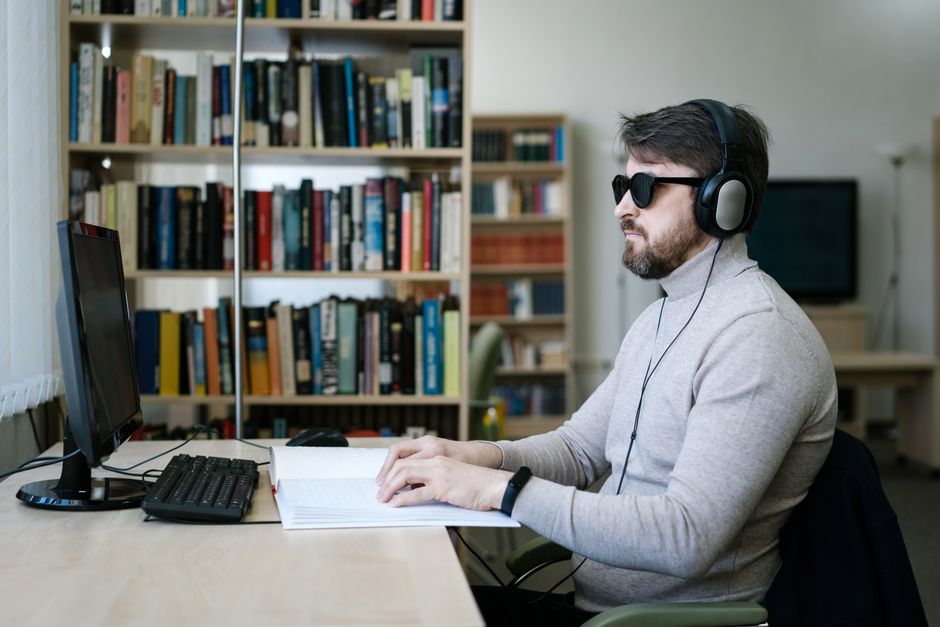
The practical challenges of studying medicine without sight are significant, but Dang is already finding ways around them. She uses artificial intelligence tools on her phone to help her engage with anatomical models, medical scans, and diagrams — the phone essentially describes what it sees, translating visual information into accessible knowledge.
It is an innovative approach that speaks to how rapidly AI is reshaping the boundaries of what is possible in education and professional training.
Dang is realistic about the clinical limitations she would face as a practising doctor. She acknowledges that her work would likely be confined to diagnosis and patient consultations rather than hands-on procedural medicine. But she argues that those limitations come with a countervailing strength that many sighted doctors may lack: a profound, lived capacity for empathy.
"I won't just be the doctor who can diagnose you and treat you, but I can be that doctor who can also help you through the ups and downs of being unwell," she said.
It is a compelling vision of what inclusive medicine could look like — a doctor who understands, in a visceral and personal way, what it means to be vulnerable, frightened, and dependent on the skill and compassion of others.
Breaking barriers in Australian medicine
If Dang succeeds, she would make history. There is currently no blind practising doctor in Australia, making her pursuit genuinely groundbreaking. The path is long — biomedical science leads to a medical degree application, then years of training and residency — but Dang's track record of defying predictions suggests she is not easily deterred.
Her story arrives at a moment when conversations about diversity and inclusion in the medical profession are gaining momentum, and when assistive technology is opening doors that were previously firmly closed to people with disabilities.
For Dang, the mission is not abstract. It is rooted in gratitude. Twice she was pulled back from the edge by doctors who did not give up on her. Now she intends to spend her career doing the same for others.
"Someone has to do it first," she said again — quietly, but without any doubt.