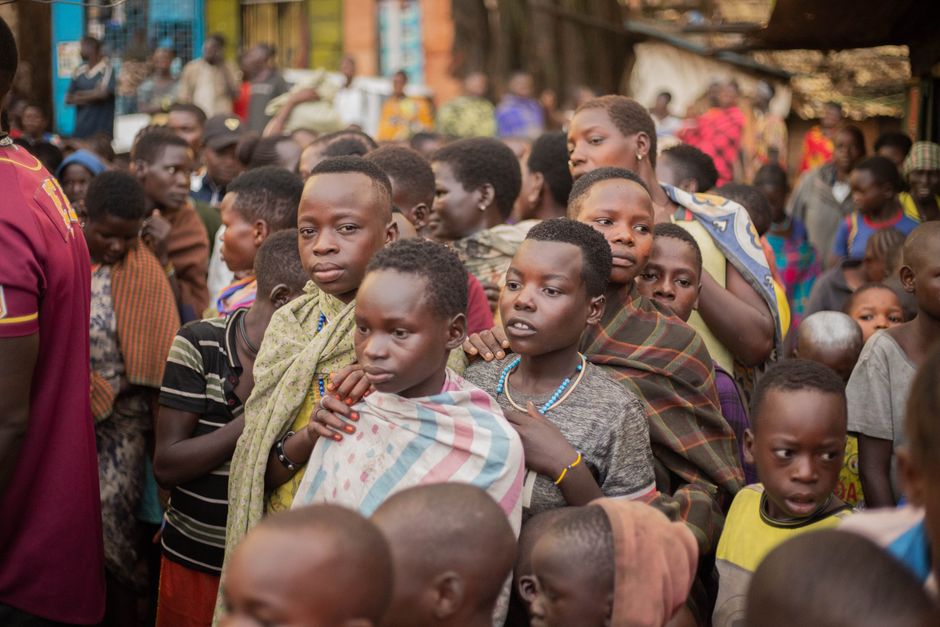
In the storm-battered city of Soroti in eastern Uganda, a pastor is racing against the rain — and against deeply entrenched cultural beliefs — to protect some of his country's most vulnerable children. Pastor Fred Alimet has made it his life's mission to advocate for Ugandans living with disability, a group of nearly six million people who are widely regarded, in a tradition rooted in cultural superstition, as cursed or spiritually possessed.
A calling born from conjoined twins
Alimet's path began in 2013, when he learned that a mother in the village of Omalla, just outside Soroti, had given birth to conjoined twins. Esther Akello's daughters, Apio and Acen, were joined at the hip. Ugandan hospitals lacked the surgical capacity to separate them, so Alimet took to social media, mobilising his network to raise funds. The effort succeeded — the girls were taken to the United States, where they underwent surgery in Ohio.
But for Alimet, the medical outcome was only part of the story. The twins' father, James, had fled the village under enormous social pressure. "People were calling those children a curse. People were calling those children a misfortune," Alimet recalls. "People spoke a lot of things, and that is what probably scared this young man, and he took off." Alimet tracked James down and brought him home. James now describes the pastor simply as a man with "a good heart." The family runs a chicken farm outside Soroti, and Alimet visits them regularly.
Witch doctors and a broken system
About 15 kilometres from Alimet's church, in the village of Omalera, a very different kind of practitioner operates. Witch doctor Robert Apedu sees patients in a dim, cluttered clinic — bottles and bowls strewn across the floor, bird carcasses hanging from the ceiling. When a mother brings in her 17-year-old son Noah, who has hydrocephalus and cannot walk without assistance, Apedu drags the boy onto a mat and massages a tonic of tree roots and water into his legs, telling the mother it will cure his condition.
This scene is not an aberration. It reflects the reality of healthcare that many rural Ugandans living with disability depend upon. With formal medical services stretched or inaccessible, families turn to traditional practitioners — and cultural beliefs about disability as a supernatural affliction make that path feel logical. For children like Noah, whose conditions are medical rather than mystical, the consequences can be profound.
For families navigating complex childhood health conditions, access to appropriate medical care remains a critical challenge — as explored in coverage of supporting children with serious health conditions.
Preaching change from under a mango tree
Alimet's own upbringing shaped his convictions. The eldest of nine children, he was raised by a father who was also a pastor — a man who instilled in his sons the importance of valuing "people who are less privileged." That lesson took root. "I feel that drives me," Fred says. "To be in the place where people with disabilities cannot be heard. I can be heard on their behalf."
When recent storms sent a tree crashing through his church's roof and back wall, Alimet pressed on. By Sunday, with reconstruction stalled by lack of funds, he delivered his sermon to parishioners seated on plastic chairs beneath a mango tree. His congregation was rapt, responding to his calls with shouts of "Amen." The sermon wove biblical proverbs — "speaking up for those who cannot speak for themselves" and "defending the fatherless" — with sharp commentary on rape and society's treatment of people with disability.
It is after exactly these kinds of sermons, sources close to Alimet say, that families in crisis approach him for help. For a pastor whose church may still lack a roof, his reach into the lives of Uganda's most marginalised children appears to have no ceiling.