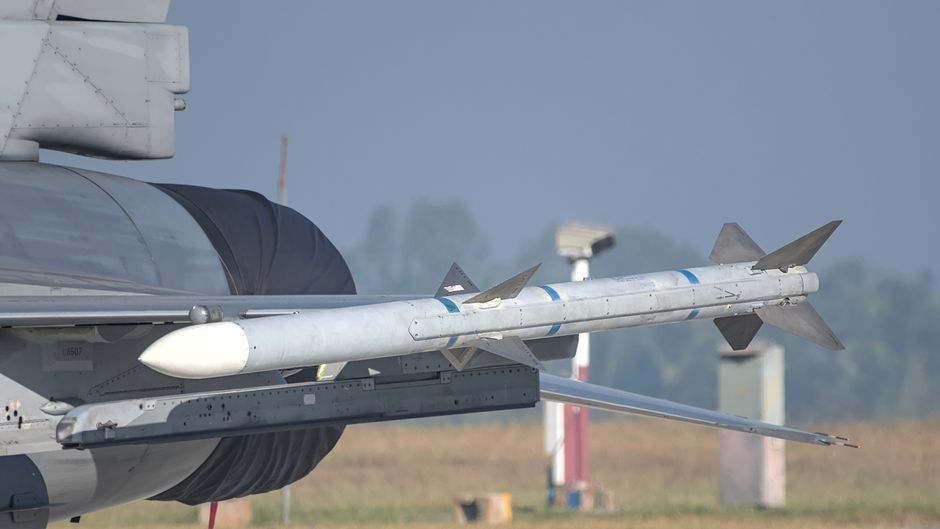
At midday on Monday, a Chinese submarine launched a nuclear-capable ballistic missile fitted with a dummy warhead into international waters in the South Pacific, with the projectile splashing down roughly 800 to 1,000 kilometres north-northeast of the Solomon Islands. The test — the first of its kind since 2024, and only the second in over four decades — has drawn fierce condemnation from Australia, New Zealand, the United States, Japan and Pacific island leaders, and raised urgent questions about China's strategic intentions in a region already on edge.
What China Did — and How It Tried to Frame It
Chinese state media described the launch as a "routine arrangement" of annual military training, insisting it was "safe," "professional," and not directed at any specific country or target. Beijing said it had notified relevant countries in advance in accordance with international law, and urged governments around the world not to "overinterpret" the matter.
Those assurances have satisfied almost nobody. Critics have noted that the advance warning given to affected nations amounted to only a few hours — well short of the widely observed 48-hour standard. Australia's Foreign Minister Penny Wong confirmed the government had been notified before the launch, but was unequivocal in her assessment: "Australia has been clear with China that we regard this as destabilising to the region," she said, adding that the test was "inconsistent" with Pacific leaders' expectations and occurred against the backdrop of a "rapid military build-up" lacking in transparency.
Prime Minister Anthony Albanese, who was in Honiara for Solomon Islands' national day celebrations when the missile struck the ocean nearby, was initially represented by his ministers before offering his own condemnation a full day later. "There is no doubt that this is a provocative act by China which does destabilise the region," he said. He also singled out the inadequate notice period as a further cause for concern.
A Chorus of Condemnation Across the Pacific
The diplomatic fallout has been swift and broad. Leaders and officials across the Indo-Pacific moved quickly to condemn the test as a dangerous escalation.
- Solomon Islands Prime Minister Matthew Wale — himself a guest of China at a stadium Beijing built, with Chinese police present on the day — was blunt: "China's a good friend of Solomon Islands, but this is not something a friend does."
- New Zealand Foreign Minister Winston Peters said he was "deeply concerned," stating plainly that Pacific nations have no interest in China using the South Pacific as a testing ground for missile capability.
- Japan expressed "grave concern" over the Chinese military's increased activity in the region.
- Taiwan's National Security Council Secretary-General Joseph Wu called it "a provocation that destabilises the Indo-Pacific," saying China had "proved itself again to be a bully on the block."
- The United States State Department called on China to "engage in meaningful arms control discussions," warning that Beijing's nuclear weapons build-up was "rapid and opaque" and "of great concern to the region and the world."
- NATO's Secretary-General cautioned against naivety about China's intentions.
Australia's opposition, to its credit, refrained from using the moment for domestic political point-scoring. Opposition foreign affairs spokesman Ted O'Brien described the launch as "irresponsible, and not welcomed," while Opposition Leader Angus Taylor used the moment to press for greater defence spending: "The best pathway to peace is strength."
The Hypocrisy Is Hard to Ignore
The timing has thrown into sharp relief a striking piece of diplomatic double-speak from Beijing. Just one week before the missile test, China's top diplomat in Australia, Xiao Qian, publicly chided Australian intelligence agencies for daring to state — accurately — that China had conducted espionage on Australian soil. He claimed such language "deeply wounded the feelings of the people of both China and Australia, and undermined the atmosphere of friendly co-operation between the two sides."
Those wounded feelings look hollow in hindsight. By the time those remarks were being published, Chinese naval vessels were already repositioning in the region to monitor the imminent launch. Launching a nuclear-capable missile into a neighbouring region's waters with only hours' warning is, by any measure, a far graver breach of "friendly co-operation" than a spy chief accurately describing espionage activity.
Former Home Affairs Secretary Mike Pezzullo did not mince words in his assessment of the broader context: "We are in a nuclear sense in a more unstable and unpredictable situation than we were at the height of the Cold War."
Australia Deepens Pacific Alliances as Tensions Rise
The missile test coincided with a significant week of Australian diplomacy in the Pacific. Australia and Fiji signed a landmark defence alliance — described as an Ocean of Peace pact — committing each country to come to the other's aid in the event of an attack. Tonga, Papua New Guinea and New Zealand have been invited to join the arrangement, which would give Australia a fourth formal treaty ally alongside the United States, New Zealand and Papua New Guinea.
Albanese was also in Honiara to advance negotiations on a new security treaty with Solomon Islands Prime Minister Wale, who also serves as head of the Pacific Islands Forum. Analysts have described China's military build-up as the most significant the region has seen since World War II, lending those negotiations added urgency.
The prime minister is set to continue his Pacific engagement on Wednesday, hosting the leaders of Papua New Guinea, Samoa and Tonga in Brisbane for the State of Origin decider at Suncorp Stadium — a pointed reminder that Australia's Pacific partnerships extend well beyond the defence table.
China's insistence that Monday's launch was merely routine will convince few in the neighbourhood. The message the missile sent — intentionally or not — was unmistakable.