Bulgaria's incumbent president Iliana Iotova has narrowly topped the first round of the country's presidential election, exit polls indicate, setting up a runoff against pro-Western challenger Andrey Gyurov on 1 November in a contest overshadowed by Black Sea security concerns and the ongoing war in Ukraine.
Iotova, a 62-year-old former journalist and European Parliament member who took over the presidency this year, secured between 35 and 36.5 per cent of the vote according to three separate exit polls. Gyurov, a banker and former caretaker prime minister, finished second with between 32.2 and 32.5 per cent. The margin was considerably tighter than pre-election surveys had suggested, with polls ahead of the vote predicting a more comfortable lead for Iotova.
A vote shaped by Ukraine and regional security
The election has been conducted against a backdrop of heightened anxiety over regional security. Four vessels were struck off Bulgaria's Black Sea coast this month, leaving 21 people missing in what are widely suspected to be incidents connected to the spillover from the Russia-Ukraine war. Prime Minister Rumen Radev said the attacks appeared to serve Russian interests and summoned the Russian ambassador, though his government has maintained there is no direct evidence linking Russia to the incidents.
The security climate has given added weight to the starkly different foreign policy positions of the two runoff candidates. Iotova, who supports dialogue with Russia and opposes sending military aid to Ukraine, has made the war a central theme of her campaign and pledged to serve as a "president of peace." After casting her vote, she said she also wanted to confront "the dire issue of poverty" in Bulgaria, which remains the European Union's poorest member state, alongside regional inequalities.
Gyurov, 50, has positioned himself as a firm supporter of Bulgaria's Euro-Atlantic commitments and has sharply criticised Prime Minister Radev's approach to Russia. At his final campaign rally in Plovdiv, he called for Bulgaria to be "a reliable ally within NATO, defending its interests through solid preparedness, strong diplomacy and clear positions." He told supporters after the first round result that he wanted "a Bulgaria that looks forward, a country that is European, free, and proud."
Turnout alarms democracy observers
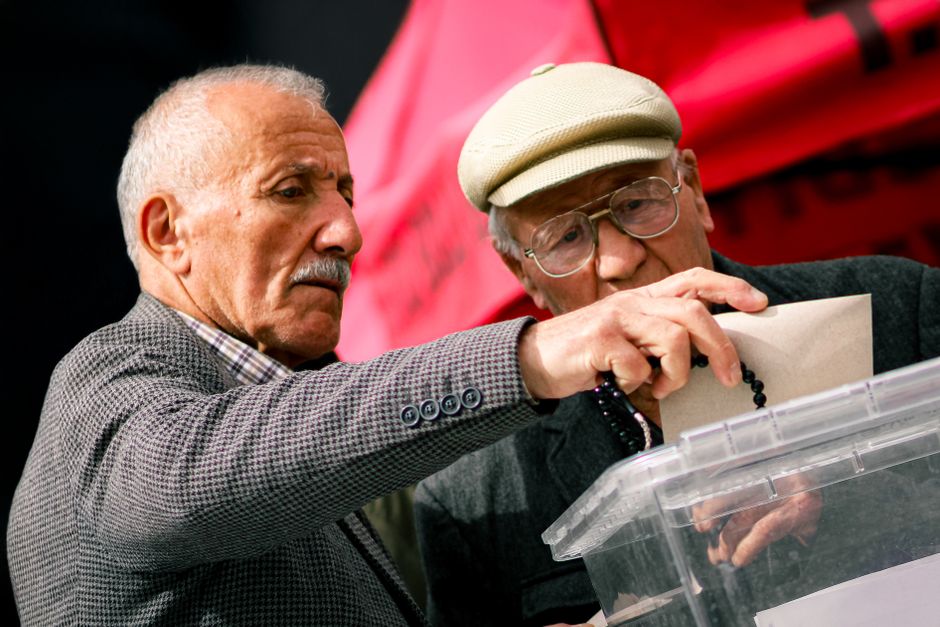
One of the most striking features of the vote was the extremely low participation rate. Only around 20 per cent of eligible voters turned out, according to exit poll data, a figure that drew concern from analysts and political figures alike.
Polling institute founder Parvan Simeonov said the low turnout reflected not a problem with polling methodology but with "the very functioning of democracy" in the country. Prime Minister Radev attributed the poor showing in part to the pre-election polling gap between the candidates, suggesting a large predicted lead can breed complacency in one camp and despondency in the other.
The first round featured a crowded field: 27 pairs of presidential and vice-presidential candidates competed, with nearly half of those pairings openly pro-Kremlin in their orientation, a reflection of Bulgaria's historically deep and persistent divisions over its relationship with Russia.
What a Iotova win would mean
Bulgaria is both a European Union and NATO member, and neither candidate has questioned that dual membership. However, the philosophical differences between the two finalists over how Bulgaria should engage with the war in Ukraine and with Russia more broadly make the 1 November runoff a significant moment for the country's foreign policy direction.
A victory for Iotova would represent a boost for Prime Minister Radev, who also favours engagement with Moscow, and would make her the first woman ever elected president in a country of 6.4 million people. Iotova previously served as vice-president alongside Radev following elections in 2016 and 2021 before stepping up to the presidency this year when Radev departed to contest parliamentary elections.
Gyurov's backers in the pro-Western opposition will be hoping the closer-than-expected first round result signals momentum heading into the decisive second vote.