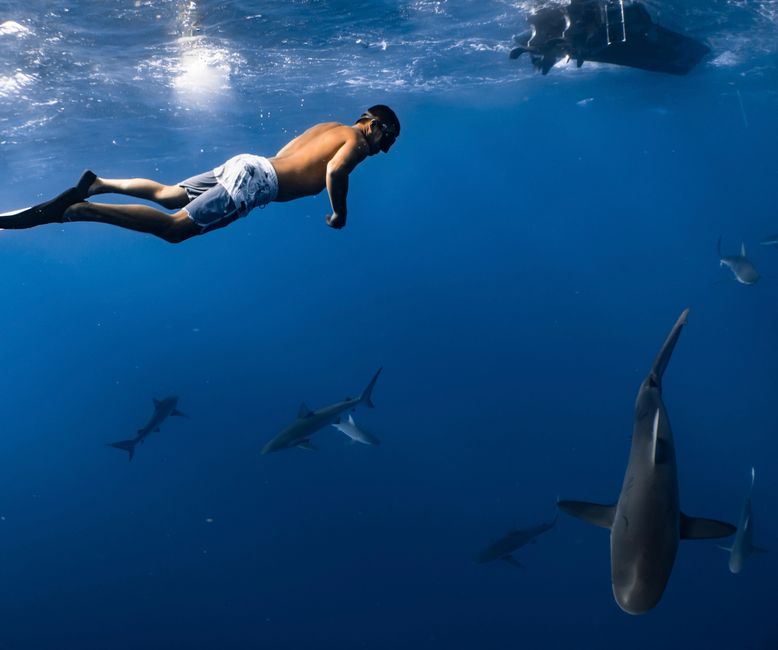
A three-metre dusky shark that wandered into a narrow artificial waterway at a busy South Korean port last month has become one of the country's most unlikely celebrities, attracting more than 1.6 million visitors, shifting stock prices and earning an official city title before finally being guided back to the open ocean on Wednesday.
The shark, affectionately nicknamed Bukhangi by its rapidly growing fanbase, was first spotted on 18 September in the canal at Busan's North Port. Its name comes from "Buk Hang," the Korean name for the port, combined with the Korean suffix "-i." Dusky sharks are typically found in tropical waters, and its presence in the cool, confined waterway immediately drew public fascination and prompted questions about what had driven it so far off course.
Three attempts to free Bukhangi
South Korean authorities made two failed attempts to return the shark to sea before finally succeeding on Wednesday morning, as falling water temperatures and growing concerns about the animal's health made action urgent.
The first rescue attempt used vessels fitted with water jets to steer the shark toward open water, but Bukhangi simply swam away and stayed put. A second attempt deployed a 50-metre-long, 6.8-metre-high net, with a vessel pulling the centre while five people on each side coordinated their movement along the waterfront. That effort also failed.
For the third and ultimately successful attempt, authorities used a floating platform to gradually herd the shark. Busan mayor Chun Jae-soo confirmed that after lingering at the canal's mouth, Bukhangi eventually swam out to sea. Nets fixed to floating pontoons were used to block the shark from re-entering the waterway once it passed. The entire operation was livestreamed by Busan authorities as onlookers gathered along the canal for one last look.
An official from South Korea's oceans ministry told reporters that experts had grown seriously concerned about Bukhangi's condition in the days before the third attempt. The shark had not been observed eating and appeared to have difficulty maintaining its balance while swimming. "These were not normal signs, and the experts believed its condition appeared to be deteriorating," the official said. The limited water depth in the artificial waterway was also cited as a key reason authorities pressed ahead with the final rescue effort.
An economic and cultural phenomenon
While the operation to free Bukhangi was driven by welfare concerns, the shark's month-long stay in Busan turned into a remarkable economic windfall for the city. More than 1.6 million people visited the Busan canal to catch a glimpse of the animal in person. Sales of shark-shaped ice cream bars at nearby convenience stores jumped by nearly 30 per cent.
Mayor Chun Jae-soo publicly thanked Bukhangi, saying the publicity generated would otherwise have cost the city "trillions." In a fitting tribute, the shark was elected an honorary public relations ambassador for Busan, receiving an extraordinary 91 per cent of the vote.
The shark's fame also rippled through financial markets. Shares in The Pinkfong Company, the studio behind the globally viral Baby Shark song, briefly surged more than 7 per cent on the back of the frenzy surrounding Bukhangi.
A warning from climate advocates
Not everyone was swept up in the celebratory mood. Environmental groups were quick to argue that Bukhangi's appearance in a South Korean port canal should be treated as a serious signal rather than a spectacle. Climate activists linked the shark's unusual presence in the area to broader changes in the waters around South Korea, pointing to the encounter as evidence of the ongoing climate crisis affecting marine ecosystems.
For those with a broader interest in shark encounters closer to home, one survivor's account of a shark attack at Port Noarlunga offers a vivid reminder of how unpredictable these animals can be when they venture into unexpected waters.
As for Bukhangi, it is now back in the open ocean. Whether its brief, eventful detour into one of South Korea's busiest ports will be remembered as a curiosity, a warning or simply a very good story may depend on what the warming seas bring next.