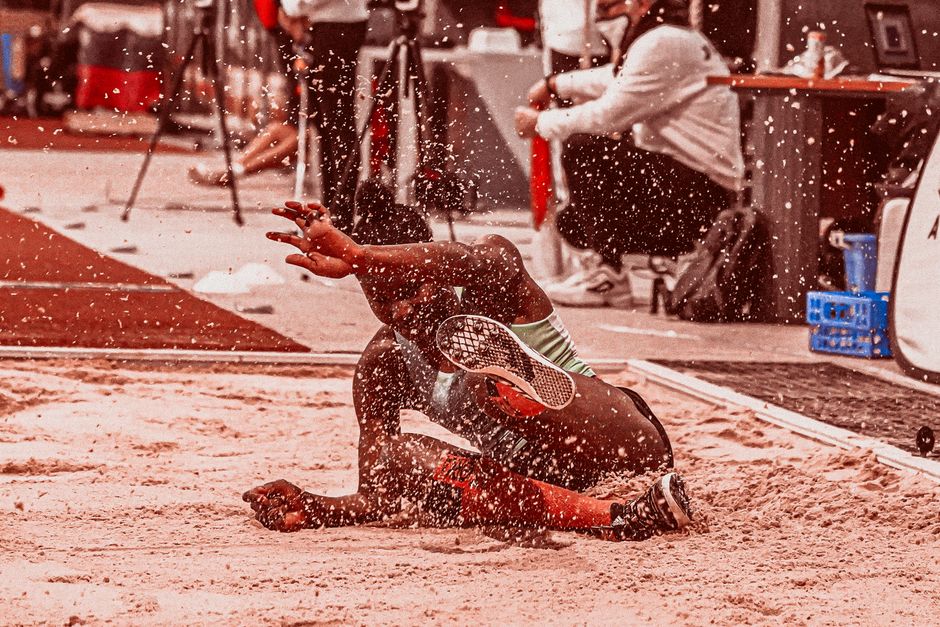
Australian long jumper Brooke Buschkuehl is heading to the Commonwealth Games in Glasgow just 13 months after giving birth, completing one of the most remarkable postpartum returns in recent Australian athletics — and she'll have her one-year-old son Bobby cheering from the stands when she competes.
The 32-year-old Victorian Institute of Sport athlete, formerly known as Brooke Stratton, will represent Australia at her third Commonwealth Games after a recovery that began just four weeks after a vaginal delivery left her barely able to walk.
A brutal postpartum beginning
Buschkuehl has been candid about how physically demanding the early weeks after Bobby's birth were. "I could barely walk," she said, describing the rapid deterioration of her conditioning in the days immediately following delivery. "I lost a lot of conditioning in those few weeks postpartum … just seeing my muscles deteriorating by the day."
Despite that difficult start, she returned to light training on an elliptical trainer within four weeks. By the eight-week mark she was back at the Victorian Institute of Sport completing gym sessions, before progressing to running drills on the track shortly after. "I got back into it pretty quickly," she said. "I probably needed to, because the longer I left it, probably the harder it would have been."
The science behind her return to elite sport
Buschkuehl's comeback was carefully managed by a multidisciplinary support team at the VIS, including physiotherapists, sport psychologists and biomechanists. Central to her recovery was physical preparation coach Corey Innes, who has worked alongside her since the 2016 Rio Olympics — a partnership spanning a decade.
While Innes had previously helped postpartum athletes return to sport, Buschkuehl's case was the first time he had guided an athlete back into a power speed event — one that demands explosive bursts of energy rather than endurance. The approach required careful prioritisation of pelvic floor rehabilitation before any high-load athletic movement could begin.
"We had to wait until her pelvic floor was restored before we could actually start doing exercises where we upped the weight," Innes explained. Early sessions focused heavily on horizontal exercises to limit time on her feet, combined with daily pelvic floor work and three gym sessions a week. "The return of the pelvic floor was one of our key criteria to being able to push more towards athletic movements," he said.
Burnout, pregnancy and a necessary reset
Buschkuehl's path to motherhood was also shaped by the mental and physical toll of elite competition. Having experienced burnout following the Paris 2024 Olympics, she described her pregnancy as an opportunity to genuinely rest and reset, saying she "needed a really good break away from structured training."
She also acknowledged that in the early months of her pregnancy she had little understanding of how important it was for female athletes to look after themselves through that period — a gap in knowledge she hopes her openness can help address for other women in sport. The broader conversation around what we expect of girls and women in sport and life remains an important one in Australia.
Bobby in the stands, gold in her sights
Now a silver medallist going into her third Games, Buschkuehl is clear about what drives her. Baby Bobby — kitted out in a personalised T-shirt and travelling to Scotland with her husband Nathan — will be in the crowd when she competes.
"I'll definitely be looking at him and just remembering why I'm doing what I'm doing," she said. "I think the biggest reason is wanting to make him proud and set a really good example for him."
She describes becoming a mother as a transformative experience unlike anything else. "He's such a happy little boy … I didn't know a love like this before I had Bobby," she said, adding that the experience has made her want more children — even as she grapples with the complexity of timing that alongside an elite athletic career.
With Bobby watching on and a decade of elite competition behind her, Buschkuehl arrives in Glasgow as both a seasoned Olympian and a first-time mum — and she's never been more motivated.