The body of slain Iranian Supreme Leader Ayatollah Ali Khamenei has arrived at one of Shia Islam's holiest sites for burial, as vast crowds of mourners in the northeastern city of Mashhad filled the streets chanting "We will kill you, Trump" and waving placards bearing revolutionary slogans — a scene that marked both the climax of a week of funeral events and a sharp escalation in anti-American sentiment following the conflict that took his life.
A Procession Through Packed Streets to the Shrine of Imam Reza
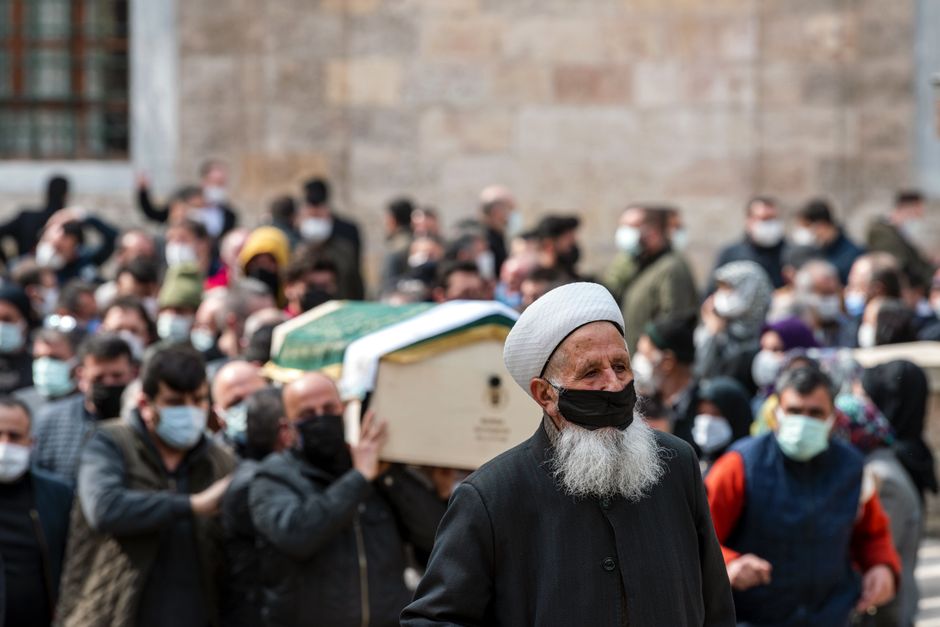
Khamenei's coffin was transported slowly by truck through densely packed streets in Mashhad, his hometown in northeastern Iran, toward the Shrine of Imam Reza — one of the most sacred sites in Shia Islam, recognisable by its gleaming golden dome and adjacent azure-domed mosque. White-turbaned clerics flanked the procession, while black-clad mourners pressed in behind, carrying Iranian flags, photographs of the late supreme leader, and red placards bearing revolutionary slogans.
Such was the density of the crowd that a helicopter was ultimately required to lift the coffin the final short distance to the shrine after the truck could no longer pass through. Once inside, the coffin was laid on a carpet as senior clerics gathered in prayer. Senior ayatollahs took their places on a raised dais beneath the intricate blue tilework of an arched recess as dusk fell over the courtyard, which had become a sea of mourners.
Loudspeakers broadcast lyrical funeral laments and sorrowful string music, punctuated by defiant chants of "Death to America" ringing across the sacred complex. Women in the crowd held up placards reading "Kill Trump," while others shouted: "I swear by the blood of the supreme leader, Trump, we will kill you!"
For more on the events surrounding the procession, see our earlier coverage of Khamenei's body being carried to the holy shrine.
Iranian Authorities Frame the Funeral as a Show of Revolutionary Strength
Iranian officials have seized on the enormous turnout at Khamenei's State funeral of Ali Khamenei as proof of the enduring legitimacy and popular support for the country's theocratic system — nearly half a century after the 1979 Islamic Revolution that established it. The images of packed streets and a packed shrine courtyard were presented by authorities as a rebuttal to those who have questioned the Islamic Republic's foundations amid months of military pressure from the United States and Israel.
Iran has also continued to assert control over the Strait of Hormuz, the vital waterway through which a significant portion of the world's oil supply passes, framing its ongoing grip on that chokepoint as evidence of survival against its most powerful adversaries. Renewed hostilities between the US and Iran this week — despite a preceding truce — have raised fresh concerns about potential disruptions to global shipping lanes and energy supplies, with analysts warning of broader economic consequences if the conflict intensifies further.
Successor Mojtaba Khamenei Remains Out of Public Sight
Conspicuously absent from the funeral proceedings was Mojtaba Khamenei, the son of the late supreme leader who was proclaimed his successor by a clerical assembly in early March — approximately one week after his father's death in the 28 February US-Israeli strike that ignited the current Middle East conflict.
Mojtaba has not appeared in public, issued any video or voice recordings, or been photographed since the strike. While written statements attributed to him have been released, senior sources in Tehran indicate he was injured in the same attack that killed his father and has not yet recovered sufficiently to make public appearances. Security services are also understood to be deliberately limiting his public exposure amid the continued threat of further US strikes.
His prolonged absence has remained a source of deep uncertainty for Iranians, even as the new supreme leader's authority has been formally proclaimed.
US-Iran Hostilities Reignite Despite Truce
The funeral took place against a backdrop of renewed military tensions. US President Donald Trump declared this week that an interim ceasefire with Iran is "over," and fresh exchanges of attacks between the two countries have followed. The resumption of hostilities has raised alarm about the stability of global energy markets, given Iran's strategic position along the Strait of Hormuz.
Iran, for its part, has been presenting the massive turnout at Khamenei's funeral — and its continued military posture — as a declaration that the Islamic Republic has not only survived but emerged from the conflict with its revolutionary ideology intact and its population united in grief and defiance.