Workers at BHP's Port Hedland operations have walked off the job for a second consecutive day, with members across three unions joining a 24-hour work stoppage at Australia's most profitable port facility. Meanwhile, high voltage workers near the inland town of Newman have launched a separate 12-hour strike, widening the scope of the industrial dispute.
What Triggered the Full Stoppage at Port Hedland
The latest industrial action follows a turbulent Friday in which a partial strike escalated into a complete work stoppage after workers were allegedly threatened with loss of pay by the mining giant. The Australian Workers' Union, whose members participated in Friday's action, said the company's conduct amounted to intimidation.
"BHP must understand that the Combined Ports Unions will not be deterred by threats or intimidation," AWU state secretary Craig Beveridge said.
BHP rejected that characterisation, arguing that the 47 work activities the AWU had flagged as subject to an industrial ban left employees with nothing to do. The company maintained it was operating within the law.
"Workplace laws are clear that we are not required to pay for the portion of an employee's work that is subject to an industrial ban," BHP said in a statement.
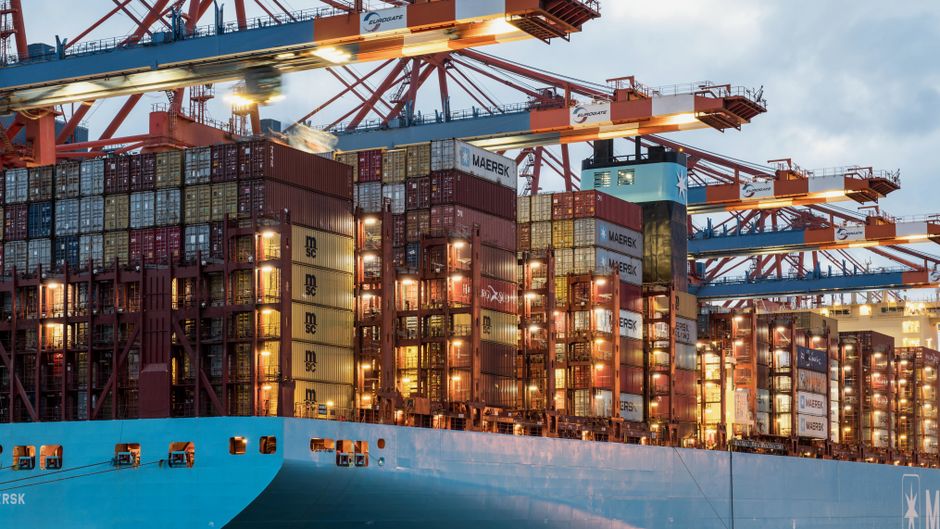
Despite the dispute, BHP insisted ship-loading operations continued through Friday's stoppage, with bulk carriers observed departing its berths. "Vessels are being loaded, with scheduled departures subject to usual port planning and tides," the company said.
Saturday's Strike Expected to Have Wider Impact
As Saturday's action got under way, union officials indicated the second day of industrial action would be more disruptive than the first. AMWU WA secretary Steve McCartney said he expected more than a hundred workers to participate in the stoppage.
Electrical Trades Union WA lead north-west organiser Brant Softley went further, predicting the strike would land a heavier blow on BHP's operations.
"To my knowledge, there'll be nearly no union people going in," Softley said. "Electrical, mechanical and the ship-loading people with the AWU have skill sets that can't be learned in five minutes."
When asked why unions were not organising a picket line, Softley said they had no interest in making a spectacle to prove their point.
In addition to the port action, high voltage workers responsible for supplying electricity to Newman — roughly 450 kilometres inland from Port Hedland — are conducting their own 12-hour work stoppage as part of a separate bargaining process.
Industry Body and Local Government React
The Chamber of Minerals and Energy WA expressed frustration at the timing of the strikes, with chief executive Aaron Morey saying the action was difficult to reconcile given that negotiations had reportedly made progress at a bargaining meeting held earlier in the week.
"If the talks are genuinely progressing and there is a clear path to an agreement, there was no case for walking off the job," Morey said. He warned that continued industrial unrest risked sending a damaging signal to international investors.
"International investors are watching and the message the unions seem to be trying to send is that they should take their capital somewhere else. If that happens, every West Australian will be far worse off," he said.
The Town of Port Hedland acknowledged that unrest of this kind creates broader uncertainty for the community, even as it distanced itself from the bargaining process.
"This is a matter between BHP, its workforce and their representatives, and the Town has no role in enterprise bargaining negotiations," said chief executive Dale Stewart. He acknowledged, however, that many residents, businesses and community organisations have deep ties to the resources sector, and that significant industrial disputes can ripple through the wider community.
What Happens Next
The immediate path forward will include another round of talks overseen by the Fair Work Commission, with ports unions and BHP scheduled to meet on August 18. Whether that session can break the deadlock remains to be seen, particularly as union officials have shown no sign of backing down and BHP appears equally resolute in its position.
The dispute has placed one of the country's most strategically important export hubs under intense scrutiny, with the outcome likely to have consequences not only for the workers involved but for the broader Western Australian resources industry and the national economy.