New South Wales Premier Chris Minns is exploring the possibility of bringing in rival developers to complete thousands of stalled homes and apartments after Bathla Group, one of Sydney's largest property companies, was placed into administration this week carrying debts of $3.6 billion.
The collapse has blindsided thousands of buyers across the state, many of whom have paid substantial deposits and are now in limbo, uncertain whether their homes will ever be finished or whether they will see their money again.
Scale of the Bathla Group crisis
Bathla Group specialises in greenfield housing estates and apartment complexes, and currently has approximately 2,000 dwellings under construction. The company has a significant footprint through Sydney's northwest growth corridor, as well as active projects in the Hunter Valley and the Illawarra region near Wollongong.
Premier Minns acknowledged the severity of the situation, saying the developer's collapse could leave thousands of people without a home — particularly in Western Sydney — and that unconventional solutions would need to be considered.
"We have to think creatively about who's going to step in," the Premier said. "It's not going to be easy."
Sydney-based firm Teneo Australia has been appointed administrator and has taken control of Bathla's headquarters in Girraween. Teneo's head of financial advisory, Stephen Longley, described the situation as highly complex and said his team's immediate priority was securing emergency funding to protect the interests of employees, customers and suppliers.
"This is an extremely complex administration process," Longley said. "Our priority is to secure funding to ensure that the interests of employees, customers, and suppliers are protected to the greatest extent possible."
Longley confirmed he is in active discussions with Bathla's lenders in an effort to find a financial lifeline for the group.
Buyers left stranded and out of pocket
Among those caught up in the fallout is Sue Mancuso, a 72-year-old woman who paid a $32,500 deposit for an apartment at Bathla's Kembla Grange development, located near Wollongong, in October 2025. She was told she could move in by January but remains living with her daughter, with no clear path forward.
"I just thought, no, this can't be happening," Mancuso said. "For us, it's a big deposit and if we lose it, it's hard to try and get that sort of money saved up."
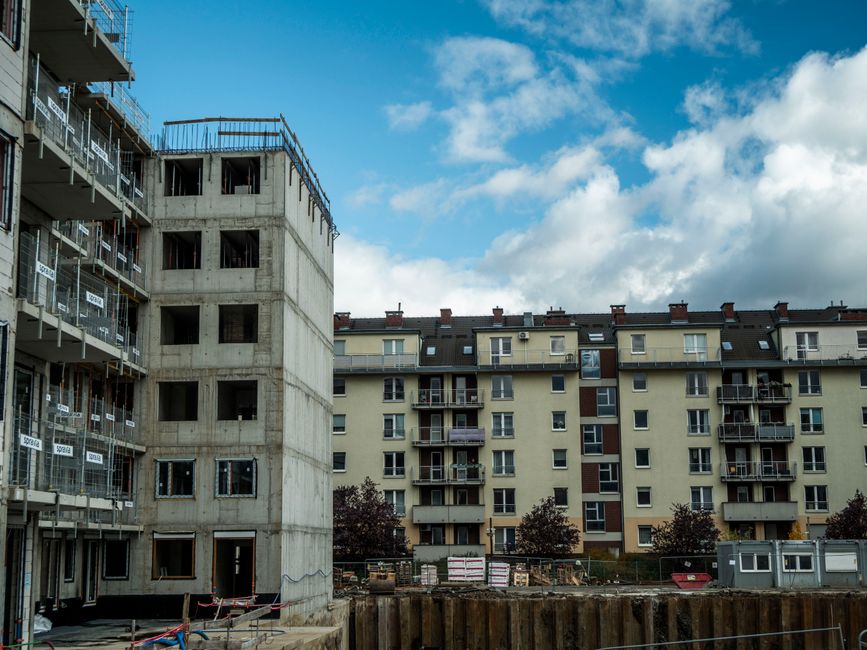
Her daughter Marie said the family had grown suspicious before the administration was announced, noting that work on the site had visibly slowed. When visited mid-week, the Kembla Grange complex was half-finished, padlocked and completely devoid of tradespeople — a ghost site where hundreds of apartments were meant to be nearing completion.
Sue's experience is far from unique. She is one of potentially thousands of buyers across NSW who now face uncertainty over their deposits and their future homes. For many, the financial and emotional stakes are enormous — a reminder of how vulnerable property purchasers can be when developer finances unravel.
Legal advice urged for affected buyers
Property lawyer Charles Lethridge from Attwood Marshall Lawyers is urging anyone who has entered into a contract with Bathla Group to seek independent legal advice without delay.
"They should get a solicitor to look at the contract and work out if they're entitled to receive their deposit back, if they want to terminate, if they're able to terminate the contract," Lethridge said.
The advice reflects growing concern that buyers may have limited time to act and that their rights will depend heavily on the specific terms of their individual contracts.
What happens next
The administration process is ongoing, and the fate of Bathla's 2,000 dwellings remains unclear. The Premier's suggestion of engaging rival developers represents one potential path, but industry observers note that attracting competitors to take on another firm's half-finished projects — often with complicated contracts, disputed payments and incomplete works — is rarely straightforward. Developer collapses of this scale have become an increasingly sobering feature of Australia's construction landscape.
For now, buyers, tradies and suppliers are watching closely as administrators work to determine whether the group can be salvaged or whether its projects will need to be wound down or handed off entirely.