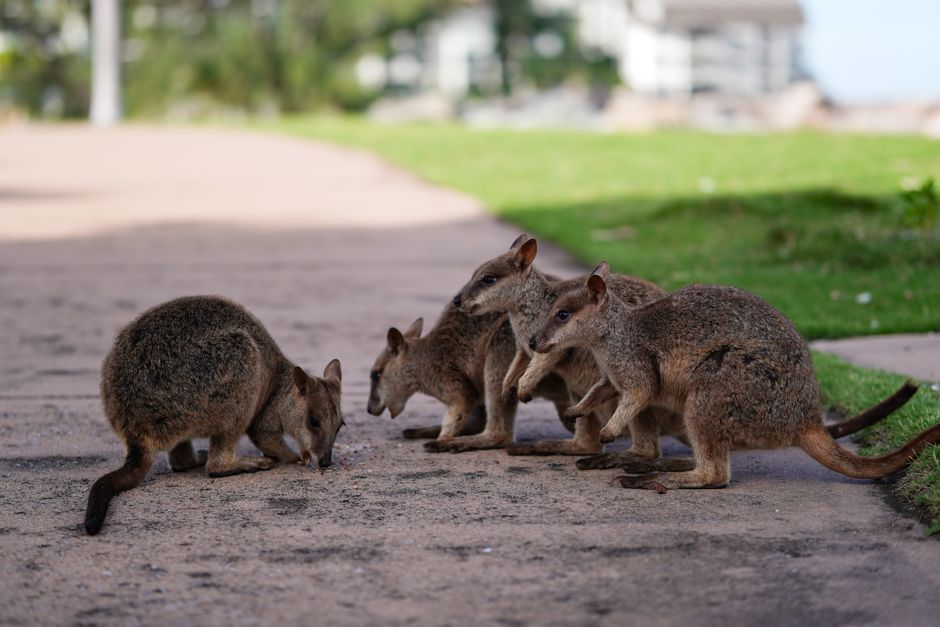
Two of Australia's most elusive and endangered marsupials have been confirmed at new locations in Western Australia's remote Kimberley region, offering a rare glimmer of hope for a species battling feral cats, devastating wildfires and decades of dwindling sightings. The Australian Wildlife Conservancy has verified the presence of the Nabarlek — Australia's second-smallest wallaby — at two previously unrecorded mainland sites, with one location not having any confirmed sighting in more than 50 years.
Smaller Than a Cat, Harder to Find Than a Needle in a Haystack
The Nabarlek and its near-identical relative, the Monjon, are among the least-known animals on the continent. Both species weigh roughly as much as a bag of sugar and measure only around 36 centimetres in length — smaller than a domestic cat. They inhabit the rugged, rocky plateaus of the Kimberley and are strictly nocturnal, making any encounter in the wild extraordinarily rare.
At just 1.7 kilograms, the Nabarlek is fiendishly difficult to distinguish from the even tinier Monjon or the larger short-eared rock-wallaby. Confirming a sighting requires far more than a photograph. Researchers from the Australian Wildlife Conservancy, working alongside local Dambimangari rangers, deploy up to five motion-triggered camera traps each night across rocky terrain. Even then, images alone are not considered conclusive.
"You've got to be out at night if you want to spot them in person," said Larissa Potter, the AWC's senior field ecologist.
To definitively identify the species, the team must scale rocky outcrops to collect fresh droppings, extracting DNA that can genetically separate one species from another. It is painstaking, years-long work that Potter describes as the ecological equivalent of finding a needle in a haystack.
Where the Nabarlek Was Found — and Why It Matters
One of the newly confirmed populations was located within the Yampi Sound Training Area, a vast and largely inaccessible wilderness listed among 20 priority places under the federal government's Threatened Species Action Plan. Owned by the Commonwealth's defence department, the area can only be reached by sea, air, or a gruelling 130-kilometre overland drive from the port town of Derby.
A second population was confirmed approximately 170 kilometres away, also within the traditional country of the Dambimangari Aboriginal Corporation — a collaboration that proved essential to the discovery.
"Confirming the Nabarlek's presence at two new sites is a major step forward for our understanding of where the species occurs," Potter said. "It's also reassuring as it indicates that this threatened wallaby is persisting on the Kimberley mainland in places we didn't previously know about."
Until these discoveries, the Nabarlek had been recorded at only a handful of mainland Kimberley sites and five offshore islands. Populations on Augustus and Jungulu — two large uninhabited islands at the southern end of the Bonaparte Archipelago — appear to have survived extensive wildfires, suggesting small groups can endure in isolated pockets when conditions allow.
Feral Cats and Fire Remain Serious Threats
Despite the positive news, researchers caution that the species remains deeply vulnerable. Like most of Australia's small marsupials, the Nabarlek is endangered, and scientists believe feral cats and uncontrolled fire are the primary drivers of its mainland decline. The species was once thought to have ranged widely across northern Australia.
Potter said the DNA gathered from the newly discovered mainland populations will now be compared with that of island groups, potentially shedding light on how isolated these communities have become. She called for additional funding to deepen understanding of the species' ecology and range.
"We think that feral cats and fire might be getting them on the mainland, so it'd be great to have more funding to learn more about this animal," she said.
The findings have been announced ahead of Threatened Species Day on September 7, which marks the anniversary of the death of the last thylacine at Hobart Zoo in 1936. For researchers, the Nabarlek discoveries serve as a reminder that, even in the most remote corners of Australia, First Nations partnerships and knowledge can be pivotal in protecting what remains of the country's extraordinary wildlife heritage.