Australia's two remaining oil refineries should receive extended government financial support beyond 2030, but only on the condition they begin transitioning toward clean fuel production, according to a sweeping new blueprint for the nation's fuel security strategy. The proposal comes as modelling shows Australia's commercially viable crude oil reserves will be fully exhausted by 2035 and as the ongoing conflict in Iran has already pushed up the country's fuel import bill by $18 billion.
The Case for Keeping Refineries Running
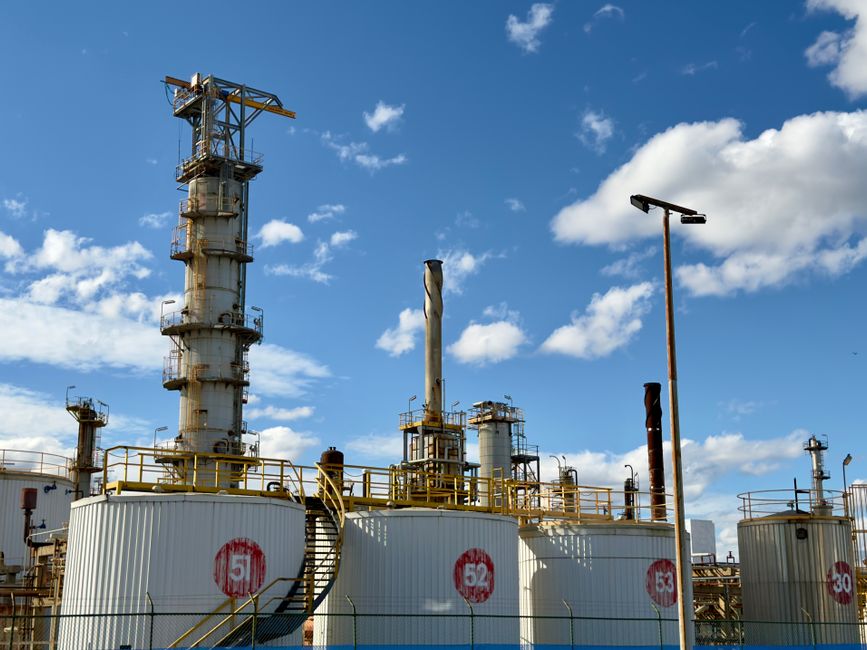
The Grattan Institute, a non-partisan think tank, has released a report urging the federal government to underwrite Viva Energy's Geelong refinery and Ampol's Lytton facility in Brisbane, which together produce almost all of Australia's domestically sourced liquid fuel. With 86 per cent of their combined output already relying on imported crude oil, the report argues that any continued subsidies should be conditional on those facilities demonstrating credible progress toward switching to cleaner fuel sources.
Australia currently holds just 34 billion litres of commercially viable crude oil reserves. At current extraction rates, that supply would run dry within a decade. The country consumes roughly 60 billion litres of liquid fuel every year, with 97 per cent either imported directly or produced from foreign crude.
The government's existing refinery underwriting scheme has paid out only $37 million since 2021, largely because both plants have operated profitably. However, the report warns costs could rise to at least $200 million per year as the ageing infrastructure demands expensive upgrades and refining margins tighten.
Fuel Security and the Cost to Households
Grattan's energy and climate change program director said successive governments had consistently failed to develop a coherent strategy to reduce Australia's dependence on imported fuels. "This dependence on imported fuel is no longer tenable, it keeps us tethered to increasingly chaotic global events we cannot control," she said.
The Iran conflict has not only driven up import costs but has also fuelled broader inflation and imposed more than $3 billion in additional costs on the federal budget. Against that backdrop, the think tank's proposed reforms are projected to deliver a net $55 billion benefit to the budget by 2050 while cutting the typical household's annual fuel bill by more than $3,300.
The report sets a target for Australia to source at least half the fuel required to power its road transport, aviation and mining industries domestically by 2050, including through widespread electrification.
Scrapping the Third Refinery Plan and Mining Tax Breaks
One of the more politically charged recommendations challenges the broad cross-party support for building a third oil refinery, backed by Labor, the Coalition and One Nation. The report argues Australia would need to increase its crude oil production sixfold before refining capacity would even become a constraint, making such a project premature and unnecessary.
The blueprint also takes direct aim at the diesel fuel tax credits currently available to Australia's largest mining companies. It proposes capping those credits at $35 million per corporate group annually, a move projected to reduce government spending by $76 billion by 2050 and cut annual diesel consumption by 3.5 billion litres. The intent is to accelerate the mining sector's shift toward electrification.
The scale of Australia's diesel dependency is underscored by a striking comparison: while most developed economies have substantially cut their reliance on diesel over the past 25 years, Australia now consumes more diesel for every dollar of economic output than it did in 2000.
What Comes Next
The report lands as the Albanese government signals a tightening of federal spending, adding urgency to the question of how Australia funds both its ongoing refinery support and a credible long-term transition away from imported fossil fuels. With cost-of-living pressures already reshaping the political landscape, the prospect of redirecting billions in mining subsidies toward fuel security reform is likely to generate significant debate in the months ahead.