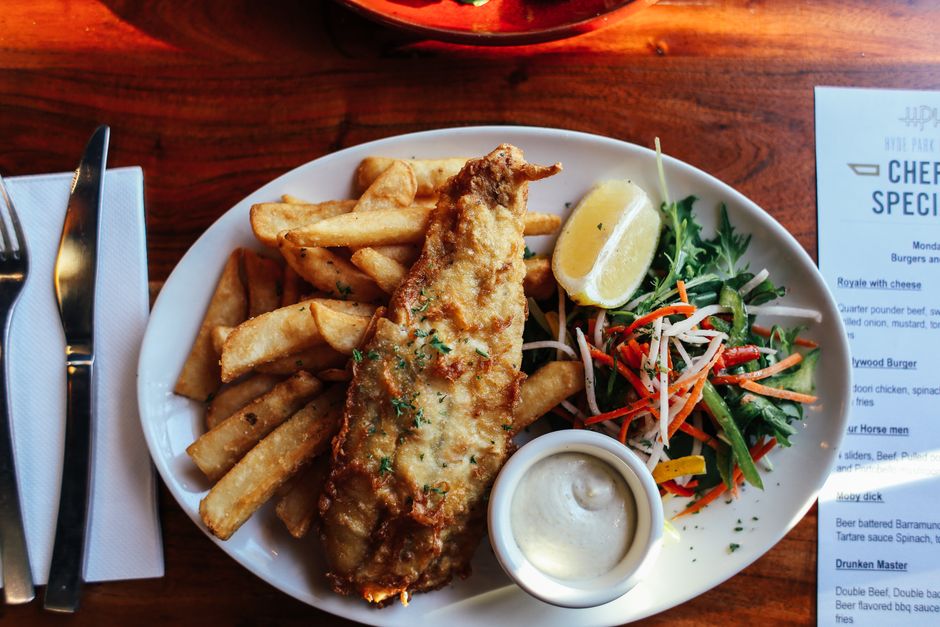
Every time Australians order a piece of battered fish at their local fish and chip shop, they may be unwittingly contributing to environmental damage thousands of kilometres away — and a new study from James Cook University argues the country's seafood regulations are partly to blame.
The research, released on Wednesday, calls for a fundamental rethink of how Australia regulates imported seafood, warning that the nation's heavy dependence on overseas fish products may not just be shifting ecological harm abroad, but actively amplifying it.
A Nation Surrounded by Sea — but Ranked 52nd in Seafood Production
Despite overseeing approximately eight million square kilometres of fishing waters, Australia ranks just 52nd globally in seafood production. The gap between what the country catches and what it consumes is filled almost entirely by imports — a situation the study's lead author describes as deeply contradictory.
"We've got a situation where we're contradicting ourselves," said Andrew Chin, a senior fisheries researcher and lead author of the study. "We hold our domestic fisheries to very high environmental standards but we turn a blind eye when we're importing our seafood products."
Chin and his co-authors argue this blind eye amounts to more than an oversight — it is, they say, a form of policy hypocrisy that undercuts Australia's reputation as an environmental leader.
The Basa Problem: What's Really in Your Batter
One of the study's most pointed examples concerns basa catfish, a low-cost fillet widely used by fish and chip shops across Australia. Basa is imported in the thousands of tonnes from Vietnam, where it is farmed extensively along the Mekong River Delta.
According to the study, basa farming has been linked to contamination of local waterways with excessive nutrients and antibiotics, as well as placing significant pressure on feed resources.
"You can't just close commercial fisheries and say you're doing it for environmental reasons, and then import tens of thousands of tonnes of basa from Vietnam," Chin said. "That's not environmental leadership, that's hypocrisy."
The researchers specifically pointed to Queensland's phasing out of gillnet fishing as a domestic management decision that, while well-intentioned, has reduced the local supply of barramundi and king threadfin — pushing retailers toward imported alternatives to keep shelves stocked.
"Those sorts of management decisions basically mean that we have to fill the shelves with imported seafood instead," said study co-author Jonathan Smart, an adjunct senior research fellow at James Cook University.
What the Researchers Want Changed
The JCU study puts forward several recommendations aimed at closing the gap between Australia's domestic standards and its import practices:
- Stronger standards, labelling and certification requirements for imported seafood products
- Increased investment in domestic commercial fishing and aquaculture
- Regulatory reforms that balance sustainable production with economic viability for both operators and consumers
Smart was careful to clarify the study is not advocating for unsustainable fishing. "We're definitely not promoting any unsustainable practices but basically determining what is a sustainable catch level for each of our fisheries and trying to maximise that where we can," he said.
Industry Backs the Push for Recognition
John Ackerman, chief executive of Seafood Industry Australia, said most Australians — and international visitors — would be surprised to learn just how much of the seafood they eat is imported rather than locally caught.
"We want to be recognised as a seafood nation itself, not just as a nation surrounded by sea," he said, adding that while there is always room for improvement, Australia's domestic operators can be proud of how they manage sustainability.
The study's authors hope their findings will prompt policymakers to align import standards with the strict requirements already placed on local fishers — giving consumers access to more sustainable local catch and reducing the environmental cost being quietly exported with every cheap fillet.
Have a story to share about local food or environmental issues? We'd like to hear from you.