Australia's well-documented housing shortage has a lesser-known companion crisis unfolding underground. Metropolitan cemeteries across the country are running out of burial space, with many expected to reach full capacity by the early 2030s, sparking urgent questions about land use, cultural rights and the future of deathcare in a growing, multicultural nation.
Cities have grown, but cemetery planning has not kept pace
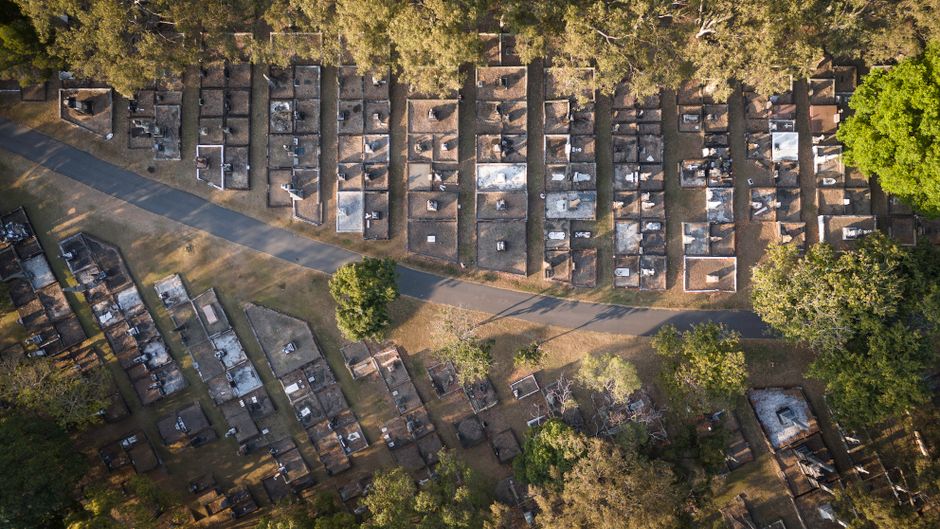
Rookwood Cemetery in Sydney's west, the largest necropolis in the southern hemisphere, spans more than 280 hectares and has been operating for close to 160 years. Despite its vast size, it is among the sites under pressure. The acting CEO of Metropolitan Memorial Parks, which manages eight Crown land cemeteries in New South Wales including Rookwood, says almost all of the organisation's sites are expected to reach capacity by the early 2030s.
"As our larger sites do run out of land, that puts pressure on all of the other sites that might still have land," he said.
The root cause, according to the CEO of the Australasian Cemeteries and Crematoria Association, is straightforward: Australian cities have expanded dramatically, but the construction of new cemeteries has not followed.
"You look at Rookwood in Sydney, that was right on the outskirts, and now that's almost an inner suburb," he said. "It's just our cities have grown, we just haven't continued building cemeteries."
Community resistance compounds the problem. Some residents oppose new cemeteries near their homes, fearing an impact on property values or simply finding them unwelcoming. Governments, meanwhile, have often directed funding elsewhere. Australia's pressures around house prices and urban land use make finding new sites even more contentious.
A Sydney proposal stirs controversy
One proposed solution in New South Wales is attracting significant pushback. The state government is considering converting the Carnarvon Golf Club in the Sydney suburb of Lidcombe into a new cemetery. The plan has drawn criticism from community members and local representatives, including Auburn MP Lynda Voltz, who raised concerns in parliament in May about flood risk at the site.
"At first glance, this proposal may be presented as a practical response to the growing demand for burial space but when you take a closer look, a different picture emerges," she said. "The planning falls short, key risks are being brushed over and yet the environmental consequences are hard to ignore. Flooding here is frequent."
Cremation rises, but not for everyone
Shifting attitudes to death have provided some relief. Between 75 and 85 per cent of Australians are now cremated, according to the Australasian Cemeteries and Crematoria Association. Australian Bureau of Statistics figures show more than 188,000 deaths were registered across the country last year, a number that will only grow as the population ages.
However, cremation is not an option for all Australians. Faith traditions including Islam and Judaism prohibit the practice, making access to traditional burial a matter of religious obligation rather than personal preference. In 2023, the Vatican updated its guidance to allow Catholics to request that a small portion of a relative's ashes be preserved in a place of significance, reflecting a gradual softening in some traditions.
The acting CEO of Metropolitan Memorial Parks argues that preserving burial choice is essential in a country as diverse as Australia. Australia has never been a monoculture, and the needs of its many communities must be reflected in how public land and services are planned.
"To say to people, you can't follow your cultural, your faith-based requirements is very restrictive on the individuals, or the families or the communities," he said. "Australia is a multicultural country and while we do have a broad range of faiths and cultures within Australia, I think we need to be able to provide choice."
What comes next
With the deadline for many cemetery sites now less than a decade away, the pressure on governments and planning authorities to act is intensifying. Whether through acquiring new land, expanding existing sites or encouraging alternative forms of deathcare, finding a workable solution will require balancing environmental concerns, community sentiment and the deeply personal needs of grieving families across a wide range of cultural backgrounds.