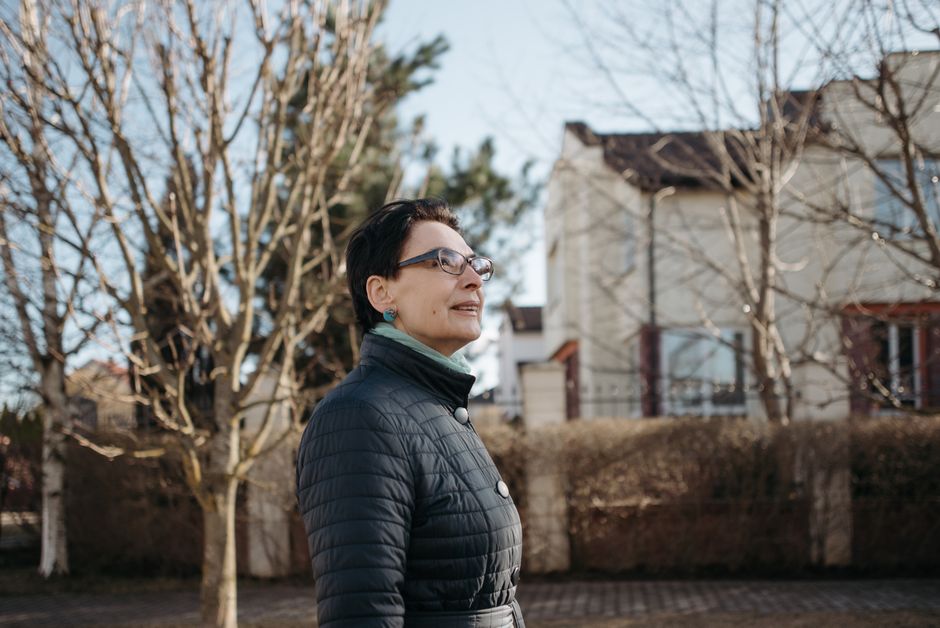
New research has identified Australian women in their mid-to-late 50s as one of the fastest-growing groups at risk of homelessness, with financial disadvantage, domestic violence and a chronic shortage of affordable housing combining to push more older women than ever toward housing insecurity.
The findings, highlighted by Australian charity StreetSmart, show that women aged 55 to 59 represent one of the most rapidly expanding cohorts experiencing homelessness in the country. The data also reveals that more than a third of single women over 60 are currently living in poverty — a figure advocates say demands urgent national attention.
A Crisis Hiding in Plain Sight
StreetSmart chief executive Alan White says women's homelessness has become a central focus for the organisation, particularly given the scale and speed at which the problem is growing.
"Particularly given the rise in homelessness driven by domestic and family violence, as well as the growing number of women over the age of 55 experiencing homelessness," White said. "It's one of the fastest-growing cohorts of people at risk, and an issue that deserves greater attention."
For women in this age group, family and domestic violence remains the leading cause of homelessness. But it is far from the only one. Lifelong financial inequality, interrupted or insecure work histories, years spent in unpaid caring roles, and a severe shortage of affordable housing are all compounding the problem.
White explained that this particular generation of women faces a distinct set of structural disadvantages. Many did not accumulate significant superannuation savings due to years out of the workforce or working part-time. They also worked through periods when equal pay was not guaranteed, leaving them with fewer financial reserves in later life.
"Often the organisations they'll seek out are the local community groups, grassroots, neighbourhood centres," White said. "They are often the front line of response for women. Trust in community is so important for these women."
Impossible Choices for Women With Children
The research underscores a particularly painful reality for women who are also caring for children. When domestic violence forces them to leave home, the options available are frequently dangerous in different but equally serious ways.
"Women with children have to make the choice of staying in an unsafe environment, heading out into shelters that aren't well equipped, sleeping in cars or couch surfing," White said. "So really, equally unsafe environments."
The shortage of well-resourced emergency accommodation means that escaping violence does not automatically mean escaping danger — a fact that advocates say must be addressed through increased investment in frontline services.
This intersects with broader concerns about financial security for Australian women, many of whom face compounding economic pressures that make housing instability more likely as they age.
How StreetSmart Is Responding on the Ground
StreetSmart takes a data-driven approach to directing its support, combining national homelessness statistics with on-the-ground intelligence gathered from the more than 1,200 grassroots organisations it has funded over the years.
"We look at what the data is telling us about the prevalence of homelessness, what cohorts are emerging or the percentage of drivers of homelessness," White said. "The last piece of the puzzle is that we try to, where possible, keep funds local to where they're all raised."
Most recently, the charity distributed $100,000 across 20 frontline organisations working in communities throughout Australia to support women who are unhoused or at immediate risk. The funded groups are working to help women access safe housing, escape violent situations, build financial independence and overcome the complex barriers that lead to homelessness.
Among the recipients is Queensland-based women's support centre WillowTree 37, which provides a safe space for women in need. Funding from StreetSmart enabled the organisation to deliver emergency supermarket vouchers, fuel assistance, clothing, household essentials and short-term accommodation support.
A Systemic Problem Demanding a Systemic Response
While larger organisations play an important role, White emphasised that smaller, community-based groups often provide something equally vital: familiarity and trust. For older women who may feel shame or uncertainty about seeking help, knowing and trusting the people and places they turn to can make the difference between accepting support and suffering in silence.
"That's not to say that larger organisations don't do amazing work, they certainly do," White said, "but it's just a different type of response."
The research is a stark reminder that homelessness in Australia does not fit a single profile. As housing costs continue to rise and the social safety net strains under growing demand, women who spent decades raising families and contributing to their communities are finding themselves with nowhere safe to go — a trend that, without significant intervention, shows little sign of slowing.
With the nation's housing affordability crisis showing no signs of abating, advocates are calling on governments at all levels to increase investment in crisis accommodation, expand superannuation protections for women in caring roles, and fund the community organisations that are often the first — and sometimes only — point of contact for women on the edge of losing their homes.