While most Australians travelling in Europe this summer are seeking out beaches and tourist landmarks, a small but growing contingent of Australian pilots is stationed at airbases across Greece and southern France, flying up to ten hours a day in the fight against some of the continent's most destructive wildfires in recorded history.
Among them is Alex Pay, 31, a third-generation pilot from NSW's Hunter Region who works for his family business, Pay's Air Service. Now in his second Greek fire season — and the company's fifth — Pay describes the pace as relentless from the moment a call comes through.
"When you get a fire call, you're gonna be airborne in 15 minutes," he said. "So there's not a lot of time for nerves."
Into the Air: How Australian Pilots Tackle European Wildfires
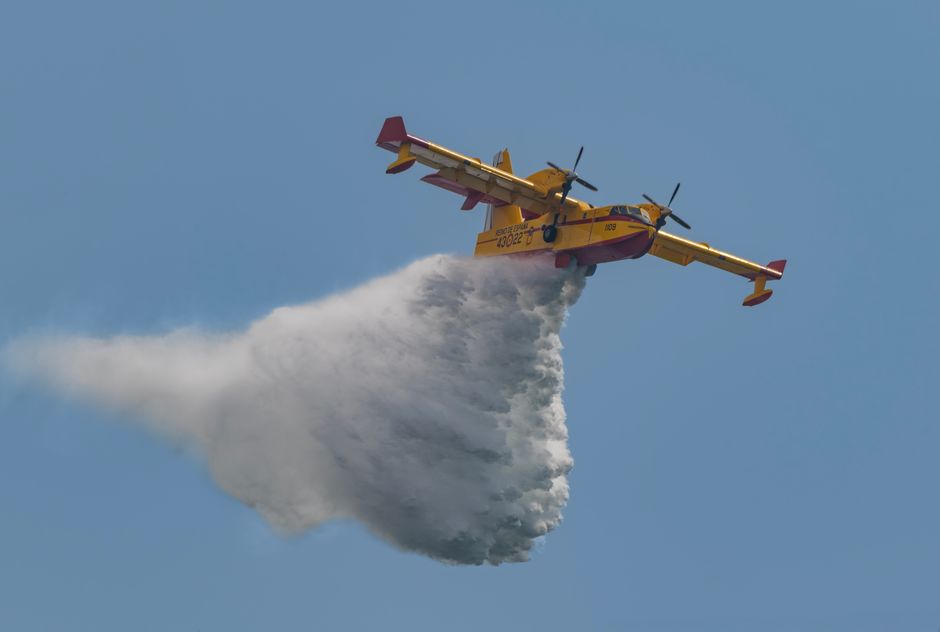
Pay's Air Service currently has 14 aircraft stationed across Greece for the season. The fleet flies a variant of the Air Tractor AT-802, known as the "Fire Boss" — an amphibious aircraft capable of scooping water directly into an onboard tank, or "hopper," which is managed by a computerised fire gate that pilots can fine-tune to suit the exact conditions on the ground.
Pay is joined in Greece by aircraft from Ballarat-based Field Air Group. That company's representative, Andrew Mackay, explained that aerial assets alone don't extinguish fires — they support the crews on the ground.
"We like to say in our industry that it's not the aircraft that put out the fires, it's the ground crew — we're merely a tool to assist them," Mackay said.
Tactically, pilots often work in formation on either side of a blaze to funnel it into a point — creating what Mackay describes as "a triangle or an arrowhead" — where ground crews can then move in to extinguish it. In more urgent situations, pilots drop water or fire retardant directly onto homes in the path of advancing flames.
"We spent a lot of time training and preparing scenarios that give us a good education on what we might see on the fire ground," Pay said, stressing that risk management remains the team's highest priority. "The biggest thing is that we don't try to take risks."
A Deadly Season: Fatalities Underscore the Dangers
Despite rigorous safety protocols, the hazards of aerial firefighting are stark. On Sunday, two pilots — a Greek and a Danish national — were killed after two helicopters collided while battling a fire west of Athens. The helicopters were leased from Australian company McDermott Aviation, which described itself as "deeply saddened" by the tragedy.
The incident is a sobering reminder of the industry's risks. According to Australia's transport safety authority, there were 32 aerial firefighting accidents in Australia between 2000 and 2023, resulting in six fatalities. In Australia, roughly 130 certified firefighting aeroplane operators or individual pilots were active in 2021, alongside 186 helicopter operators, according to the Civil Aviation Authority.
Bordeaux Also Drawing on Australian Expertise
Australian aerial firefighting support is not limited to Greece. In the Bordeaux region of southern France — where tens of thousands of people were recently forced to evacuate — Adelaide-based Aerotech Group has deployed four aircraft, six pilots and a ground crew. It is their fourth year working in the area, but CEO Chris Boyd says it has been their most intense season yet.
"Basically, from the beginning of the season, it's been busy … It's been hotter and drier," Boyd said.
Eyes Also Turning to Australia's Own Fire Risk
The work of these pilots takes on added significance given conditions back home. An approaching El Niño weather pattern is forecast to increase Australia's own summer bushfire risk significantly — raising the prospect that the same operators currently battling blazes in Europe may face an equally demanding season when they return.
For Pay, the community response in Greece makes the commitment worthwhile. Locals, he says, have been welcoming and genuinely appreciative of the Australian crews' presence — a reminder that the threat of wildfire increasingly demands a global response.