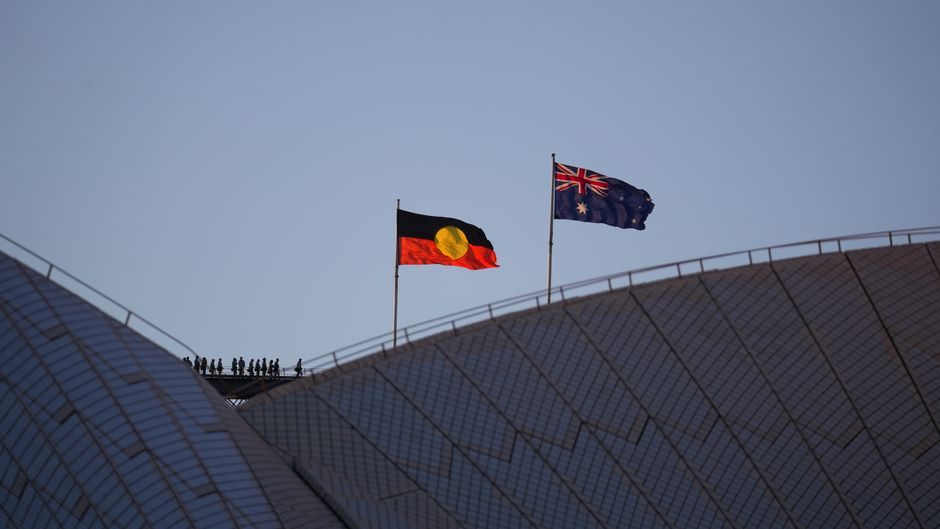
As political debate increasingly frames cultural diversity as a problem to be managed or reversed, First Nations Australians are offering a powerful counter-narrative rooted in tens of thousands of years of lived experience: this continent has never been a monoculture, and diversity has always been its strength, not its weakness.
With NAIDOC Week providing a focal point for national reflection, Indigenous voices are calling on all Australians to look to First Nations knowledge systems — not as historical curiosity, but as practical wisdom for a country grappling with distrust, disconnection and fear of difference.
A Continent of Hundreds of Nations — Connected, Not Divided
For tens of thousands of years, First Nations peoples lived across hundreds of distinct nations and language groups. That extraordinary diversity did not produce fragmentation. Instead, communities remained connected through shared values — love of Country, kinship, belonging, respect and responsibility.
That history stands in direct contrast to the current political moment, in which calls for cultural conformity have grown louder. First Nations thinkers argue the push toward monoculture is a fear response — a belief that difference threatens belonging — when First Nations experience demonstrates precisely the opposite.
Diversity, across hundreds of nations and languages, was never a weakness. It was how First Nations peoples survived.
One concept that speaks directly to this moment is kanyini — a Pitjantjatjara word that loosely translates as the act of supporting, nurturing, protecting and caring for the land and others. At its core, kanyini holds that we are not separate beings but are connected, and therefore responsible for the wellbeing of the whole.
What Kinship Teaches About Conflict and Belonging
Alongside kanyini, the concept of Dreaming reinforces that no one is truly alone — ancestors and Country are always present, meaning every person is connected to others and to every living being. This worldview transforms how conflict is understood.
Rather than viewing those who disagree as opponents to be defeated, a kinship framework sees them as people you remain connected to — even in disagreement. In Aboriginal culture, there are no outsiders or orphans. Everyone belongs somewhere, and with that belonging comes responsibility to others.
This does not mean pretending conflict does not exist. Conflict is present in families, communities, workplaces and between nations. What matters, according to this tradition, is whether people approach disagreement with enough openness and curiosity to genuinely understand another's view — even without fully agreeing with it.
The kinship question is not "how do I win?" but rather: how do we stay in the right relationship?
Fear-based politics, by contrast, operates from a position of scarcity — telling people there is not enough belonging, safety or opportunity to go around, and that protection means pushing others away. First Nations advocates warn that continuing along this path risks producing a society where people are not taught to sit quietly with disagreement, but are instead rewarded for defending, explaining, correcting and winning.
Truth Without Shame — A Path Forward
A recurring theme in First Nations approaches to healing and reconciliation is the principle of moving forward without shame, blame or guilt — while insisting on truth and responsibility.
Shame shuts people down. Blame makes them defensive. Guilt can leave them frozen. None of those responses produce meaningful change. But rejecting shame does not mean rejecting accountability. It means telling the truth in a way that invites people to take the next step forward, rather than retreating from it.
This framing is particularly relevant given the aftermath of the Voice to Parliament referendum, which — while closing a chapter of constitutional debate — did not resolve the deeper questions it exposed about trust, truth and how Australians live together. The renewed appetite for politics built around fear of difference signals that many Australians are experiencing real distrust and disconnection.
The question First Nations voices are posing this NAIDOC Week is not a confrontational one. It is an invitation — to practise kanyini, to learn from Country and kinship, and to ask collectively what kind of country Australians want to become together.
An Ancient Wisdom for a Modern Crisis
Australia's national conversation about identity, belonging and diversity is not new, but it has sharpened in recent years. Questions about what it means to be Australian — and who gets to define that — have surfaced repeatedly in public life and policy debate.
What First Nations cultures are offering in this moment is not a lecture, but a long record of practical experience. A continent that sustained hundreds of distinct nations, languages and cultures for thousands of years — remaining connected through shared values rather than enforced sameness — has something genuinely useful to teach a modern democracy struggling with division.
The invitation of NAIDOC Week, at its deepest level, is for Australians to receive that teaching: to recognise that diversity is not the threat to national cohesion, but has always been one of its most enduring foundations.