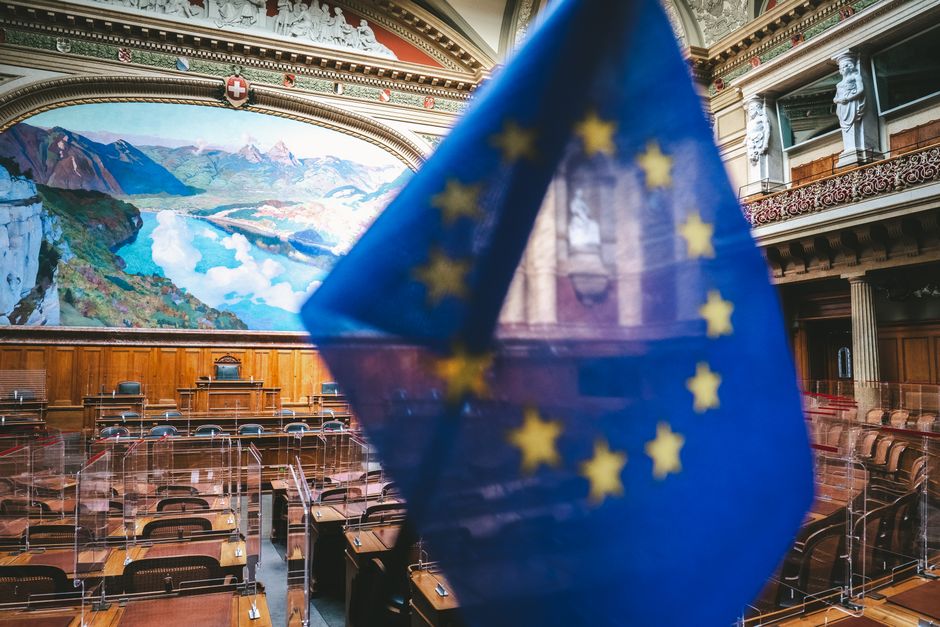
Australia and New Zealand could be invited to form a new kind of formal relationship with the European Union, after the president of the European Parliament singled out both countries as candidates for deeper ties — a proposal that has already drawn a warm response from Canada and a sharp warning from US President Donald Trump.
European Parliament President Roberta Metsola raised the prospect in a recent interview, pointing to Australia and New Zealand as examples of countries already signalling a desire to strengthen their connections with the EU bloc. Her comments came as the idea of "associate membership" — a status short of full EU membership — gained rapid momentum following a landmark address by Canadian Prime Minister Mark Carney to the European Parliament in Strasbourg.
What Associate Membership Could Mean for Australia
Metsola made clear the EU already operates across a spectrum of relationships with outside nations — ranging from full membership to participation in the European Economic Area — and that a new model was taking shape for like-minded democracies beyond the continent.
"We've already seen it, both in terms of legislation that we pass, where we see partners from across the world — Australia, New Zealand being some examples — of saying, look, we want to deepen our relationship," Metsola said.
She pointed to cooperation on trade, social media regulation, child safety policy, critical raw materials, and other strategic alliances as areas where ties could be forged. Underlining the rationale for closer partnerships during a period of global instability, she said: "Friends matter. If we can do more things with our friends, then let's do them."
Metsola added she had "no doubt" that other countries would follow Canada's lead in pursuing this kind of closer arrangement with the EU.
Canada Leads the Way — With Trump Watching Closely
The immediate catalyst for the debate was Canadian Prime Minister Mark Carney's address to the European Parliament, in which he enthusiastically endorsed the associate membership concept. Carney framed the push not as an attempt to build a rival power bloc, but as a means of protecting shared values and economic sovereignty.
"Europe and Canada are each strong. Europe and Canada are even stronger together," Carney told assembled MEPs. He was emphatic that the goal was resilience, not dominance: "We do not seek power to dominate others. On the contrary, we are pursuing resilience so that no one can control our open markets, impair our sovereignty, threaten our territorial integrity, or undermine our freedoms, our democracies, our rule of law."
The proposal had originated with European Commission President Ursula von der Leyen, though it remains in its early stages — requiring both further development and approval from EU member states before it could be implemented.
Trump responded swiftly and bluntly, warning that he would consider any such arrangement a hostile act if it were directed against the United States. "If I think it's at all a hostile act, I will put very serious tariffs or stop trading with Europe on many things," Trump told reporters. He added that heavy tariffs on Europe remained on the table depending on intent.
The European Commission pushed back on that framing. A Commission spokesperson said the proposed Canada partnership was "not against anyone else, but for our common strength."
A Shifting Global Landscape
The flurry of diplomatic activity reflects mounting pressure on both the EU and countries like Canada and Australia, which have faced trade tensions with the Trump administration alongside growing assertiveness from China. The associate membership concept appears designed to give democratic allies a structured way to coordinate without triggering the complexities of full EU accession.
For Australia, which has been deepening engagement with European partners across trade, technology, and security, the suggestion from one of the EU's most senior figures that Canberra could be part of this new framework marks a significant moment — even if formal talks remain a long way off. The idea that Australia's identity and international partnerships continue to evolve in step with a changing world order is one that will likely gain considerable traction in the months ahead.