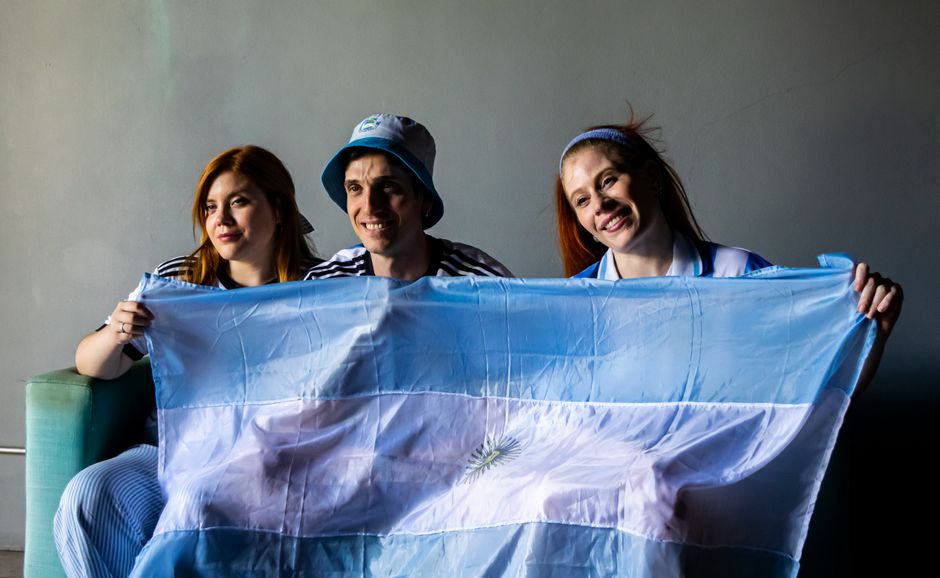
Argentina stand just one victory away from back-to-back World Cup titles, and with the pressure mounting ahead of Monday's final against Spain, fans across the country are reaching for something beyond tactics and talent — good luck rituals that they believe can tip the balance in their team's favour.
Lionel Messi's side secured their place in the decider after defeating old rivals England 2–1 in Atlanta in Thursday's semi-final, a result that sent the nation into a frenzy of blue-and-white celebrations. For those following Messi's Argentina through this World Cup campaign, the final represents the ultimate prize — but getting there emotionally is proving a challenge for many supporters.
Nobody moves: the unwritten rules of watching Argentina
In the working-class Liniers neighbourhood of Buenos Aires, self-described "football addict" Andres Gonzalez, 48, has a strict set of in-match rules that nobody in his household dares to break. The accountant insists that no one moves from the position they occupied when Argentina last scored or won.
"If you went to the bathroom and there's a goal, we lock you in. You stay there until the match is over," he explained with complete conviction.
What Gonzalez is describing is a cabala — a deeply ingrained Argentine concept of a lucky ritual, something believed to channel fortune toward a desired outcome. These habits are woven into the fabric of football culture across the country, cutting across age, class and profession.
Saleswoman Estela Vargas, 65, runs an equally regimented household on match days. Everyone must wear the same clothes they wore during the last victory, sit in the same chair, and the family dog — an English bulldog — is banished outside. "In the match against England, since he's an English bulldog, we put an Argentina jersey on him," she said. "For Spain, rain or shine, he stays outside."
In Graciela Campos's home, the designated sacrifice is her mother-in-law, who is sent to the kitchen to knit a blue-and-white scarf for the duration of the match.
Even the president has his World Cup superstitions
The ritual fever extends all the way to the top of Argentine society. President Javier Milei revealed on Thursday that under no circumstances would he deviate from his own personal custom — watching every World Cup match from the presidential residence. He made clear this tradition would hold firm for the final.
Retiree Lidia Otero, 74, echoed the sentiments of millions when she declared that all her match rituals "work every time" — a statement delivered with the kind of absolute certainty that only a lifelong football devotee could muster. Otero is a devoted supporter of both the national team and Boca Juniors, the former club of the late Diego Maradona.
Why Argentines feel like more than just spectators
Sociologist Diego Murzi offers an insight into why such rituals run so deep in Argentine football culture. "In football, Argentines don't feel like spectators but like protagonists," he said. "Rituals are part of that — feeling involved by bringing good luck and warding off bad luck."
Murzi pointed to the legendary former coach Carlos Bilardo — who guided Argentina to World Cup glory in 1986 — as a striking example of the phenomenon. Despite being "a man of science", Bilardo was superstitious to an extreme degree. After a phone rang in the locker room before Argentina's first match at a tournament and went unanswered, yet Argentina went on to win, Bilardo insisted the same ritual be repeated before every subsequent game — same player, same phone, same silence on the other end of the line.
With Buenos Aires's neighbourhoods draped in blue and white, and the nation's nerves stretched to breaking point, the rituals will be in full swing when Argentina take the field in Monday's World Cup final — and for millions of fans, that is every bit as important as what happens on the pitch.