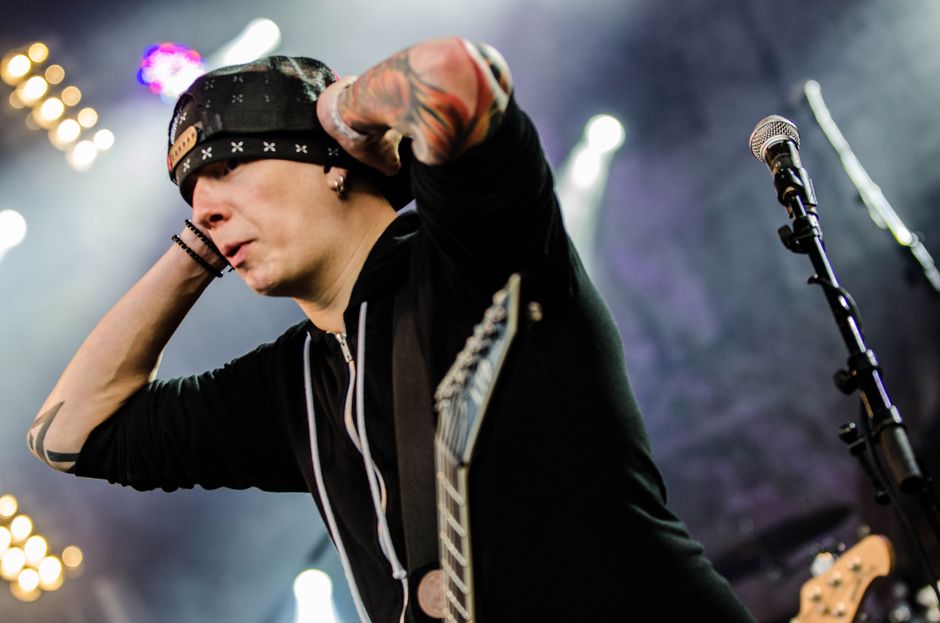
Just days before suffering the cardiac arrest that would ultimately claim his life, Gary "Angry" Anderson sat down for what would prove to be his final interview — speaking with characteristic warmth and energy about Rose Tattoo's farewell European tour and the band's extraordinary half-century legacy. Anderson, aged 79, died in Australia on a Monday night surrounded by his family, having been hospitalised on August 10 after collapsing following a performance in Cologne, Germany.
At the time of the interview, recorded with German musician and radio presenter Lotto King Karl for a show on Rock Antenne Hamburg, Anderson had no idea it would be his last. He was looking ahead, not back — excited about the dates still to come and at peace with the decision to bring Rose Tattoo's storied career to a close.
Anderson's Final Words: 'One Last Ride'
In the interview, Anderson spoke with the openness and energy that had defined more than five decades in Australian rock. He described the tour as "one last ride" for the band, which he noted was approaching its 50th anniversary — a milestone he felt was a natural and fitting point to draw the curtain.
"And that's a good round figure to finish up on after 50 years of the band being in existence," Anderson told his host during the radio conversation. He added simply: "I think it's time, it just really is time, I think."
The tour had been officially billed as "Rock'n'Roll Outlaws — One Last Ride", marking the half-century since Rose Tattoo formed in Sydney in 1976. Those words, chosen to celebrate a career, became haunting in light of what followed.
Lotto King Karl paid tribute after Anderson's passing, describing their exchange as "a really wonderful conversation." He wrote that Anderson had been "full of stories and excitement about the remaining dates of the farewell tour, which he was looking forward to as a fitting end to his career." The host added: "This kind-hearted little bloke" had left fans around the world hoping for his recovery — hopes that were ultimately not realised.
A Tour Cut Short Across Europe
By the time Anderson collapsed in Cologne, Rose Tattoo had already performed across a sweeping European itinerary that included the Netherlands, Switzerland, Belgium, Sweden, Norway, Austria, Hungary and Poland. Nine European shows remained when the tour was cancelled following his cardiac arrest.
Among the tour's highlights was a final appearance at Wacken Open Air in Germany in July — one of the world's most celebrated heavy metal festivals, where Rose Tattoo had performed for more than 25 years. The festival this week described Anderson as "a warm-hearted, genuinely lovely bloke" and "a legend with no airs and graces."
The tribute from Wacken was deeply personal. Festival organisers recalled how "encounters turned into reunions, and reunions turned into friendship" over the decades. They noted that when Rose Tattoo recorded their live album 25 To Life at Wacken, Anderson had told the crowd: "We are walking on Holy Ground." The festival said those words had since become inseparable from the event itself.
"Just this summer, we had the privilege of seeing him and Rose Tattoo perform here once again," the tribute read. "Angry delivered a concert that will stay with us. No one could have known at the time that it would be his final Wacken show."
The organisers remembered Anderson not just as "that unmistakable voice and the tattooed, uncompromising rock'n'roller on stage" but as someone who was, at his core, "an incredibly warm and genuine person. A legend without airs. One of us."
A Legacy Spanning Five Decades
Rose Tattoo's farewell tour was conceived as a celebration of one of Australian rock's most enduring acts. Formed in Sydney in 1976, the band built a fierce international following over five decades, with Anderson as its unmistakable figurehead — a compact, heavily tattooed frontman whose powerful voice belied his stature.
Anderson was 79 at the time of his death, having spent the better part of his adult life fronting the band through changing musical eras, personal hardships and industry shifts. That he died while still on the road — still performing the songs, still in the midst of what he called the band's final chapter — struck many as entirely in keeping with the life he had lived.
For those who witnessed his final Wacken performance or heard his last radio interview, the weight of his words now lands differently. He had spoken of finishing on a high, of going out on his own terms after 50 years. "I think it's time," he had said — and, as it turned out, time was shorter than anyone knew.
Fans wishing to understand more about the cardiology conditions that can lead to sudden cardiac events may find further context in our earlier health coverage. Anderson's death has also drawn comparisons to other tributes paid to artists who gave their final performances not knowing they would be their last — a bittersweet farewell the rock world will long remember.