Almost a year after a mass shooting at a Bondi Chanukah festival killed 16 people and wounded 38 others in Australia's deadliest attack since Port Arthur in 1996, the man at the centre of it all has told his story. Ahmed Al Ahmed, the Syrian-born Australian who tackled and disarmed one of the two attackers, has released a memoir titled Light Will Win, and it makes clear that the 12 seconds of footage that circled the globe represent only a fraction of who he is.
A life shaped by hardship long before Bondi
Al Ahmed was born in 1980 in Al-Nayrab, Syria, near the Turkish border, the eldest child of Malakeh and Mohamed Fateh Al Ahmed. His father was an ambitious shepherd who climbed the ranks of the Assad regime's police force, dragging the family from city to city: Latakia, Masyaf, Aleppo and Jableh. Working from the age of nine, Al Ahmed was a friendless outsider who regularly missed school.
After completing national service, which included six months of conscript training in the Syrian police force that he describes as more brutal than anything his father had inflicted on him, Al Ahmed fled to Dubai. With a cousin's sponsorship, he secured a working visa for Australia, trained as a carpenter and eventually became a citizen.
In 2012 he married Alsu, an Australian of Russian heritage, and built his own construction company. A serious work injury requiring knee reconstruction temporarily sidelined him, leading him to open a shop in Sutherland as a stopgap. By October 2025, life had settled enough for him to bring his beloved mother and his father, who he describes as never having shed his small-town Syrian police sergeant mentality, out to Australia.
Throughout the hardships of his early years, one source of comfort was constant: his mother's mantra. "This pain will pass. This hurt will end. Tomorrow, you will still be here. Tomorrow, you will still be a good man. This is important." He invokes those words repeatedly across the book's pages.
What happened at Bondi on the night of the attack
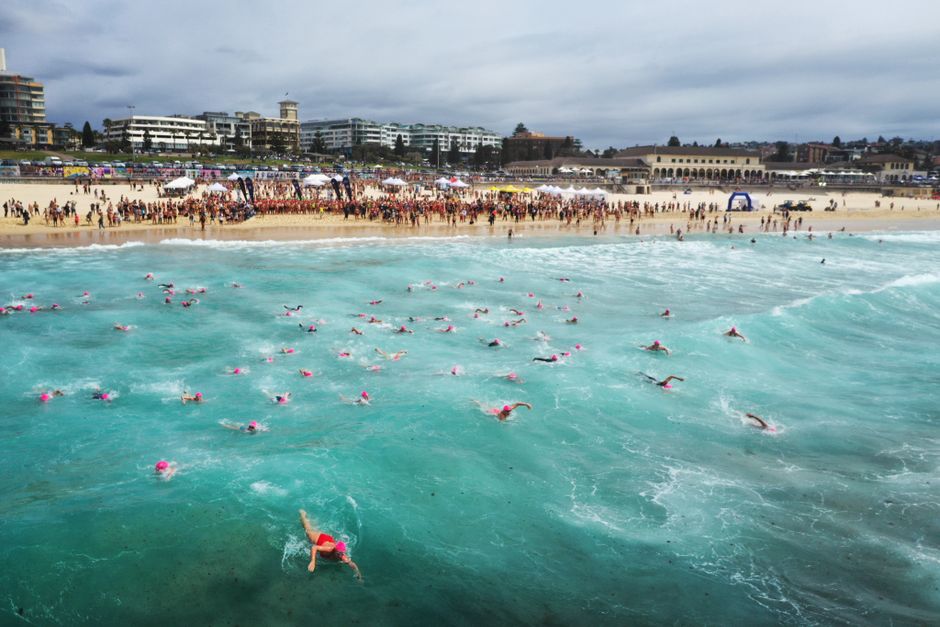
On the evening of the attack, Al Ahmed and a cousin drove to Bondi, a suburb he loved. Looking for coffee, he came across the Chanukah festival, lit by a giant menorah and filled with families. At 6:40pm, a figure in black began firing at the crowd, shooting with a calm and casual manner that Al Ahmed found chilling.
Spotting Sajid Akram, the elder of the two attackers and an Islamic State supporter, metres ahead of him, Al Ahmed ran and leapt onto his back, wrestling the firearm from his grip. His instinctive verbal response, as he held the gun and backed Akram away, reflected two decades on Australian building sites rather than any formal training.
He then propped the weapon against a palm tree. When Akram's son, the younger attacker on the bridge, opened fire, Al Ahmed took cover behind the same palm tree. It proved crucial: though he slipped and was struck by five bullets, the tree shielded him from worse. Police subsequently shot both attackers, killing Sajid Akram and wounding his son.
Al Ahmed was hospitalised with his wounds as an anonymous bystander on a nearby balcony filmed the confrontation. That 12-second clip spread rapidly across the world. During his recovery, US President Donald Trump described him as "a hero of the world." Prime Minister Anthony Albanese and Governor-General Sam Mostyn visited his bedside, bringing flowers chosen on behalf of the King.
The memoir: structure, voice and an artful ghostwriting partnership
Light Will Win was written with the assistance of one of Australia's most accomplished ghostwriters, the author behind the bestselling memoir The Happiest Man on Earth by Eddie Jaku. The book alternates between timestamped chapters set on the night of the attack and chapters drawn from earlier periods of Al Ahmed's life, a device designed to build suspense even though the outcome is already publicly known.
The structure occasionally strains against the material. Ending a chapter at the moment of the first bullet, only to pivot immediately to Al Ahmed's impressions of Dubai in the 2000s, can test a reader's patience. But beneath the constructed architecture, Al Ahmed's own voice surfaces with consistency. It is, as the book demonstrates, a voice that is decent, modest and quietly brave.
His elder daughter, Sofia, is reported to have asked him why he had not also tackled the second shooter on the bridge, a question that speaks to how naturally his family came to expect heroism from him.
As the first anniversary approaches
Publication of the memoir arrives just ahead of the one-year anniversary of the Bondi shootings, an attack that left a profound mark on the national consciousness. With 16 people killed and 38 injured, the scale of the tragedy surpassed any comparable event in Australia in three decades.
Al Ahmed's account does not dwell on glory. It is instead the story of a man who spent a lifetime absorbing pain, guided by his mother's quiet insistence that he would endure, and who found himself, on one terrible evening, acting on instincts forged over decades of hardship.
Light Will Win is available now.